MinuteRead
30 min
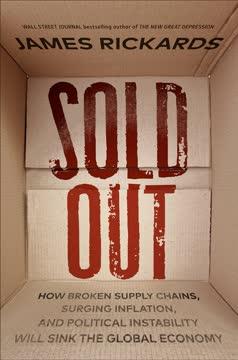
Something strange happened in the aisles of your grocery store. Toilet paper vanished. Electronics shipments stretched from days to months. Used cars suddenly cost more than new ones. The global economy, which had promised endless abundance delivered with frictionless precision, delivered empty shelves and six-month backorders.
**Author:** James Rickards **Estimated Reading Time:** 45 minutes
**What You'll Learn:** Why store shelves emptied and prices soared. How decades of efficiency worship created a fragile global economy. What the new supply chain reality means for your money, your job, and your future. And why the inflation you feel today may not be the economic story tomorrow.
**Who This Book Is For:** Anyone who sensed that something fundamental broke in the global economy and wants to understand what actually happened, what comes next, and how to think clearly when the experts keep getting it wrong.
Something strange happened in the aisles of your grocery store. Toilet paper vanished. Electronics shipments stretched from days to months. Used cars suddenly cost more than new ones. The global economy, which had promised endless abundance delivered with frictionless precision, delivered empty shelves and six-month backorders. Most explanations were shallow. The pandemic disrupted things. People panic-bought. It will all sort itself out soon. James Rickards saw something deeper. He recognized that the supply chain crisis was not a temporary glitch in an otherwise healthy system. It was the inevitable collapse of a system built on a single fragile premise: that efficiency matters more than resilience. For thirty years, the world optimized for cost. Companies chased cheap labor to China. Inventories were slashed to the bone because holding product meant tying up capital. Single suppliers replaced diversified networks because consolidated purchasing power drove better prices. Every link in the chain was stretched and streamlined until it looked perfect on a spreadsheet. Then reality intervened. A trade war disrupted the flows. A pandemic shattered them. Energy markets seized up. And suddenly the world discovered that a system with no slack has no ability to absorb shock. One factory closure in Shenzhen meant idled assembly lines in Michigan. One container ship stuck in the Suez Canal meant empty shelves in London. The supply chain is not part of the economy. It is the economy. Everything you touch, eat, wear, drive, and use arrived through a supply chain. When those chains break, the economy breaks with them. This book explains why the breakdown happened, why it will continue happening in new and surprising ways, and what the emerging order will look like. Rickards does not offer comforting reassurances. He offers something more valuable: a clear framework for understanding a world where the old certainties no longer hold. The inflation you are experiencing is real. But so are the deflationary forces building beneath the surface. The digital transformation of money is accelerating. The geopolitical map of production is being redrawn. And the choices made in boardrooms and central banks over the next few years will determine whether we build a…
Continue reading in the MinuteRead app
Get the complete 30-minute summary of Sold Out
Get the complete summary in the appSupply chains are the economy. When they break, the economy breaks.
Thirty years of efficiency optimization created a system with no margin for error.
Single points of failure, whether a supplier, a factory, or a shipping route, will eventually fail.
Inventory is not waste. It is insurance against disruption.
China dependence is the world's largest supply chain risk.
Energy shortages make all other shortages worse.
"Sold Out" is a strong fit if you want practical ideas around economics, business, finance, especially themes like supply chains are the economy. when they break, the economy breaks; thirty years of efficiency optimization created a system with no margin for error. The MinuteRead summary distills these concepts into a focused read, whether you're deciding whether to buy the book or applying its lessons at work.
James Rickards is an economist, investor, and author known for his expertise in global finance and economics. He has written several books on economic topics, including currency wars and financial crises. Rickards' work often focuses on analyzing complex economic systems and predicting potential future scenarios. He is recognized for his ability to explain intricate financial concepts in accessible terms. Rickards has a background in capital markets and has advised various government agencies on…
View all summaries by James RickardsContinue Reading
Access the complete 30-minute summary and thousands more nonfiction books in the MinuteRead app.

Continue reading the complete summary in the MinuteRead app.