MinuteRead
30 min
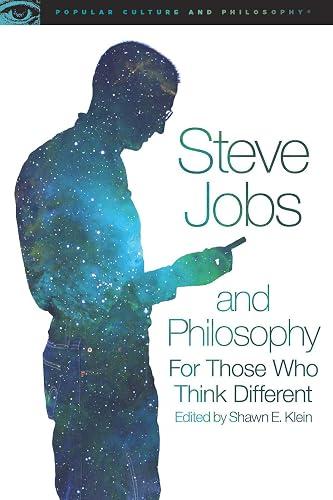
Book summary
by Shawn E. Klein
Premium summary · Opens in the app · 30 min read
Steve Jobs was one of the most consequential figures of the modern era. He transformed personal computing, music, telecommunications, and entertainment. He built the most valuable company in the world from a garage in Los Altos, California. He changed how billions of people interact with technology.
### By Shawn E. Klein
**Estimated Reading Time:** 45 minutes
**What You'll Learn:** How Steve Jobs embodied a distinct philosophical approach to innovation, entrepreneurship, and creativity. You will explore the tension between his unconventional character and his world-changing achievements, and discover what his life reveals about virtue, purpose, and the nature of human flourishing.
**Who This Book Is For:** Anyone fascinated by Steve Jobs, entrepreneurship, creativity, or the philosophical questions that arise when we examine extraordinary lives. This book is for readers who want to understand not just what Jobs did, but what his life means.
Steve Jobs was one of the most consequential figures of the modern era. He transformed personal computing, music, telecommunications, and entertainment. He built the most valuable company in the world from a garage in Los Altos, California. He changed how billions of people interact with technology. Yet Jobs was also a deeply controversial figure. He could be cruel to employees. He parked in handicapped spaces. He denied paternity of his first child. He refused to bathe during his early years at Apple. He was, by many accounts, difficult to work with, impossible to please, and often dismissive of the feelings of others. How do we reconcile these two images? How can the same person who created products of extraordinary beauty and utility also behave in ways that seem so ugly and self-centered? What does it mean to call someone a visionary when that person's vision often came at the expense of basic decency? These are not merely biographical questions. They are philosophical questions. They touch on ethics, aesthetics, the nature of creativity, the meaning of success, and the relationship between individual character and social contribution. This book takes Steve Jobs seriously as a philosophical subject. It examines his life and work through the lens of ideas that have occupied thinkers for millennia. It asks what Jobs can teach us about entrepreneurship, innovation, and the pursuit of a meaningful life. And it asks what philosophy can teach us about Jobs. The central puzzle of Steve Jobs is that he seemed to violate many of the conventional rules of good character while achieving results that most would consider profoundly good. His products brought joy, connection, and creative power to millions of people. His company created enormous value. His vision reshaped entire industries. Does this mean that the conventional rules of good character are wrong? Or does it mean that Jobs succeeded despite his flaws, not because of them? Or is there something more subtle going on, something about the relationship between creativity and nonconformity that we need to understand better? These questions matter because they touch on how we think about success and virtue in our…
Continue reading in the MinuteRead app
Get the complete 30-minute summary of Steve Jobs and Philosophy
Get the complete summary in the appSteve Jobs's reality distortion field was about inspiration, not deception. He convinced people that the impossible was
Jobs was a counter-cultural capitalist, driven by passion and pride, not just profit.
The entrepreneur requires different virtues than the ordinary citizen: independence of mind, vision, and audacity.
Jobs was not an inventor. He was an innovator who transformed existing technologies into products people loved.
Market success is a measure of value, not just sales. It reflects the revealed preferences of customers.
Jobs's approach to charity was unconventional. He believed he could do more good through innovation than through traditi
"Steve Jobs and Philosophy" is a strong fit if you want practical ideas around philosophy, business, essays, especially themes like steve jobs's reality distortion field was about inspiration, not deception. he convinced people that the impossible was; jobs was a counter-cultural capitalist, driven by passion and pride, not just profit. The MinuteRead summary distills these concepts into a focused read, whether you're deciding whether to buy the book or applying its lessons at work.
Motivated to turn hard-won expertise into something readers can use every day, Shawn E. Klein wrote “Steve Jobs and Philosophy” to distill the ideas behind the work into clear, actionable lessons. Through “Steve Jobs and Philosophy”, Shawn E. Klein distills the core ideas on philosophy into lessons readers can absorb in a single short sitting. Readers turn to this work when they want Shawn E. Klein's perspective on the subject without working through the entire original volume. The book is struc…
Continue Reading
Access the complete 30-minute summary and thousands more nonfiction books in the MinuteRead app.

Continue reading the complete summary in the MinuteRead app.