MinuteRead
30 min
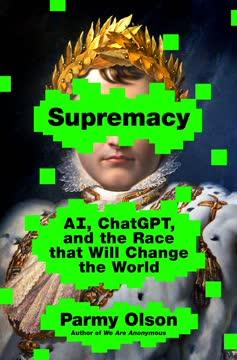
Book summary
by Parmy Olson
Premium summary · Opens in the app · 30 min read
The most important technological race of the twenty-first century did not begin in a government laboratory or a university research department. It began in the minds of two men who believed, with an intensity that bordered on religious conviction, that they could build machines capable of thinking like humans. Their names are Demis Hassabis and Sam Altman. Their creation, the race to build artificial general intelligence, has already reshaped the global economy, concentrated unprecedented power
**Author:** Parmy Olson
**Estimated Reading Time:** 45 minutes
**What You'll Learn:** How two rival visionaries, Demis Hassabis and Sam Altman, sparked a race to build artificial general intelligence, how Big Tech consolidated control over that race, and what the concentration of such transformative power means for humanity's future.
**Who This Book Is For:** Anyone who wants to understand the real story behind the AI revolution, the people driving it, the companies funding it, and the ethical questions that will shape the coming decades.
The most important technological race of the twenty-first century did not begin in a government laboratory or a university research department. It began in the minds of two men who believed, with an intensity that bordered on religious conviction, that they could build machines capable of thinking like humans. Their names are Demis Hassabis and Sam Altman. Their creation, the race to build artificial general intelligence, has already reshaped the global economy, concentrated unprecedented power in the hands of a few corporations, and raised questions about the future of human agency that no one yet knows how to answer. This book tells the story of how that race unfolded. It is not a technical manual about neural networks or a philosophical treatise about consciousness. It is a story about power, ambition, rivalry, and the collision between idealistic missions and commercial imperatives. It is about what happens when a technology with the potential to transform civilization is developed behind closed doors by a small group of people who answer to almost no one. The problem at the heart of this story is simple to state but extraordinarily difficult to solve. Artificial intelligence is advancing faster than our ability to understand it, regulate it, or predict its consequences. The people building these systems are brilliant, driven, and often genuinely motivated by a desire to help humanity. But they are also human. They have egos, rivalries, financial pressures, and blind spots. And the institutions that fund them, the Microsofts and Googles of the world, have their own imperatives that do not always align with the public good. Why does this matter? Because the technology being developed is not like previous innovations. The internet changed how we communicate. Smartphones changed how we access information. Artificial general intelligence, if achieved, would change something far more fundamental: the balance of cognitive power between humans and machines. It would create systems that can reason, plan, and create in ways that rival or exceed human capabilities across a wide range of domains. Whoever controls such systems would possess influence that dwarfs anything previously held by corporations or governments. The struggle to understand this technology is compounded by the fact that the people building it often…
Continue reading in the MinuteRead app
Get the complete 30-minute summary of Supremacy
Get the complete summary in the appThe AI race was driven by two visionaries, Demis Hassabis and Sam Altman, whose different philosophies shaped the indust
Big Tech consolidated control over AI through strategic acquisitions and partnerships, creating an oligopoly.
Ethical commitments at AI companies eroded under commercial pressure, with safety often losing to speed.
The effective altruism movement shaped AI priorities, focusing attention on existential risks while sometimes neglecting
AI companies operate with remarkably little transparency, making accountability nearly impossible.
Human personalities and rivalries shaped the AI industry as much as technical breakthroughs.
"Supremacy" is a strong fit if you want practical ideas around artificial intelligence, technology, business, especially themes like the ai race was driven by two visionaries, demis hassabis and sam altman, whose different philosophies shaped the indust; big tech consolidated control over ai through strategic acquisitions and partnerships, creating an oligopoly. The MinuteRead summary distills these concepts into a focused read, whether you're deciding whether to buy the book or applying its lessons at work.
Parmy Olson é colunista da Bloomberg Opinion, especializada em regulação tecnológica, inteligência artificial e redes sociais. Com uma carreira consolidada no jornalismo, tendo passado pelo Wall Street Journal e pela Forbes, é autora de vários livros, entre os quais se destaca "We Are Anonymous". Há sete anos, dedica-se a acompanhar os sistemas de inteligência artificial e os seus financiamentos, tendo conquistado reconhecimento pelo seu trabalho jornalístico sobre grandes aquisições tecnológica…
View all summaries by Parmy OlsonContinue Reading
Access the complete 30-minute summary and thousands more nonfiction books in the MinuteRead app.

Continue reading the complete summary in the MinuteRead app.