MinuteRead
30 min
Book summary
Premium summary · Opens in the app · 30 min read
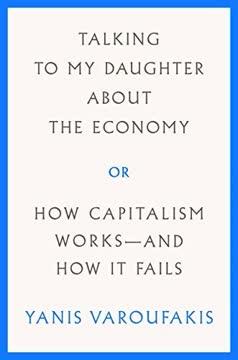
Every parent faces a moment when a child asks a question that seems simple but carries enormous weight. For Yanis Varoufakis, that moment came when his daughter asked why there is so much inequality in the world. Why do some people have so much while others have so little? Why do some countries dominate others? Why does money seem to rule everything?
**Author:** Yanis Varoufakis **Estimated Reading Time:** 45 minutes
**What You'll Learn:**
Why the economy works the way it does, where money comes from, why inequality persists, and how the invisible forces of markets shape your daily life. You will learn why societies with markets are fundamentally different from market societies, how banks create money from nothing, why automation threatens prosperity, and what authentic democracy might look like in an economic context.
**Who This Book Is For:**
Anyone who has ever felt confused or intimidated by economic discussions. Anyone who suspects that the economy is not a natural force like gravity but a human creation that can be understood and changed. Anyone who wants to understand the hidden logic behind debt, profit, money, and markets without wading through jargon or ideology.
Every parent faces a moment when a child asks a question that seems simple but carries enormous weight. For Yanis Varoufakis, that moment came when his daughter asked why there is so much inequality in the world. Why do some people have so much while others have so little? Why do some countries dominate others? Why does money seem to rule everything? Varoufakis, an economist who has spent decades studying these questions, realized that the standard answers would not satisfy a curious young mind. The usual explanations, filled with technical jargon and abstract models, obscure more than they reveal. They make the economy seem like a natural phenomenon, like the weather, something that happens to us rather than something we create. This book is his attempt to explain the economy honestly. It is written as a letter to his daughter, but it is really a letter to everyone who has ever felt that economics is too complicated to understand. The central argument is radical in its simplicity: the economy is not a mystery. It is a human creation, built on human choices, and those choices can be understood, questioned, and changed. The problem is that most economic education does the opposite. It presents the economy as a machine that operates according to immutable laws. It tells us that markets are natural, that debt is normal, that inequality is inevitable. It discourages us from asking the most important questions: Who benefits from this arrangement? Who loses? What alternatives exist? Varoufakis wrote this book because he believes that economic literacy is not a luxury. It is a prerequisite for freedom. If we do not understand how the economy works, we cannot participate in the decisions that shape our lives. We become subjects of economic forces rather than citizens who control them. The book begins with a simple observation: the economy is not just about money. It is about power. It is about…
Continue reading in the MinuteRead app
Get the complete 30-minute summary of Talking to My Daughter About the Economy
Get the complete summary in the appInequality is not natural. It is the result of surplus and the power struggles that surplus creates.
The Great Reversal transformed societies with markets into market societies, where the market determines the structure o
Debt is the fuel of market economies. Without debt, production cannot begin.
Banks create money out of thin air. This power is the source of both dynamism and instability.
Economic outcomes are shaped by expectations. Pessimism can become self-fulfilling.
Automation creates a paradox: replacing human labor with machines reduces purchasing power, which can harm profits.
"Talking to My Daughter About the Economy" is a strong fit if you want practical ideas around economics, politics, history, especially themes like inequality is not natural. it is the result of surplus and the power struggles that surplus creates; the great reversal transformed societies with markets into market societies, where the market determines the structure o. The MinuteRead summary distills these concepts into a focused read, whether you're deciding whether to buy the book or applying its lessons at work.
Ioannis "Yanis" Varoufakis is a Greek-Australian economist and politician known for his outspoken criticism of austerity measures and neoliberal economic policies. He gained international prominence as Greece's Finance Minister in 2015 during negotiations with the European Union over Greece's debt crisis. Varoufakis has authored several books on economics and politics, including "Talking to My Daughter About the Economy." He is the founder of MeRA25, a left-wing political party in Greece. With a…
View all summaries by Yanis VaroufakisContinue Reading
Access the complete 30-minute summary and thousands more nonfiction books in the MinuteRead app.

Continue reading the complete summary in the MinuteRead app.