MinuteRead
30 min
Most people go through life feeling like a separate self trapped inside a body, looking out at a world that is fundamentally foreign and often hostile. This feeling is so familiar that we rarely question it. We assume it is simply the way things are. We think of ourselves as isolated egos navigating an external reality, making choices, pursuing goals, and trying to avoid pain.
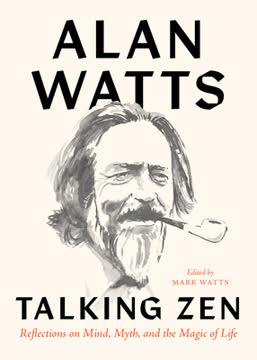
**Author:** Alan W. Watts **Estimated Reading Time:** 45 minutes
This book explores the core teachings of Zen Buddhism as interpreted by Alan Watts, one of the twentieth century's most influential interpreters of Eastern philosophy for Western audiences. You will learn why the sense of a separate self is an illusion, how spontaneity and non-attachment can transform your experience of daily life, why acceptance is more powerful than resistance, and how to understand time, effort, and identity in ways that reduce suffering and increase presence.
This book is for anyone who has ever felt trapped by their own thoughts, exhausted by constant striving, or disconnected from the world around them. It is for those who suspect that the ordinary sense of being a separate ego inside a body might be a misunderstanding with profound consequences. You do not need any background in Buddhism or meditation to find value here. Watts speaks directly to the human condition, using clear language and vivid examples that bridge Eastern wisdom and Western psychology.
Most people go through life feeling like a separate self trapped inside a body, looking out at a world that is fundamentally foreign and often hostile. This feeling is so familiar that we rarely question it. We assume it is simply the way things are. We think of ourselves as isolated egos navigating an external reality, making choices, pursuing goals, and trying to avoid pain. Alan Watts argues that this entire framework is a mistake. Not a minor philosophical error, but a fundamental misperception that generates enormous unnecessary suffering. The feeling of being a separate self, cut off from the rest of existence, is not a biological fact. It is a social convention, a learned way of interpreting experience that has become so habitual we mistake it for reality. Watts dedicated much of his life to translating the insights of Zen Buddhism, Taoism, and other Eastern traditions into language that Westerners could understand and apply. He saw that the core problem facing modern people was not a lack of information or achievement but a deep confusion about who and what they actually are. We spend our lives trying to improve an ego that does not exist in the way we think it does. We chase security for a self that is fundamentally insecure because it is fundamentally imaginary. The Zen approach is not about adding new beliefs to your existing collection. It is about seeing through the illusions you already hold. It is not a philosophy to be studied but a direct pointing toward immediate experience. When Watts talks about Zen, he is not asking you to accept doctrines. He is inviting you to look at your own experience more carefully and…
Continue reading in the MinuteRead app
Get the complete 30-minute summary of Talking Zen
Get the complete summary in the appThe ego is a social construct, not your true self. See through it rather than trying to destroy it.
Spontaneity is your natural state. Self-consciousness is what interferes with it.
Non-attachment means full engagement without clinging. It is not indifference.
Acceptance is recognizing that you are not separate from what is happening. It is not passive resignation.
The present moment is the only reality. Past and future are mental constructs.
Opposites depend on each other. You cannot have one side without the other.
"Talking Zen" is a strong fit if you want practical ideas around philosophy, buddhism, spirituality, especially themes like the ego is a social construct, not your true self. see through it rather than trying to destroy it; spontaneity is your natural state. self-consciousness is what interferes with it. The MinuteRead summary distills these concepts into a focused read, whether you're deciding whether to buy the book or applying its lessons at work.
Alan Wilson Watts was a British philosopher, writer, and speaker renowned for his work in interpreting and popularizing Asian philosophies for Western audiences. He held advanced degrees in theology and divinity, and wrote extensively on topics such as personal identity, reality, consciousness, and the pursuit of happiness. Watts authored over 25 books and numerous articles, combining his personal experiences with scientific knowledge and teachings from Eastern and Western religions and philosop…
View all summaries by Alan W. WattsContinue Reading
Access the complete 30-minute summary and thousands more nonfiction books in the MinuteRead app.

Continue reading the complete summary in the MinuteRead app.