MinuteRead
30 min
Book summary
Premium summary · Opens in the app · 30 min read
Every classroom contains students who learn differently. Some grasp concepts after repeated exposure. Others need only a single explanation before their minds race ahead, making connections the curriculum never anticipated. These students, the gifted and talented, have been the focus of specialized education for over a century. Yet despite decades of research and practice, gifted education remains one of the most misunderstood and inconsistently implemented areas of schooling.
**Author:** Jeff Danielian
**Estimated Reading Time:** 42 minutes
**What You'll Learn:**
- Why gifted education must evolve to serve an increasingly diverse student population - How to identify and support twice-exceptional students who are both gifted and learning disabled - The social-emotional challenges gifted children face and how to address them - Practical strategies for curriculum differentiation and enrichment - How to build effective collaboration between educators, counselors, and families - Why advocacy and policy change are essential for equitable gifted education
**Who This Book Is For:**
This book is for classroom teachers who encounter gifted students in mixed-ability settings, gifted education specialists seeking to refine their practice, school counselors supporting high-ability learners, administrators making program decisions, and parents advocating for their gifted children. It is also valuable for anyone interested in understanding how to nurture exceptional talent in all its forms.
Every classroom contains students who learn differently. Some grasp concepts after repeated exposure. Others need only a single explanation before their minds race ahead, making connections the curriculum never anticipated. These students, the gifted and talented, have been the focus of specialized education for over a century. Yet despite decades of research and practice, gifted education remains one of the most misunderstood and inconsistently implemented areas of schooling. The problem begins with a fundamental question: what does it mean to be gifted? For too long, the answer has been narrow. A high IQ score. A standardized test result. A teacher recommendation based on quiet compliance and neat handwriting. These traditional measures capture only a fraction of the students who possess exceptional abilities. They miss the creative thinker who struggles with organization. They overlook the brilliant mathematician who speaks English as a second language. They fail to recognize the gifted student whose learning disability masks their intellectual potential. Jeff Danielian confronts this problem directly. His work in gifted education spans decades, and his central argument is both simple and profound: gifted education must evolve. The students sitting in today's classrooms represent more racial, cultural, and socioeconomic diversity than any previous generation. Over half of public school students now come from low-income families. Classrooms include students from nontraditional families, English language learners, and children whose gifts express themselves in ways that traditional identification systems never anticipated. If gifted education does not adapt to this reality, it will continue to serve only a privileged subset of the students who need it. The stakes are higher than most people realize. Gifted students who are not challenged often disengage from school entirely. They may coast through classes without developing study skills, then crash when they finally encounter difficult material. They may hide their abilities to fit in socially. They may develop perfectionism so…
Continue reading in the MinuteRead app
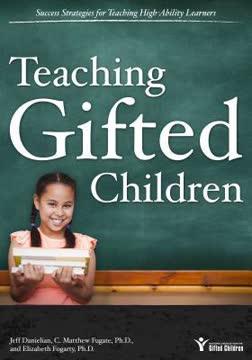
Get the complete 30-minute summary of Teaching Gifted Children
Get the complete summary in the appGifted education must evolve to serve an increasingly diverse student population. Traditional identification methods mis
Cultural competence is essential. Teachers must examine their own biases and adapt their practices to meet the needs of
Twice-exceptional students are gifted and have a learning disability or other exceptionality. They need support that add
Social-emotional needs are as important as academic needs. Perfectionism, intensity, and asynchronous development are co
Collaboration is key. Teachers, counselors, and families must work together to support the whole gifted child.
Differentiation is about different work, not more work. Gifted students need appropriate challenge, not busywork.
"Teaching Gifted Children" is a strong fit if you want practical ideas around education, especially themes like gifted education must evolve to serve an increasingly diverse student population. traditional identification methods mis; cultural competence is essential. teachers must examine their own biases and adapt their practices to meet the needs of. The MinuteRead summary distills these concepts into a focused read, whether you're deciding whether to buy the book or applying its lessons at work.
Jeff Danielian is the author of "Teaching Gifted Children," a book aimed at providing guidance for educators working with gifted students. While specific details about the author are not provided in the given information, it can be inferred that Danielian has expertise in the field of gifted education. His work focuses on pedagogical approaches and curriculum development for gifted learners across various subject areas. Despite some criticism regarding the depth and practical applicability of th…
View all summaries by Jeff DanielianContinue Reading
Access the complete 30-minute summary and thousands more nonfiction books in the MinuteRead app.

Continue reading the complete summary in the MinuteRead app.