MinuteRead
30 min

Book summary
by Sun Tzu
Premium summary · Opens in the app · 30 min read
Most books on strategy promise formulas. They offer steps, frameworks, and guarantees. Sun Tzu offers something different. He offers principles that require judgment.
**Author:** Sun Tzu **Estimated Reading Time:** 45 minutes
**What You'll Learn**
How to think strategically about conflict, competition, and human nature. You will learn why self-knowledge and knowledge of the opponent form the foundation of all victory, how to adapt when circumstances shift, why deception is not dishonesty but intelligence, and how to win without destroying what you hope to gain.
**Who This Book Is For**
This book is for anyone who faces opposition, whether in business, leadership, relationships, or personal growth. It is for those who want to understand the deeper principles that govern conflict and competition, principles that have remained unchanged for over two thousand years because they reflect something permanent about human nature.
Most books on strategy promise formulas. They offer steps, frameworks, and guarantees. Sun Tzu offers something different. He offers principles that require judgment. The Art of War was written in China roughly twenty-five hundred years ago, during a period of constant warfare among competing states. Sun Tzu was not an academic. He was a general who tested his ideas in conditions where failure meant death. The text that survives is compressed, often poetic, and deceptively simple. A single line can contain a lifetime of strategic wisdom. The problem The Art of War addresses is timeless: how do you prevail against an opponent who also thinks, also plans, and also wants to win? This is not a problem of engineering, where materials behave predictably. It is a problem of interacting intelligences, where every move you make changes the opponent's behavior, and every move they make changes yours. Most people approach conflict poorly. They react emotionally. They attack strength directly. They confuse activity with progress. They exhaust themselves fighting battles that do not matter. They win the fight but lose the war. Sun Tzu's approach is radically different. He treats warfare as a last resort, not a first impulse. The highest form of victory, he argues, is to win without fighting at all. This is not passivity. It is the recognition that destruction is expensive, that resources are finite, and that the true objective is not to defeat the enemy but to achieve your purpose. Why does this matter today? Because the fundamental dynamics of competition have not changed. Whether you are navigating office politics, building a company, negotiating a contract, or managing a difficult relationship, you are dealing with the same variables Sun Tzu analyzed: incomplete information, limited resources, shifting conditions, and opponents with their own agendas. Sun Tzu's approach is different because it begins with philosophy, not technique. He is not interested in tricks. He is interested in understanding the deep structure of conflict. Once you understand that structure, the right actions become obvious.…
Continue reading in the MinuteRead app
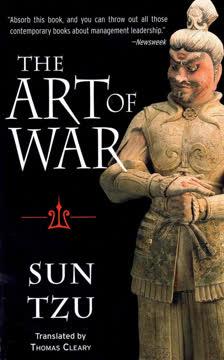
Get the complete 30-minute summary of The Complete Art of War
Get the complete summary in the appKnow yourself and know your opponent completely. Victory flows from knowledge, not force.
Win without fighting whenever possible. Destruction is expensive and the results are unstable.
All warfare is based on deception. Control what the opponent sees and believes.
Avoid strength and strike weakness. Never attack where the enemy is prepared.
Adapt to changing circumstances. No tactic works forever and no plan survives contact with reality.
Speed is economy. Prolonged conflicts drain resources and benefit no one.
"The Complete Art of War" is a strong fit if you want practical ideas around philosophy, classics, history, especially themes like know yourself and know your opponent completely. victory flows from knowledge, not force; win without fighting whenever possible. destruction is expensive and the results are unstable. The MinuteRead summary distills these concepts into a focused read, whether you're deciding whether to buy the book or applying its lessons at work.
Sun Tzu , also known as Sun Wu, was an ancient Chinese military strategist and philosopher who lived around 544-496 BC. He is best known for authoring The Art of War, a highly influential text on military strategy. Sun Tzu believed in using military sciences to achieve peaceful outcomes. His name is actually an honorific title, with "Tzu" meaning "Master." The character "Wu" in his name means "military," reflecting his expertise. Sun Wu also had a courtesy name, Chang Qing. His work has had a la…
View all summaries by Sun TzuContinue Reading
Access the complete 30-minute summary and thousands more nonfiction books in the MinuteRead app.

Continue reading the complete summary in the MinuteRead app.