MinuteRead
30 min
Book summary
by Moises Naim
Premium summary · Opens in the app · 5 min read
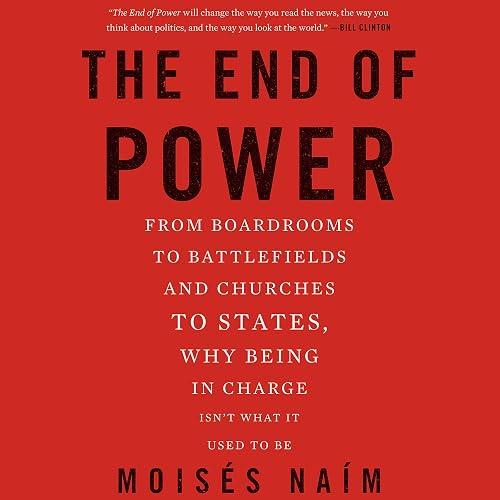
The End Of Power explains why the old positions of power aren’t as powerful as they used to be due to recent changes in society and technology and how this shift has put more influence in the hands of everyday citizens like you and what it might mean for the future of our governments and world.
The End Of Power explains why the old positions of power aren’t as powerful as they used to be due to recent changes in society and technology and how this shift has put more influence in the hands of everyday citizens like you and what it might mean for the future of our governments and world.
In just the last few decades, the world has seen a radical shift in the notion of what is important. Countries that were formerly poor and now have an emerging middle class are now dealing with expectations from citizens that now want more in life than just food and shelter. This change has meant people now want liberal values such as freedom, fairness, transparency, and property.
For example, marriage has been regarded as the holiest and highest bond. That if you’ll break it, comes an intense shame for many hundreds of years. In just the last thirty or so years, we have seen this institution become increasingly obsolete. Divorce rates are on the rise everywhere, even in conservative countries.
The more people want liberal values, the more they start to mistrust the authorities who are supposed to instil these values in society. In the United States during the ‘60s, 75 per cent of the population trusted that their government did what right most of the time was. Recently, that number has fallen somewhere from 20-35 per cent.
We saw this discontent on an even greater scale during the Arab Spring uprisings in 2011. Leaders in the Middle East and North Africa who held unchallenged power for decades suddenly were forced to leave their positions or fight their citizens. The result was a drastic redistribution of power in these areas.
We can see just how much democracy has spread in the last 50 years when looking at the statistics. In 1947, there were just 67 sovereign states in the world. Today, just the UN has 193 members. In the ‘70s, there were twice as many autocracies as there were democracies. Now, that ratio has been reversed and is four to one. What’s more, governments now tend to hold more frequent elections than ever before. This means the people have more power to decide who runs the country, and there is an increased pressure on political leaders to act. When you have more elections, politicians are more likely to consider whether not people approve of their actions. Before, organizational and cultural barriers separated everyday people from political elites; those boundaries are now fading. Anyone can be involved in politics if they want to. For example, it took journalists two whole years to bring down Nixon after the Watergate scandal. Today, pretty much anyone who works in…
Continue reading in the MinuteRead app
Get the complete 5-minute summary of The End Of Power
Get the complete summary in the appThe 20% gap between being satisfied and feeling full could be the difference between losing weight and gaining it.
Political power is being shared now more than ever before.
The distribution of power has its benefits and challenges, but we can ride the storms with the right tools.
"The End Of Power" is a strong fit if you want practical ideas around economics, leadership, politics, especially themes like the 20% gap between being satisfied and feeling full could be the difference between losing weight and gaining it; political power is being shared now more than ever before. The MinuteRead summary distills these concepts into a focused read, whether you're deciding whether to buy the book or applying its lessons at work.
Motivated to help readers with the End Of Power explains why the old positions of power aren’t as powerful as they used to be due to recent, Moises Naim wrote “The End Of Power” to package those ideas for a fast, focused read. In “The End Of Power”, Moises Naim focuses on the End Of Power explains why the old positions of power aren’t as powerful as they used to be due to recent. Through “The End Of Power”, Moises Naim distills the core ideas on economics into lessons readers can absorb in a sin…
View all summaries by Moisés NaímContinue Reading
Access the complete 5-minute summary and thousands more nonfiction books in the MinuteRead app.

Continue reading the complete summary in the MinuteRead app.