MinuteRead
30 min
Book summary
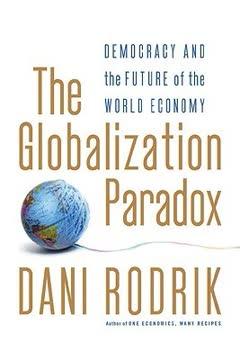
by Dani Rodrik
Premium summary · Opens in the app · 30 min read
The world economy has a problem that few people want to talk about directly. We have spent decades building an elaborate system of global economic integration, yet that system keeps producing crises, backlash, and political upheaval. The promise was simple: open markets would bring prosperity, peace, and convergence between rich and poor nations. The reality has been far messier.
**Author:** Dani Rodrik
**Estimated Reading Time:** 45 minutes
**What You'll Learn:**
* Why markets cannot function without governments and other social institutions * How hyperglobalization undermines democracy and national sovereignty * What the Bretton Woods system got right and why it was abandoned * Why financial globalization has often caused more harm than good * How a "thin" version of globalization could preserve economic openness while respecting national diversity * What a reformed global trade system might look like
**Who This Book Is For:**
This book is for anyone who has sensed that something is deeply wrong with the current global economic order but could not quite articulate what it was. It is for readers who feel torn between the promise of open markets and the reality of financial crises, job displacement, and eroding democratic control. It is for policymakers, students, business leaders, and engaged citizens who want a clear-eyed understanding of how globalization actually works, why it so often fails, and what a more sustainable alternative might look like.
The world economy has a problem that few people want to talk about directly. We have spent decades building an elaborate system of global economic integration, yet that system keeps producing crises, backlash, and political upheaval. The promise was simple: open markets would bring prosperity, peace, and convergence between rich and poor nations. The reality has been far messier. Dani Rodrik, a Harvard economist known for challenging comfortable orthodoxies, argues that the problem is not globalization itself. The problem is the particular version of globalization we have chosen to pursue. We have built a system that demands deep economic integration while pretending that national governments can simply step aside. We have created rules that constrain democratic choices while claiming that this is the only path to prosperity. We have pursued a form of globalization that is, in Rodrik's telling, fundamentally unsustainable. The core tension is captured in what Rodrik calls the fundamental political trilemma of the world economy. We cannot simultaneously have hyperglobalization, democratic politics, and national sovereignty. We can have at most two of these three. If we want hyperglobalization and democracy, we must give up the nation-state and embrace global governance. If we want the nation-state and hyperglobalization, we must sacrifice democratic politics. If we want democracy and the nation-state, we must accept limits on globalization. There is no way around this trilemma. Any serious discussion of the global economy must begin by acknowledging it. Most economists and policymakers have avoided this uncomfortable truth. They have assumed that the nation-state is a relic, that democratic politics is a nuisance to be managed, and that hyperglobalization is the inevitable destination of human progress. Rodrik argues that this is exactly…
Continue reading in the MinuteRead app
Get the complete 30-minute summary of The Globalization Paradox
Get the complete summary in the appMarkets require governments and other social institutions to function. They are complements, not adversaries.
We cannot have hyperglobalization, democracy, and national sovereignty at the same time. We must choose at most two.
The golden straitjacket is unsustainable. Forcing countries to prioritize market confidence over democratic choice leads
There is no one-size-fits-all path to development. Countries need policy space to experiment and adapt.
The Bretton Woods system got the balance right. It promoted trade while preserving domestic policy autonomy.
Financial globalization is dangerous. Capital controls are a legitimate tool of economic management.
"The Globalization Paradox" is a strong fit if you want practical ideas around economics, politics, history, especially themes like markets require governments and other social institutions to function. they are complements, not adversaries; we cannot have hyperglobalization, democracy, and national sovereignty at the same time. we must choose at most two. The MinuteRead summary distills these concepts into a focused read, whether you're deciding whether to buy the book or applying its lessons at work.
Dani Rodrik is a renowned economist and professor at Harvard University's John F. Kennedy School of Government. He holds the position of Rafiq Hariri Professor of International Political Economy. Rodrik is known for his expertise in globalization, economic development, and international trade. His work often challenges conventional wisdom in economics, offering nuanced perspectives on the impacts of globalization and trade policies. Rodrik's research and writings have significantly influenced de…
View all summaries by Dani RodrikContinue Reading
Access the complete 30-minute summary and thousands more nonfiction books in the MinuteRead app.

Continue reading the complete summary in the MinuteRead app.