MinuteRead
30 min
Book summary
Premium summary · Opens in the app · 30 min read
There is a quiet crisis unfolding in the modern world. We have more access to pleasure than any generation in human history. We can summon food to our doors within minutes. We can scroll through infinite entertainment without leaving our beds. We can buy almost anything with a single click. We can stimulate ourselves with screens, substances, and experiences that our ancestors could not have imagined.
**Author:** Robert H. Lustig, M.D.
**Estimated Reading Time:** 45 minutes
**What You'll Learn:**
- Why pleasure and happiness are not the same thing - How dopamine and serotonin create two very different experiences - Why modern life has become a machine for hijacking your brain chemistry - How sugar, technology, and corporate marketing exploit your reward system - What you can do to reclaim genuine contentment
**Who This Book Is For:**
Anyone who has ever felt that something is missing despite having access to endless entertainment, food, and stimulation. Anyone who has wondered why more pleasure does not lead to more satisfaction. Anyone ready to understand the science behind why we feel the way we feel and what to do about it.
There is a quiet crisis unfolding in the modern world. We have more access to pleasure than any generation in human history. We can summon food to our doors within minutes. We can scroll through infinite entertainment without leaving our beds. We can buy almost anything with a single click. We can stimulate ourselves with screens, substances, and experiences that our ancestors could not have imagined. And yet, we are not happier. Rates of depression, anxiety, addiction, and suicide have climbed steadily for decades. People report feeling empty, disconnected, and chronically unsatisfied despite living in conditions of unprecedented material abundance. Something is deeply wrong, and the usual explanations do not quite capture the problem. Robert Lustig approaches this puzzle from an unusual angle. He is a pediatric endocrinologist who spent years studying childhood obesity and the effects of sugar on the body. But as he dug deeper into the science of metabolism, he found himself confronting a more fundamental question: why do we do things that we know are bad for us? Why do we keep reaching for the very things that make us sick, unhappy, and disconnected? The answer, he discovered, lies in the brain. Specifically, it lies in the distinction between two neurochemical systems that govern how we feel. One system produces pleasure. The other produces happiness. They are not the same thing. They are not even close. And the modern world has become extraordinarily skilled at exploiting the first while starving the second. This book is an investigation into how that happened and what it means for your life. It is a scientific detective story, a cultural critique, and a practical guide all rolled into one. Lustig traces the pathways from brain chemistry to corporate boardrooms, from sugar molecules to smartphone notifications, from stress hormones to social media algorithms. He shows how the very systems that evolved to keep us alive have been turned against us. The problem is not that pleasure is bad. Pleasure…
Continue reading in the MinuteRead app
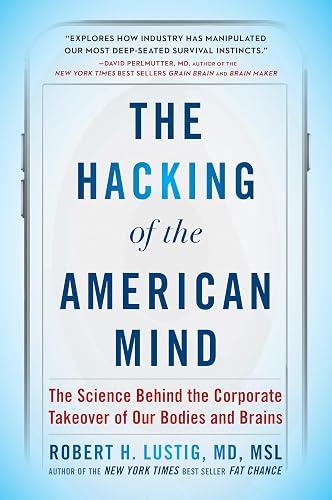
Get the complete 30-minute summary of The Hacking of the American Mind
Get the complete summary in the appPleasure and happiness are different. Dopamine drives pleasure. Serotonin drives happiness.
The modern world overstimulates dopamine and starves serotonin.
Sugar is addictive. It acts on the brain like a drug.
Technology is designed to be addictive. The attention economy exploits your reward pathway.
Chronic stress makes addiction worse by sensitizing the reward system.
Sleep is essential for brain health and emotional regulation.
"The Hacking of the American Mind" is a strong fit if you want practical ideas around health, psychology, science, especially themes like pleasure and happiness are different. dopamine drives pleasure. serotonin drives happiness; the modern world overstimulates dopamine and starves serotonin. The MinuteRead summary distills these concepts into a focused read, whether you're deciding whether to buy the book or applying its lessons at work.
Motivated to help readers with pleasure and happiness are not mutually exclusive, Robert H. Lustig wrote “The Hacking of the American Mind” to package those ideas for a fast, focused read. In “The Hacking of the American Mind”, Robert H. Lustig focuses on pleasure and happiness are not mutually exclusive. Through “The Hacking of the American Mind”, Robert H. Lustig distills the core ideas on health into lessons readers can absorb in a single short sitting. Readers turn to this work when they wan…
View all summaries by Robert H. LustigContinue Reading
Access the complete 30-minute summary and thousands more nonfiction books in the MinuteRead app.

Continue reading the complete summary in the MinuteRead app.