MinuteRead
30 min
Book summary
by Doc Childre
Premium summary · Opens in the app · 30 min read
For centuries, poets have written about the heart as the seat of emotion. Lovers speak of giving their hearts away. The brokenhearted feel physical pain. The brave are said to have heart. Yet modern science, for all its achievements, has largely dismissed the heart as nothing more than a pump. A sophisticated pump, certainly, but a mechanical organ nonetheless. The brain was where intelligence lived. The heart was just plumbing.
**Author:** Doc Childre
**Estimated Reading Time:** 45 minutes
**What You'll Learn:**
- Why the heart has its own independent intelligence and how it communicates with the brain - How heart rhythms directly reflect and influence your emotional states - The science behind why emotions move faster than thoughts - Practical techniques to interrupt stress and restore internal coherence - How to transform overcare into balanced, regenerative care - Why heart intelligence holds the key to transforming families, schools, and organizations
**Who This Book Is For:**
This book is for anyone who has ever felt trapped by stress, overwhelmed by emotions, or disconnected from their own inner wisdom. It is for the busy professional seeking better decision-making, the parent wanting deeper connection with children, the teacher hoping to create calmer classrooms, and the curious reader who senses there is more to human intelligence than the brain alone. If you have ever been told to "follow your heart" but did not know how, this book provides the map.
For centuries, poets have written about the heart as the seat of emotion. Lovers speak of giving their hearts away. The brokenhearted feel physical pain. The brave are said to have heart. Yet modern science, for all its achievements, has largely dismissed the heart as nothing more than a pump. A sophisticated pump, certainly, but a mechanical organ nonetheless. The brain was where intelligence lived. The heart was just plumbing. This book challenges that assumption with evidence that would have seemed impossible just a few decades ago. The heart, it turns out, is not merely a pump. It is an information processing center with its own nervous system, its own memory, and its own form of intelligence. It communicates with the brain continuously, sending more signals to the brain than the brain sends to the heart. And these signals profoundly influence how we think, feel, and behave. The problem this book addresses is one that nearly everyone experiences but few understand. We live in an age of unprecedented stress. The demands of modern life exceed what our nervous systems evolved to handle. We respond to constant stimulation with chronic activation of stress responses that were designed for short-term emergencies. The result is a global epidemic of anxiety, depression, heart disease, sleep disorders, and a pervasive sense of disconnection from what matters most. Traditional approaches to managing stress and emotions have focused almost exclusively on the brain. We are taught to think positively, to reframe our thoughts, to use cognitive strategies to override our feelings. These approaches have value, but they are incomplete. They ask the brain to solve problems that the brain did not create alone. They ignore the heart's role in emotional experience…
Continue reading in the MinuteRead app
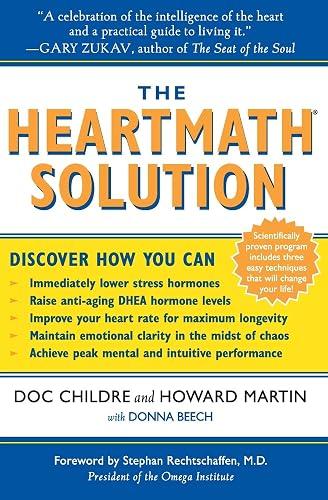
Get the complete 30-minute summary of The HeartMath Solution
Get the complete summary in the appThe heart has its own intelligence with approximately forty thousand neurons.
Your emotional state is reflected in your heart rhythm, and you can use your heart rhythm to shift your emotional state.
Emotions move faster than thoughts, which is why cognitive strategies alone often fail.
Chronic stress damages your body at the cellular level. Heart coherence restores balance.
Core heart feelings like appreciation and compassion are tools you can use deliberately.
Sincerity is essential. Fake positive emotions do not produce coherent heart rhythms.
"The HeartMath Solution" is a strong fit if you want practical ideas around health, self help, psychology, especially themes like the heart has its own intelligence with approximately forty thousand neurons; your emotional state is reflected in your heart rhythm, and you can use your heart rhythm to shift your emotional state. The MinuteRead summary distills these concepts into a focused read, whether you're deciding whether to buy the book or applying its lessons at work.
Motivated to turn hard-won expertise into something readers can use every day, Doc Childre wrote “The HeartMath Solution” to distill the ideas behind the work into clear, actionable lessons. Through “The HeartMath Solution”, Doc Childre distills the core ideas on health into lessons readers can absorb in a single short sitting. Readers turn to this work when they want Doc Childre's perspective on the subject without working through the entire original volume. The book is structured so each chapt…
Continue Reading
Access the complete 30-minute summary and thousands more nonfiction books in the MinuteRead app.

Continue reading the complete summary in the MinuteRead app.