MinuteRead
30 min
Book summary
Premium summary · Opens in the app · 30 min read
Money is something most people never think about. It sits in your pocket, your bank account, your payment apps. It feels permanent, natural, inevitable. But money has a history. It has changed form many times. And in each transformation, the relationship between people and power shifted in ways that were impossible to predict.
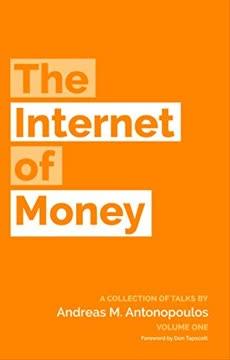
**Author:** Andreas M. Antonopoulos
**Estimated Reading Time:** 2 hours 15 minutes
**What You'll Learn:**
- Why Bitcoin represents a fundamental shift in the relationship between money and state power - How decentralized networks create trust without intermediaries - Why cryptocurrencies will proliferate into millions of forms - What Bitcoin means for global financial inclusion - How permissionless innovation will reshape finance and beyond
**Who This Book Is For:**
This book is for anyone who has wondered why Bitcoin matters. You do not need a technical background. You do not need to understand cryptography. You need curiosity about money, power, and how technology reshapes society. Whether you are a skeptic, an investor, an entrepreneur, or simply someone trying to understand what all the fuss is about, this book will give you a framework for seeing what is actually happening beneath the headlines.
Money is something most people never think about. It sits in your pocket, your bank account, your payment apps. It feels permanent, natural, inevitable. But money has a history. It has changed form many times. And in each transformation, the relationship between people and power shifted in ways that were impossible to predict. We are living through one of those transformations right now. In 2008, a person or group using the name Satoshi Nakamoto published a paper describing a system for digital money that required no banks, no governments, no trusted intermediaries. The paper was nine pages long. The system it described was called Bitcoin. At first, Bitcoin seemed like a curiosity. A toy for cryptographers. A speculative asset for early adopters. A tool for people who distrusted banks. But over time, something deeper emerged. Bitcoin was not just a new kind of money. It was a new way of organizing trust itself. Andreas M. Antonopoulos has spent years explaining this technology to audiences around the world. He has stood on stages in dozens of countries, speaking to bankers, activists, developers, and ordinary people. He has watched the reactions shift from confusion to dismissal to fear to curiosity. This book is a collection of those talks, refined and organized into a coherent argument about what Bitcoin means. The core problem Antonopoulos addresses is simple: most people are asking the wrong questions about Bitcoin. They ask about the price. They ask about whether it is legal. They ask about whether it will scale. They ask about whether governments will ban it. These questions miss the point. The real question is: what happens when money is no longer controlled by the state? For centuries, the ability to issue currency has been a defining feature of sovereignty. Kings minted coins with their faces. Governments printed paper money backed by their authority. Central…
Continue reading in the MinuteRead app
Get the complete 30-minute summary of The Internet of Money
Get the complete summary in the appBitcoin separates money from state control for the first time in centuries.
The blockchain enables trust without intermediaries through mathematics and economic incentives.
Bitcoin's simple design pushes innovation to the edges, enabling permissionless creativity.
Currency creates sovereignty: communities can form around monetary systems.
We will see millions of cryptocurrencies serving specific communities and purposes.
Scaling is an ongoing process, not a one-time goal. Bitcoin scales in layers.
"The Internet of Money" is a strong fit if you want practical ideas around economics, finance, business, especially themes like bitcoin separates money from state control for the first time in centuries; the blockchain enables trust without intermediaries through mathematics and economic incentives. The MinuteRead summary distills these concepts into a focused read, whether you're deciding whether to buy the book or applying its lessons at work.
Andreas M. Antonopoulos is a prominent figure in the Bitcoin and cryptocurrency space. Andreas M. Antonopoulos is known for his ability to explain complex technical concepts in an accessible manner. He has authored multiple books on Bitcoin, including "Mastering Bitcoin" and "The Internet of Money." Antonopoulos is a sought-after public speaker, advisor to startups, and host on cryptocurrency podcasts. He has founded several Bitcoin businesses and contributed to open-source projects. As an early…
View all summaries by Andreas M. AntonopoulosContinue Reading
Access the complete 30-minute summary and thousands more nonfiction books in the MinuteRead app.

Continue reading the complete summary in the MinuteRead app.