MinuteRead
30 min
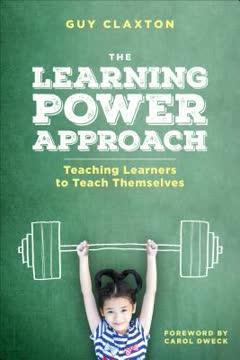
Book summary
by Guy Claxton
Premium summary · Opens in the app · 30 min read
Every teacher has encountered the student who raises a hand before the question is finished. Not because they know the answer, but because they cannot tolerate the discomfort of not knowing. They have learned, somewhere along the way, that being wrong is dangerous, that uncertainty is a sign of failure, and that the goal of learning is to arrive at answers as quickly as possible.
By Guy Claxton
**Estimated Reading Time:** 45 minutes
**What You'll Learn:**
- Why traditional education leaves students unprepared for real-world learning - How to develop the hidden dispositions that drive lifelong learning - The three layers of every classroom experience and why the deepest one matters most - Practical strategies for building curiosity, resilience, and resourcefulness in learners - How to shift from being an instructor to becoming a learning coach - A complete framework for implementing learning power across an entire school
**Who This Book Is For:**
This book is for teachers who sense that something essential is missing from modern education. It is for school leaders who want to create a coherent culture of learning rather than a collection of disconnected classrooms. It is for parents who wonder why their children can pass tests but struggle to pursue their own questions. And it is for anyone who believes that education should prepare young people not just for examinations, but for the unpredictable demands of a complex world.
Every teacher has encountered the student who raises a hand before the question is finished. Not because they know the answer, but because they cannot tolerate the discomfort of not knowing. They have learned, somewhere along the way, that being wrong is dangerous, that uncertainty is a sign of failure, and that the goal of learning is to arrive at answers as quickly as possible. Then there is the other student. The one who sits quietly, avoids eye contact, and hopes to remain invisible. They have learned that speaking up invites judgment, that their ideas probably are not worth sharing, and that it is safer to wait for someone else to provide the answer. Neither of these students lacks intelligence. Neither lacks potential. What they lack is learning power: the set of attitudes, habits, and dispositions that enable a person to engage confidently and effectively with new challenges. And the uncomfortable truth is that their schooling has taught them these limitations. The Learning Power Approach begins with a simple observation. Schools spend enormous energy deciding what students should learn. They spend far less energy considering how students learn, and almost no energy asking a deeper question: what kind of learners are students becoming as a result of their time in school? Every lesson teaches twice. It teaches the content: the quadratic equation, the causes of the First World War, the structure of a cell. But it also teaches a disposition: how to respond when faced with something unfamiliar, how to handle confusion, how to relate to difficulty, how to work with others, how to think about one's own thinking. The first lesson is explicit and carefully planned. The second is implicit…
Continue reading in the MinuteRead app
Get the complete 30-minute summary of The Learning Power Approach
Get the complete summary in the appLearning power is learnable. The capacities that make someone a good learner can be deliberately developed.
Every lesson teaches content and also teaches dispositions about learning. Both matter.
The five learning dispositions are curiosity, resilience, resourcefulness, reflectiveness, and reciprocity.
The deep layer of classroom learning shapes students' long-term attitudes toward learning. It deserves deliberate attent
Learning involves risk. Create classrooms where intellectual risk-taking feels safe.
Knowledge and learning power are complementary, not competing. Develop both together.
"The Learning Power Approach" is a strong fit if you want practical ideas around education, teaching, especially themes like learning power is learnable. the capacities that make someone a good learner can be deliberately developed; every lesson teaches content and also teaches dispositions about learning. both matter. The MinuteRead summary distills these concepts into a focused read, whether you're deciding whether to buy the book or applying its lessons at work.
Guy Claxton is an accomplished academic and author in the field of learning sciences. As Emeritus Professor at the University of Winchester, he has contributed significantly to understanding how people learn and think. Claxton has published numerous works, including the notable "Hare Brain, Tortoise Mind: Why Intelligence Increases When You Think Less." This book explores the concept that slowing down one's thinking process can lead to increased intelligence. Claxton's research and writing focus…
View all summaries by Guy ClaxtonContinue Reading
Access the complete 30-minute summary and thousands more nonfiction books in the MinuteRead app.

Continue reading the complete summary in the MinuteRead app.