MinuteRead
30 min
Book summary
Premium summary · Opens in the app · 5 min read
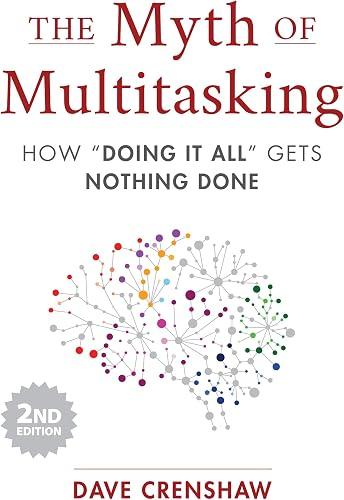
The Myth Of Multitasking explains why doing everything at once is neither efficient, nor even possible, and gives you practical steps for more focus in the workplace.
The Myth Of Multitasking explains why doing everything at once is neither efficient, nor even possible, and gives you practical steps for more focus in the workplace.
When most people hear that multitasking is a myth they think the myth is that it doesn’t work. But that’s not true. The myth is that such a thing even exists. As the author, Dave Crenshaw, explains, what we’re actually doing when trying to handle multiple tasks at once is switching between them. We just do it so fast that it feels like working on several to-dos simultaneously.
He calls it switchtasking. The part of our brain that’s in charge when we perform conscious actions is the prefrontal cortex. As long as we focus on one thing, both brain halves are engaged. Adding a second task, however, literally splits the brain in half. The right half takes care of one task, the left deals with the other. Now, both sides of your brain work independently, and they each chase their own goal and reward.
At any given point in time, you’ll devote more attention to one task than the other, and whatever half of your brain deals with it wins in that moment – until you switch. There are two kinds of switches:
Active switches. You create these yourself. For example, you decide to check your email while you’re still on the phone. Passive switches. These are triggered by people or events in your environment. For example, as you’re writing an email, a co-worker walks into your office and starts talking to you, forcing you to redirect your attention.
As you can imagine, both types of switches cause you to direct less brain power for shorter periods of time at the tasks at hand, which sends your efficiency down the tube.
But did you notice? We only talked about two tasks so far and we only have two brain halves. Imagine what’d happen if you threw in a third task. Yup. Chaos.
Okay, so how do you prevent switchtasking? Dealing with active switches is mostly a matter of discipline, passive switches is where it really gets tricky. However, there are preemptive measures you can take to design your environment in ways that makes them less likely to occur. Here are two for when you’re at the office: Schedule regular, recurring meetings with people who need your input. Have open office hours at least once a week. The first way helps you avoid constant interruptions from the people you work with the most. For example, if a co-worker or secretary sits in the same room as you, they might often ask for confirmation, feedback or your opinion on tasks. If you have to write…
Continue reading in the MinuteRead app
Get the complete 5-minute summary of The Myth Of Multitasking
Get the complete summary in the appWhat we call multitasking is actually switchtasking, and it comes in two forms.
Have two kinds of office hours to maximize your focus time.
Don’t try to force singletasking upon others. Just be a role model.
"The Myth Of Multitasking" is a strong fit if you want practical ideas around mental health, mindfulness, productivity, especially themes like what we call multitasking is actually switchtasking, and it comes in two forms; have two kinds of office hours to maximize your focus time. The MinuteRead summary distills these concepts into a focused read, whether you're deciding whether to buy the book or applying its lessons at work.
Dave Crenshaw develops productive leaders in Fortune 500 companies, universities, and organizations of every size. He has appeared in Time magazine, USA Today, FastCompany, and the BBC News. His courses on LinkedIn Learning have been viewed tens of millions of times. His five books have been published in eight languages, the most popular of which is The Myth of Multitasking—a time management bestseller. As an author, speaker, and online instructor, Dave has transformed the lives and careers of h…
View all summaries by Dave CrenshawContinue Reading
Access the complete 5-minute summary and thousands more nonfiction books in the MinuteRead app.

Continue reading the complete summary in the MinuteRead app.