MinuteRead
30 min
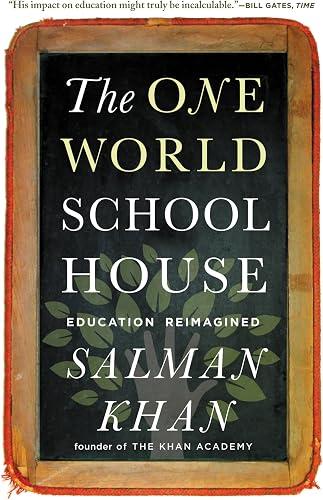
Book summary
by Salman Khan
Premium summary · Opens in the app · 30 min read
In the fall of 2004, a hedge fund analyst in Boston received a phone call from his twelve-year-old cousin in New Orleans. Nadia was struggling with math. Specifically, she was having trouble with unit conversions, and she had failed a placement test that would have put her in a more advanced track. She was smart, motivated, and capable. But somewhere along the way, something had gone wrong.
**Author:** Salman Khan **Estimated Reading Time:** 45 minutes
**What You'll Learn:** Why the traditional classroom model is failing students, how mastery-based learning can fix the "Swiss cheese" gaps in understanding, and what a reimagined education system could look like when technology, human connection, and proven learning principles come together.
**Who This Book Is For:** Parents frustrated by their children's educational experience, teachers seeking a better way to reach every student, lifelong learners curious about how learning actually works, and anyone who suspects that the way we educate people is overdue for a fundamental rethink.
In the fall of 2004, a hedge fund analyst in Boston received a phone call from his twelve-year-old cousin in New Orleans. Nadia was struggling with math. Specifically, she was having trouble with unit conversions, and she had failed a placement test that would have put her in a more advanced track. She was smart, motivated, and capable. But somewhere along the way, something had gone wrong. Salman Khan offered to help. He started tutoring Nadia remotely, using a simple setup: a phone call, Yahoo Doodle, and a shared screen. When that worked, he began creating short video lessons she could watch on her own time. Nadia improved. Then her brothers wanted help. Then other family members. Then strangers on YouTube started watching. What happened next is now well known. Khan Academy grew into a global educational platform serving millions of learners in dozens of languages. But the story of Khan Academy is not really about videos or technology. It is about a deeper question: What is education actually for, and why does so much of it fail to deliver on its promise? The problem, as Khan sees it, is not that teachers are lazy or students are unmotivated. The problem is structural. The modern education system was designed in the eighteenth century to produce compliant factory workers and obedient citizens. It was built around standardization, batch processing, and the assumption that all students of the same age should learn the same material at the same pace. This model was never designed to help every student reach their full potential. It was designed to sort students into winners and losers. The consequences are everywhere. Students who miss a concept in algebra are pushed forward into geometry, where their shaky foundation causes further confusion. They develop "Swiss cheese" knowledge: solid in some places, full of holes in others. By the time they reach advanced courses, the holes have compounded. They decide they are "not math people." They give up. This is not a failure of individual students. It is a failure of a system that treats learning as a race rather than a journey. A system that…
Continue reading in the MinuteRead app
Get the complete 30-minute summary of The One World Schoolhouse
Get the complete summary in the appThe traditional education system was designed for the eighteenth century and is failing to prepare students for the twen
Students learn at different rates, and the system should adapt to the student, not the other way around.
Mastery learning ensures that students have a solid foundation before moving on to new material.
The Swiss cheese problem occurs when gaps in understanding compound over time, leading to frustration and failure.
The flipped classroom inverts the traditional structure: lectures at home, homework in class.
Technology can democratize education, making world-class instruction available to anyone with an internet connection.
"The One World Schoolhouse" is a strong fit if you want practical ideas around education, teaching, technology, especially themes like the traditional education system was designed for the eighteenth century and is failing to prepare students for the twen; students learn at different rates, and the system should adapt to the student, not the other way around. The MinuteRead summary distills these concepts into a focused read, whether you're deciding whether to buy the book or applying its lessons at work.
Motivated to help readers with the old classroom model simply doesn't fit our changing needs, Salman Khan wrote “The One World Schoolhouse” to package those ideas for a fast, focused read. In “The One World Schoolhouse”, Salman Khan focuses on the old classroom model simply doesn't fit our changing needs. Through “The One World Schoolhouse”, Salman Khan distills the core ideas on education into lessons readers can absorb in a single short sitting. Readers turn to this work when they want Salman …
View all summaries by Salman KhanContinue Reading
Access the complete 30-minute summary and thousands more nonfiction books in the MinuteRead app.

Continue reading the complete summary in the MinuteRead app.