MinuteRead
30 min
Book summary
Premium summary · Opens in the app · 30 min read
We tend to assume that technological progress is inevitable. New inventions arrive, old ways of doing things disappear, and society moves forward. The benefits of innovation seem so obvious that resistance appears irrational, even foolish. The Luddites who smashed textile machinery in early nineteenth-century England are remembered as misguided reactionaries who failed to understand the forces of history.
**Author:** Carl Benedikt Frey **Estimated Reading Time:** 45 minutes
Why technological progress has always created winners and losers, how the Industrial Revolution broke the social contract between workers and elites, why the twentieth century was an anomaly in the long history of technological disruption, and what the rise of artificial intelligence means for the future of work, inequality, and democracy.
Anyone who wants to understand the deeper forces behind today's political and economic turmoil. If you have wondered why wages have stagnated for so many workers, why geographic inequality has exploded, or why democracy feels increasingly fragile, this book provides the historical perspective needed to make sense of the present moment.
We tend to assume that technological progress is inevitable. New inventions arrive, old ways of doing things disappear, and society moves forward. The benefits of innovation seem so obvious that resistance appears irrational, even foolish. The Luddites who smashed textile machinery in early nineteenth-century England are remembered as misguided reactionaries who failed to understand the forces of history. Carl Benedikt Frey argues that this view is dangerously incomplete. Throughout most of human history, technological progress was not inevitable at all. It was frequently blocked, delayed, or abandoned. Rulers and elites often had good reason to resist new technologies, because those technologies threatened the social order that kept them in power. The question was never simply whether a technology worked. The question was whether the people with power stood to benefit from it. The central insight of this book is that attitudes toward technology are shaped by how people's incomes are affected by it. When technology benefits the many, it is embraced. When it benefits the few while displacing the many, it breeds resistance. This simple principle explains a great deal about the uneven path of technological history. Frey divides technologies into two categories. Enabling technologies create new tasks and new jobs. They augment human capabilities and open up new possibilities. The telescope, for example, created new opportunities for navigation and scientific discovery. Replacing technologies, by contrast, substitute for human labor. The power loom could do the work of skilled weavers faster and cheaper. Replacing technologies tend to face fierce opposition because they can reduce demand for labor and depress wages in the short term. The Industrial Revolution was a turning point in this history. For the first time, replacing technologies were adopted on a massive scale despite widespread resistance. The result was what Frey calls Engels's pause, a period of roughly six decades during which economic growth accelerated while living standards for ordinary workers stagnated or declined. The gains went overwhelmingly to factory owners and industrialists. Workers paid the price. This pattern eventually reversed. The Second Industrial Revolution, powered…
Continue reading in the MinuteRead app
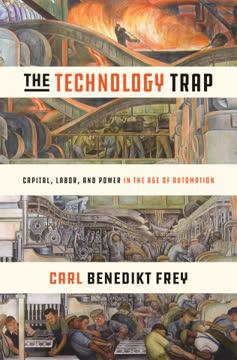
Get the complete 30-minute summary of The Technology Trap
Get the complete summary in the appTechnological progress is not inevitable. It is shaped by power, incentives, and institutions.
Enabling technologies create new jobs. Replacing technologies substitute for human labor.
The Industrial Revolution was powered by replacing technologies that displaced workers and depressed wages.
Engels's pause lasted sixty years, during which workers experienced the costs of progress without sharing in its benefit
The great leveling of the twentieth century was an anomaly, not the rule.
Computers have been replacing middle-skill routine jobs while creating high-skill jobs for the educated few.
"The Technology Trap" is a strong fit if you want practical ideas around economics, technology, history, especially themes like technological progress is not inevitable. it is shaped by power, incentives, and institutions; enabling technologies create new jobs. replacing technologies substitute for human labor. The MinuteRead summary distills these concepts into a focused read, whether you're deciding whether to buy the book or applying its lessons at work.
Carl Benedikt Frey is a prominent economist and researcher specializing in the impact of technology on employment and economic growth. As the Oxford Martin Citi Fellow and codirector of the Oxford Martin Programme on Technology and Employment at the University of Oxford, Frey has established himself as a leading voice in the field of technological change and its societal implications. His work at the Institute for New Economic Thinking and Lund University further demonstrates his expertise in ec…
View all summaries by Carl Benedikt FreyContinue Reading
Access the complete 30-minute summary and thousands more nonfiction books in the MinuteRead app.

Continue reading the complete summary in the MinuteRead app.