MinuteRead
30 min
Book summary
Premium summary · Opens in the app · 30 min read
Every society that has moved beyond primitive barter has confronted the same question: what makes money valuable? For centuries, thinkers assumed that money possessed some intrinsic worth, that a gold coin was valuable because it was gold, and that paper currency derived its value from the promise to redeem it in something real. This view seemed sensible. It explained why people accepted money in exchange for goods and why they saved it for future use.
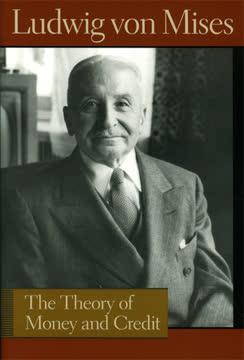
**Author:** Ludwig von Mises
**Estimated Reading Time:** 45 minutes
**What You'll Learn:**
- Why money is not a measure of value but a medium of exchange - How the quantity of money determines its purchasing power - Why inflation silently redistributes wealth across society - How banking transforms monetary systems through credit creation - Why sound money requires independence from political manipulation - How monetary stability enables economic calculation - Why speculation is misunderstood in currency markets
**Who This Book Is For:**
This condensed edition is for readers who want to understand the fundamental mechanics of money, credit, and banking. It is for investors seeking to protect their wealth, entrepreneurs trying to navigate inflationary environments, students of economics who want a rigorous foundation in monetary theory, and citizens who sense that something is wrong with the monetary system but cannot articulate what. If you have ever wondered why prices rise, why governments seem addicted to printing money, or why your savings lose purchasing power over time, this book will give you the intellectual tools to understand what is happening and why.
Every society that has moved beyond primitive barter has confronted the same question: what makes money valuable? For centuries, thinkers assumed that money possessed some intrinsic worth, that a gold coin was valuable because it was gold, and that paper currency derived its value from the promise to redeem it in something real. This view seemed sensible. It explained why people accepted money in exchange for goods and why they saved it for future use. Ludwig von Mises demolished this comfortable assumption. In 1912, when he published The Theory of Money and Credit, he was a young economist in Vienna, writing in a tradition that traced back to Carl Menger and the founders of the Austrian School. Mises saw that the conventional understanding of money was fundamentally flawed. Money, he argued, has no intrinsic value at all. It is valuable only because people expect it to be valuable in the future. It is a medium of exchange, nothing more, and its entire worth derives from its ability to facilitate trade. This insight seems simple, but its implications are profound. If money has no intrinsic value, then its purchasing power is determined entirely by the subjective valuations of the people who use it. And if that is true, then any attempt by governments or central banks to manage money is not merely difficult but deeply dangerous. Manipulating the money supply does not create wealth. It redistributes it. It does not stabilize the economy. It distorts the signals that guide economic calculation. It does not serve the public interest. It serves the interests of those who control the printing press. Mises…
Continue reading in the MinuteRead app
Get the complete 30-minute summary of The Theory of Money and Credit
Get the complete summary in the appMoney is a medium of exchange, not a measure of value. Its value is subjective and derived from its ability to facilitat
Money emerged from the market, not from the government. Business usage creates money, not state decree.
The value of money is determined by supply and demand. Increasing the money supply reduces its purchasing power.
Inflation is an increase in the money supply, not rising prices. It is a hidden tax that redistributes wealth.
Banks create money through credit expansion. This is the primary cause of the business cycle.
The business cycle is caused by credit expansion. Booms are unsustainable. Busts are the correction.
"The Theory of Money and Credit" is a strong fit if you want practical ideas around economics, finance, philosophy, especially themes like money is a medium of exchange, not a measure of value. its value is subjective and derived from its ability to facilitat; money emerged from the market, not from the government. business usage creates money, not state decree. The MinuteRead summary distills these concepts into a focused read, whether you're deciding whether to buy the book or applying its lessons at work.
Ludwig Heinrich Edler von Mises was an influential Austrian economist, philosopher, and classical liberal thinker. Born in 1881, he made significant contributions to the Austrian School of Economics and libertarian thought. Mises' work had a substantial impact on Austrian government economic policies in the early 20th century. He authored numerous books on economics and political theory, developing ideas that continue to shape free-market ideologies. Mises' emphasis on individual liberty and lim…
View all summaries by Ludwig von MisesContinue Reading
Access the complete 30-minute summary and thousands more nonfiction books in the MinuteRead app.

Continue reading the complete summary in the MinuteRead app.