MinuteRead
30 min
Book summary
Premium summary · Opens in the app · 30 min read
We do not usually turn to children's books for serious philosophy. But every so often, a story arrives that refuses to stay in its category. The Harry Potter series is one of those stories. Beneath the Quidditch matches, the moving staircases, and the butterbeer lies a world wrestling with the same questions that have occupied philosophers for millennia.
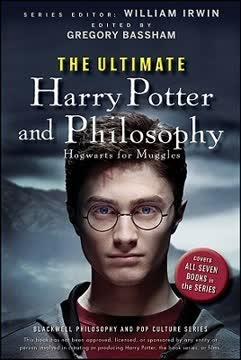
**Author:** Edited by Gregory Bassham **Estimated Reading Time:** 45 minutes
**What You'll Learn:** Why Dumbledore's wisdom cuts deeper than magic, how the battle between Harry and Voldemort illuminates the greatest questions in philosophy, and what the wizarding world teaches us about living an ethical life. You will explore free will, the nature of the soul, the meaning of death, the power of love, and the struggle against injustice.
**Who This Book Is For:** Anyone who has ever wondered why the Sorting Hat's choice matters, whether Dumbledore's manipulations were justified, or what makes a Horcrux so profoundly evil. This book is for readers who sense that Harry Potter is more than a story and want to understand the deep philosophical currents running beneath the surface.
We do not usually turn to children's books for serious philosophy. But every so often, a story arrives that refuses to stay in its category. The Harry Potter series is one of those stories. Beneath the Quidditch matches, the moving staircases, and the butterbeer lies a world wrestling with the same questions that have occupied philosophers for millennia. What does it mean to live a good life? Are we free to choose our path, or are we shaped by forces beyond our control? Is death something to be feared, accepted, or conquered? What do we owe to one another? These are not academic questions dressed up in robes and pointed hats. They are the questions that drive the plot, shape the characters, and give the series its lasting emotional weight. When Dumbledore tells Harry that it is our choices that show what we truly are, he is not offering a comforting platitude. He is articulating a philosophical position with profound implications for how we understand ourselves and our responsibilities. The wizarding world is an ideal laboratory for moral philosophy. Magic amplifies consequences. A single spell can kill, a single potion can transform, a single decision can ripple across generations. The stakes are higher, the temptations greater, and the moral landscape starker than in our ordinary lives. And yet the fundamental dilemmas are the same ones we face every day. Consider the choices that define the series. Harry chooses to spare Peter Pettigrew, an act of mercy that later saves his life. Hermione chooses to erase her parents' memories to protect them, an act of love that carries immense personal cost. Dumbledore chooses to withhold information from Harry, an act of manipulation that raises uncomfortable questions about the ethics of leadership. Snape chooses to dedicate his life to atonement, an act that blurs the line between hero and villain. Each of these choices invites philosophical reflection. Was Harry's mercy wise or reckless? Was Hermione's sacrifice noble or…
Continue reading in the MinuteRead app
Get the complete 30-minute summary of The Ultimate Harry Potter and Philosophy
Get the complete summary in the appYour choices define you far more than your abilities, your circumstances, or your past.
Everyone has both light and dark inside them. The question is which you nurture.
Prophecies and predictions describe possibilities, not certainties. You always have a choice.
Death is not the worst thing that can happen. The fear of death leads to far worse evils.
Love is not weakness. It is the power to sacrifice, and sacrifice creates bonds that sustain us.
Prejudice and injustice are not limited to villains. Good people must examine their own biases.
"The Ultimate Harry Potter and Philosophy" is a strong fit if you want practical ideas around philosophy, harry potter, psychology, especially themes like your choices define you far more than your abilities, your circumstances, or your past; everyone has both light and dark inside them. the question is which you nurture. The MinuteRead summary distills these concepts into a focused read, whether you're deciding whether to buy the book or applying its lessons at work.
William Irwin is a Professor of Philosophy at King's College in Pennsylvania. He is credited with pioneering the "philosophy and popular culture" book genre, which combines philosophical analysis with popular media. His first works in this genre were "Seinfeld and Philosophy: A Book about Everything and Nothing" (1999) and "The Simpsons and Philosophy: The D'oh! of Homer" (2001). These books paved the way for similar works exploring philosophical concepts through the lens of popular culture, mak…
View all summaries by Gregory BasshamContinue Reading
Access the complete 30-minute summary and thousands more nonfiction books in the MinuteRead app.

Continue reading the complete summary in the MinuteRead app.