MinuteRead
30 min
Book summary
Premium summary · Opens in the app · 5 min read
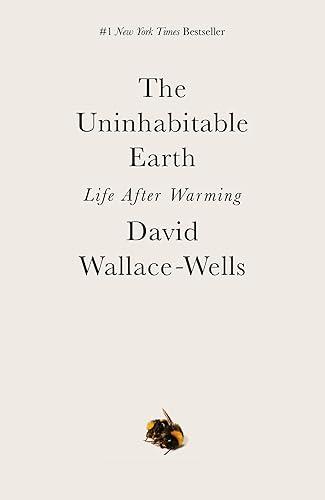
The Uninhabitable Earth explains how humanity’s complacency and negligence have put this world on a course to soon be unlivable unless we each do our small part to improve how we care for this beautiful planet we live on.
The Uninhabitable Earth explains how humanity’s complacency and negligence have put this world on a course to soon be unlivable unless we each do our small part to improve how we care for this beautiful planet we live on.
There was an epic meeting of the world leaders in Paris about 4 years ago. These leaders working towards an agreement were trying to set new goals to tackle the mounting threat of climate change. Finally, politicians are recognizing the serious implications and urgency that can occur from this situation.
From these talks stemmed the objective of maintaining global average temperatures below 2 degrees Celsius higher than pre-industrial levels. This figure was chosen because it is the temperature threshold at which disaster begins. The problem is that we are going to exceed this 2-degree threshold, and by a good measure.
The Intergovernmental Panel on Climate Change (IPCC) released a report in 2018. The data indicates that even if the world governments take aggressive actions now, by enacting all proposed policies agreed to in the Paris talks, we will still continue to see global temperatures rise in excess of 3.2 degrees before warning halts. This is not good news.
What this means is that the world’s ice sheets will still collapse in our lifetime. This would lead to the eventual flooding of hundreds of cities, including Miami, Shanghai, and Hong Kong. Southern Europe would experience permanent drought and wildfires in the U.S would increase 600 percent. And this is the optimistic scenario.
The best-known consequence of climate change is melting polar ice caps. This will cause a rise in sea levels. Without curbing our emissions output this can translate into ocean rises between 1.2 and 2.4 meters within the next century. To give you some idea of the impact of this, the city of Bangladesh, which has a population of 164 million people would be completely submerged. Other locations that would suffer a similar catastrophe, outside of all of the world’s most beautiful beaches, are Saint Mark’s Basilica in Venice, California’s Silicon Valley area, and Washington, D.C. At the current rate we are going, the Indonesian megacity, Jakarta will be entirely underwater by the year 2050. Dare we look further down the road? If we peak ahead as far as 2100, projections show things will become increasingly worse if we fail to reduce emissions now. The result will be oceans rising up to 6 meters higher in the coming centuries. Imagine the disappearance of ports, energy plants, military bases, farmlands along with major cities. Asia would experience the most severe devastation with cities like Shanghai, Mumbai, and Kolkata underwater. It’s estimated that the average American emits enough carbon to melt 10,000 tons…
Continue reading in the MinuteRead app
Get the complete 5-minute summary of The Uninhabitable Earth
Get the complete summary in the appThe Paris climate agreement goals are hopelessly optimistic and too little, too late.
Atlantis might not be such a myth for long with major cities underwater as a consequence of climate change.
We might be on the verge of a global health crisis as old diseases are revived and current ones rejuvenated.
"The Uninhabitable Earth" is a strong fit if you want practical ideas around education, environment, future, especially themes like the paris climate agreement goals are hopelessly optimistic and too little, too late; atlantis might not be such a myth for long with major cities underwater as a consequence of climate change. The MinuteRead summary distills these concepts into a focused read, whether you're deciding whether to buy the book or applying its lessons at work.
David Wallace-Wells is a national fellow at the New America foundation and a columnist and deputy editor at New York magazine. He was previously the deputy editor of The Paris Review. He lives in New York City. Photo Credit: Beowulf Sheehan
View all summaries by David Wallace-WellsContinue Reading
Access the complete 5-minute summary and thousands more nonfiction books in the MinuteRead app.

Continue reading the complete summary in the MinuteRead app.