MinuteRead
30 min
In 1943, the world was on fire. Across Europe, totalitarian regimes had industrialized murder. Cities lay in ruins. Millions were displaced, imprisoned, or dead. The old certainties of Western civilization, faith in progress, reason, and human goodness, had collapsed into ash.
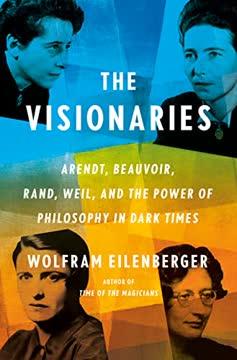
**Author:** Wolfram Eilenberger
**Estimated Reading Time:** 65 minutes
**What You'll Learn:** How four extraordinary women philosophers, Simone de Beauvoir, Simone Weil, Ayn Rand, and Hannah Arendt, each forged radically different answers to the deepest questions of human existence during the crucible of World War II. You will understand their core philosophies, the personal experiences that shaped them, and why their competing visions of freedom, responsibility, and meaning remain urgently relevant today.
**Who This Book Is For:** Anyone who has ever wondered how to live a meaningful life in a broken world. Readers interested in philosophy but intimidated by abstract theory. Those curious about the intellectual history of the twentieth century and the remarkable women who helped define it. And anyone seeking clarity about freedom, evil, and human connection in times of crisis.
In 1943, the world was on fire. Across Europe, totalitarian regimes had industrialized murder. Cities lay in ruins. Millions were displaced, imprisoned, or dead. The old certainties of Western civilization, faith in progress, reason, and human goodness, had collapsed into ash. Four women, each in her early to mid-thirties, were thinking furiously. None of them knew one another personally. They lived in different countries, spoke different languages, and came from different traditions. Yet each was engaged in the same urgent project: rebuilding philosophy from the ground up so it could answer the horrors of the present moment. Simone de Beauvoir was in Nazi-occupied Paris, writing a novel that would become a foundational text of existentialist feminism. Simone Weil, frail and uncompromising, was in London working herself to exhaustion for the Free French resistance, her notebooks filling with mystical insights and radical social critiques. Ayn Rand, a Russian Jewish immigrant who had escaped Soviet tyranny, was in New York completing her breakthrough novel, a thunderous defense of individualism that would sell millions of copies. And Hannah Arendt, a German Jewish philosopher who had fled the Gestapo, was in New York too, piecing together an unprecedented analysis of how totalitarianism destroys the very possibility of human freedom. Wolfram Eilenberger brings these four lives into a single frame not because they agreed with one another. They emphatically did not. Their philosophies clash dramatically. Beauvoir insisted that freedom is always intertwined with the freedom of others. Rand declared that the only moral life is one of rational self-interest. Weil argued that true freedom requires the dissolution of the self in love and attention to the suffering of others. Arendt warned that freedom vanishes entirely when the shared public world is destroyed. What unites them is the seriousness with which they took their historical moment. None retreated into academic abstraction. Each staked her life on her ideas. Each produced work that continues to…
Continue reading in the MinuteRead app
Get the complete 30-minute summary of The Visionaries
Get the complete summary in the appBeauvoir showed that freedom is always entangled with the freedom of others. You cannot be fully free in a world where o
Weil insisted that attention is the highest human capacity and the foundation of genuine love and justice.
Rand argued that rational self-interest is a virtue and that altruism often becomes a justification for tyranny.
Arendt revealed that great evil is often committed by ordinary people who have stopped thinking.
All four thinkers lived their philosophies. Their ideas emerged from exile, occupation, factory labor, and the struggle
The war was not only a military conflict. It was a philosophical crisis that demanded new ways of understanding freedom,
"The Visionaries" is a strong fit if you want practical ideas around philosophy, history, biography, especially themes like beauvoir showed that freedom is always entangled with the freedom of others. you cannot be fully free in a world where o; weil insisted that attention is the highest human capacity and the foundation of genuine love and justice. The MinuteRead summary distills these concepts into a focused read, whether you're deciding whether to buy the book or applying its lessons at work.
Wolfram Eilenberger is a German philosopher, journalist, and author known for his engaging approach to philosophical topics. He gained international recognition with his book "Time of the Magicians," which explored the lives and ideas of four influential male philosophers. Eilenberger's writing style combines biographical details with historical context and philosophical concepts, making complex ideas accessible to a general audience. His work often focuses on key periods in intellectual history…
View all summaries by Wolfram EilenbergerContinue Reading
Access the complete 30-minute summary and thousands more nonfiction books in the MinuteRead app.

Continue reading the complete summary in the MinuteRead app.