MinuteRead
30 min
Book summary
Premium summary · Opens in the app · 30 min read
Every day, financial news outlets bombard you with numbers. Consumer confidence rose two points. Durable goods orders fell one percent. The yield curve flattened. Housing starts surprised to the upside. Most people hear these reports and file them away as background noise, interesting perhaps but not actionable. They assume that understanding the economy requires a PhD, a Bloomberg terminal, and decades of experience.
**Author:** Simon Constable **Estimated Reading Time:** 45 minutes
### What You'll Learn
You will learn how to read the economy like a professional. This condensed edition teaches you to interpret the signals hidden in automobile sales, semiconductor orders, housing permits, the yield curve, and dozens of other indicators that shape markets and move money. You will discover which numbers matter, which ones are noise, and how to combine them into a coherent picture of where the economy has been, where it stands, and where it is heading next.
### Who This Book Is For
This book is for investors who want to make better decisions, professionals who need to understand economic forces affecting their industry, and curious readers who sense that headlines do not tell the full story. No economics degree is required. What is required is a willingness to look past the surface and learn what the data actually reveals.
Every day, financial news outlets bombard you with numbers. Consumer confidence rose two points. Durable goods orders fell one percent. The yield curve flattened. Housing starts surprised to the upside. Most people hear these reports and file them away as background noise, interesting perhaps but not actionable. They assume that understanding the economy requires a PhD, a Bloomberg terminal, and decades of experience. That assumption is wrong. The economy speaks through indicators, and once you learn its language, you can hear what it is saying. You can spot opportunities before the crowd arrives. You can sense danger before the alarms sound. You can make decisions based on evidence rather than emotion, headlines, or the advice of people who may not understand much more than you do. Simon Constable wrote this guide because he recognized a gap in how most people approach economic information. The raw data is publicly available. The indicators are widely reported. What is missing is translation: someone to explain not just what each indicator measures, but why it matters, how to interpret it, what it actually predicts, and when to ignore it entirely. The problem is not a shortage of information. The problem is a shortage of understanding. Most investors, business owners, and even policymakers treat economic indicators as a checklist. They scan the latest figures, note whether they went up or down, and move on. This approach misses the deeper story. A single indicator rarely tells you anything definitive. A collection of indicators, read together and understood in context, can tell you almost everything. Consider what happened in 2007 and 2008. The housing market was sending clear warning signals for years before the financial crisis erupted. Housing permits were declining. The yield curve had inverted. Credit conditions were tightening. The data was all there, in…
Continue reading in the MinuteRead app
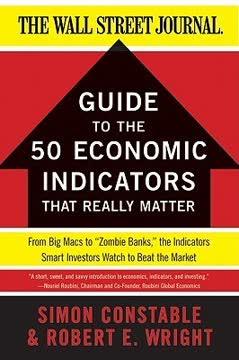
Get the complete 30-minute summary of The WSJ Guide to the 50 Economic Indicators That Really Matter
Get the complete summary in the appConsumer spending is 70 percent of the economy. Watch automobile sales for the purest signal of consumer behavior.
Housing permits lead the economy. When permits turn down, trouble is usually coming.
The yield curve inversion is the most reliable recession predictor. When short rates exceed long rates, become cautious.
Initial jobless claims are a leading indicator. They rise before recessions and fall before recoveries.
The unemployment rate lags. Do not use it to assess where the economy is heading.
Business investment indicators like durable goods orders reveal what companies actually expect.
"The WSJ Guide to the 50 Economic Indicators That Really Matter" is a strong fit if you want practical ideas around economics, finance, business, especially themes like consumer spending is 70 percent of the economy. watch automobile sales for the purest signal of consumer behavior; housing permits lead the economy. when permits turn down, trouble is usually coming. The MinuteRead summary distills these concepts into a focused read, whether you're deciding whether to buy the book or applying its lessons at work.
Simon Constable is an accomplished author, broadcaster, journalist, commentator, and speaker. His book, co-authored with Robert E. Wright, won an economics category award in the 2012 Small Business Book Awards. Constable's work appears in prestigious publications such as The Wall Street Journal, Time Magazine, Barron's, Forbes, and Fortune. He has an extensive broadcasting background, having presented the Wall Street Journal's daily TV show and hosted the John Batchelor radio show in New York. C…
View all summaries by Simon ConstableContinue Reading
Access the complete 30-minute summary and thousands more nonfiction books in the MinuteRead app.

Continue reading the complete summary in the MinuteRead app.