MinuteRead
30 min
Book summary
Premium summary · Opens in the app · 30 min read
Most problems are easy. They have been solved already. The hard ones remain. They linger because they are tangled in bad assumptions, hidden incentives, and the human reluctance to say three simple words: I do not know.
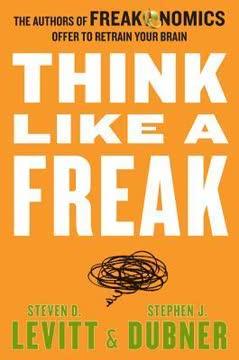
**Think Like a Freak** *By Steven D. Levitt and Stephen J. Dubner*
**Estimated Reading Time:** 45 minutes
**What You'll Learn** How to retrain your brain to solve problems the way an economist does: by stripping away assumptions, asking the questions others are afraid to ask, following the data wherever it leads, and accepting that being right often means being unpopular. You will learn to admit what you do not know, design incentives that actually work, walk away from losing battles, and persuade people who do not want to be persuaded.
**Who This Book Is For** Anyone who has ever felt stuck on a hard problem. Anyone who suspects the conventional wisdom is wrong but cannot prove it. Anyone who wants to make better decisions in their work, their relationships, or their life. And anyone willing to trade the comfort of fitting in for the satisfaction of figuring things out.
Most problems are easy. They have been solved already. The hard ones remain. They linger because they are tangled in bad assumptions, hidden incentives, and the human reluctance to say three simple words: I do not know. This book exists because the world is full of hard problems that people keep attacking with the same tired tools. Governments spend billions on programs that do not work. Businesses cling to strategies that lost their logic years ago. Individuals stay in jobs, relationships, and habits that make them miserable, all because quitting feels like failure. Why does this happen? Because thinking is hard. Real thinking. The kind that requires you to question what everyone else accepts, to admit your own ignorance, to look at data without cherry-picking the parts you like, and to change your mind when the evidence demands it. Most people do not do this. They cannot. The social cost is too high. Admitting you do not know something makes you look weak. Suggesting a counterintuitive solution makes you look foolish. Walking away from a sunk cost makes you look like a quitter. And so people keep doing what does not work, because doing anything else would require them to think like a Freak. Steven Levitt and Stephen Dubner have spent years studying the hidden side of everything. They have shown that sumo wrestlers cheat, that real estate agents have different incentives than their clients, and that the drop in crime in the 1990s had less to do with policing and more to do with Roe v. Wade. Their work is not about economics in the traditional sense. It is about a way of seeing the world. Thinking like a Freak means approaching problems with a child's curiosity and an economist's rigor. It means caring less about what people think of…
Continue reading in the MinuteRead app
Get the complete 30-minute summary of Think like a Freak
Get the complete summary in the appSay "I don't know" often. It is the foundation of all learning.
People respond to incentives. Watch what they do, not what they say.
Dig for root causes. The first explanation is rarely the deepest one.
Think like a child. Ask obvious questions. Have fun with ideas.
Quit strategically. If you would not start it today, consider stopping.
Tell stories. Facts inform but stories persuade.
"Think like a Freak" is a strong fit if you want practical ideas around economics, business, psychology—especially themes like say "i don't know" often. it is the foundation of all learning; people respond to incentives. watch what they do, not what they say. The MinuteRead summary distills these concepts into a focused read, whether you're deciding whether to buy the book or applying its lessons at work.
Steven David Levitt is an American economist and co-author of the bestselling Freakonomics series. He is a professor at the University of Chicago and the Faculty Director of the Center for Radical Innovation for Social Change. Levitt won the 2003 John Bates Clark Medal for his work in crime economics. He co-founded TGG Group, a consulting company, in 2009. Time magazine named him one of the "100 People Who Shape Our World" in 2006. Levitt is known for his innovative approach to economics and has…
View all summaries by Steven D. LevittContinue Reading
Access the complete 30-minute summary and thousands more nonfiction books in the MinuteRead app.

Continue reading the complete summary in the MinuteRead app.