MinuteRead
30 min
Book summary
Premium summary · Opens in the app · 30 min read
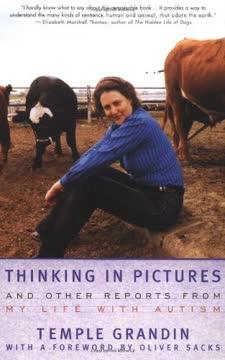
Temple Grandin did not speak until she was nearly four years old. Doctors recommended institutionalization. Her mother refused. Instead, she arranged intensive speech therapy and fought to give her daughter every opportunity to develop. That decision changed the trajectory of a life that would eventually transform two fields: animal science and autism advocacy.
**Author:** Temple Grandin
**Estimated Reading Time:** 2 hours
### What You'll Learn
This book opens a door into a mind that works differently from most. Temple Grandin, one of the world's most accomplished animal scientists and a person with autism, reveals how thinking in pictures rather than words shapes every aspect of her experience. You will learn how visual thinking works, why sensory sensitivities can be overwhelming, how emotions are processed differently in autism, and what all of this teaches us about the diversity of human cognition. You will also discover how Grandin's unique perspective revolutionized the livestock industry and why she believes neurodiversity is essential to human progress.
### Who This Book Is For
This book is for anyone who wants to understand autism from the inside. It is for parents, educators, and clinicians seeking insight into how autistic minds work. It is for employers who want to harness the strengths of neurodivergent talent. It is for anyone curious about the nature of thought itself. And it is for autistic individuals who may recognize their own experience reflected in these pages for the first time.
Temple Grandin did not speak until she was nearly four years old. Doctors recommended institutionalization. Her mother refused. Instead, she arranged intensive speech therapy and fought to give her daughter every opportunity to develop. That decision changed the trajectory of a life that would eventually transform two fields: animal science and autism advocacy. The problem Grandin addresses in this book is fundamental. Most people assume everyone thinks the same way they do. They assume thoughts are made of words. They assume sensory experiences are roughly equivalent from person to person. They assume emotions follow predictable patterns. These assumptions are wrong. And when they are applied to autistic individuals, they create misunderstanding, exclusion, and unnecessary suffering. Autism is not rare. Millions of people live with it. Yet the gap between how autistic minds actually work and how the world expects them to work remains vast. Schools are designed for verbal thinkers. Workplaces reward social fluency. Social life depends on reading subtle cues that many autistic people cannot perceive. The result is that enormous human potential goes unrecognized and undeveloped. Grandin's approach is different because she speaks from direct experience. She is not an outside observer describing autism from a clinical distance. She is a person with autism who has spent decades observing her own mind, comparing it to others, and building bridges between different ways of thinking. She is also a scientist who brings rigorous observation to everything she studies, including herself. This book matters because it challenges the idea that there is one correct way to think, to feel, or to perceive the world.…
Continue reading in the MinuteRead app
Get the complete 30-minute summary of Thinking in Pictures
Get the complete summary in the appThinking comes in different forms. Visual, pattern, and verbal thinking are all valid cognitive styles with distinct str
Sensory sensitivities in autism are real physiological experiences, not behavioral choices. Accommodating them reduces s
Emotions in autism may be simpler and more intense than in neurotypical people. This is a difference, not a deficit.
Social skills can be learned deliberately. Explicit instruction works better than expecting intuitive understanding.
Education should build on strengths, not just address deficits. Special interests are powerful motivators for learning.
Career success depends on matching the person to the right kind of work and providing appropriate accommodations.
"Thinking in Pictures" is a strong fit if you want practical ideas around autistic spectrum disorder, memoir, psychology, especially themes like thinking comes in different forms. visual, pattern, and verbal thinking are all valid cognitive styles with distinct str; sensory sensitivities in autism are real physiological experiences, not behavioral choices. accommodating them reduces s. The MinuteRead summary distills these concepts into a focused read, whether you're deciding whether to buy the book or applying its lessons at work.
Temple Grandin is an American academic, animal behaviorist, and autism spokesperson. She has made significant contributions to the livestock industry through her work on humane treatment of animals and has authored numerous scientific papers. Grandin, who is autistic herself, has become a prominent voice in autism advocacy and neurodiversity movements. She is a faculty member at Colorado State University and has been recognized as one of Time's 100 most influential people. Grandin's life story h…
View all summaries by Temple GrandinContinue Reading
Access the complete 30-minute summary and thousands more nonfiction books in the MinuteRead app.

William Stillman
Continue reading the complete summary in the MinuteRead app.