MinuteRead
30 min
Book summary
Premium summary · Opens in the app · 30 min read
Every financial crisis feels unprecedented to the people living through it. The details change. The countries differ. The technologies evolve. But beneath the surface, the patterns remain remarkably consistent across centuries and continents.
**Author:** Carmen M. Reinhart with Kenneth S. Rogoff **Estimated Reading Time:** 45 minutes
**What You'll Learn:**
- Why financial crises are not rare anomalies but recurring features of economic history - How the belief that "this time is different" drives repeated cycles of boom and bust - What debt thresholds signal danger for countries and financial systems - Why recoveries from financial crises are slower than most people expect - How to spot warning signs before the next crisis arrives
**Who This Book Is For:**
Investors who want to understand the patterns behind market booms and busts. Policy makers who need historical perspective on debt and financial stability. Students of economics seeking a framework for understanding why crises happen. Anyone who has ever wondered whether the current economic expansion can last forever.
Every financial crisis feels unprecedented to the people living through it. The details change. The countries differ. The technologies evolve. But beneath the surface, the patterns remain remarkably consistent across centuries and continents. This book exists because that consistency is routinely ignored. In 2007, as housing prices in the United States climbed to levels that defied historical norms, the prevailing wisdom held that sophisticated financial engineering had made risk manageable. Mortgage-backed securities spread risk across the globe. Central banks had learned to manage inflation. The Great Moderation, as economists called it, had supposedly tamed the business cycle. Then the system collapsed. The global financial crisis of 2008-2009 wiped out trillions of dollars in wealth, pushed millions into unemployment, and forced governments to spend unprecedented sums on bailouts. It was, by many measures, the worst economic disaster since the Great Depression. Yet none of it should have been surprising. Carmen Reinhart and Kenneth Rogoff spent years assembling a database of financial crises spanning sixty-six countries and nearly eight centuries. They examined banking panics, sovereign defaults, currency collapses, and inflation episodes from medieval times to the present. What they found was unsettling in its simplicity: financial crises follow patterns that repeat with almost mechanical regularity. The problem is not that we lack data. The problem is that we refuse to believe the data applies to us. The "this time is different" syndrome, as Reinhart and Rogoff call it, is the persistent belief that current circumstances are unique, that old rules no longer apply, that the lessons of history are irrelevant to the present moment. This belief is not a minor cognitive quirk. It is the engine that drives financial excess, and it operates in every country, in every era, at every level of society. A government official watching debt levels climb tells himself that his country's growth prospects justify the borrowing. A banker watching real estate prices soar convinces herself…
Continue reading in the MinuteRead app
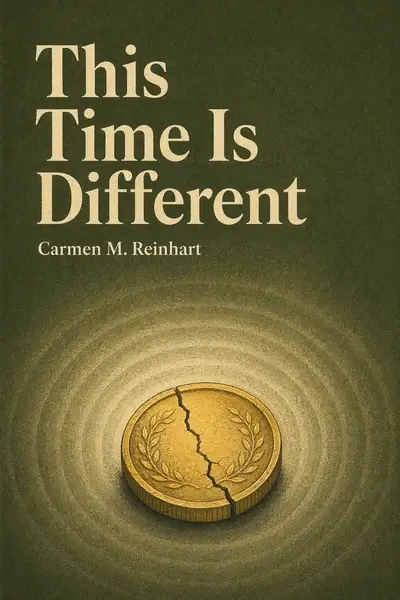
Get the complete 30-minute summary of This Time Is Different
Get the complete summary in the appFinancial crises are recurring events, not anomalies. They have happened throughout history and will happen again.
The belief that "this time is different" is the primary reason crises keep happening. It leads to excessive risk-taking
Debt is the single most important predictor of crisis. When debt levels rise too high, vulnerability increases sharply.
Banking crises are the most common type of financial crisis and affect rich and poor countries alike.
Domestic debt is often overlooked but can be just as dangerous as external debt.
Recoveries from financial crises are slow and painful. Do not expect a quick return to normal.
"This Time Is Different" is a strong fit if you want practical ideas around economics, history, finance, especially themes like financial crises are recurring events, not anomalies. they have happened throughout history and will happen again; the belief that "this time is different" is the primary reason crises keep happening. it leads to excessive risk-taking. The MinuteRead summary distills these concepts into a focused read, whether you're deciding whether to buy the book or applying its lessons at work.
Carmen M. Reinhart is a renowned economist specializing in international finance and macroeconomics. She holds the position of Minos A. Zombanakis Professor of the International Financial System at Harvard Kennedy School. Reinhart is best known for her work on financial crises, particularly her collaboration with Kenneth Rogoff on "This Time Is Different." Her research has significantly influenced economic policy discussions and academic debates. Despite facing criticism for data errors in some …
View all summaries by Carmen M. ReinhartContinue Reading
Access the complete 30-minute summary and thousands more nonfiction books in the MinuteRead app.

Continue reading the complete summary in the MinuteRead app.