MinuteRead
21 min
Book summary
Premium summary · Opens in the app · 30 min read
Most people walk through the woods and see nothing but trees, dirt, and the occasional bird. They move through the natural world as if it were a backdrop, a green curtain behind the stage of their thoughts. A tracker walks through the same woods and sees a library of stories written in the soil, pressed into leaves, and scattered across the forest floor.
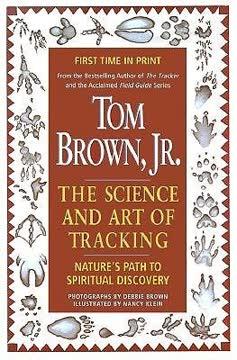
**Author:** Tom Brown Jr. **Estimated Reading Time:** 45 minutes
**What You'll Learn:** - How to read the landscape as a living record of events - The pressure release system for interpreting tracks at extraordinary depth - How soil, weather, and time affect track interpretation - Advanced techniques including night tracking and blind tracking - How to develop the tracker's mindset of constant questioning
**Who This Book Is For:** This book is for anyone who has ever looked at a footprint in mud or snow and wondered what story it might tell. It is for naturalists, hunters, wildlife enthusiasts, search and rescue professionals, and anyone seeking a deeper connection to the natural world. It is also for those who sense that true awareness begins with paying attention to what the earth reveals.
Most people walk through the woods and see nothing but trees, dirt, and the occasional bird. They move through the natural world as if it were a backdrop, a green curtain behind the stage of their thoughts. A tracker walks through the same woods and sees a library of stories written in the soil, pressed into leaves, and scattered across the forest floor. Tom Brown Jr. learned to read those stories from a man he called Grandfather, a Lipan Apache elder named Stalking Wolf. Grandfather did not teach tracking as a hobby or a survival skill. He taught it as a way of seeing, a discipline that transforms how a person experiences the world. Under Grandfather's guidance, Brown spent years learning to observe the ground with such precision that a single footprint could reveal an animal's speed, health, emotional state, and even its intentions. The problem Brown addresses in this book is not simply that people lack tracking skills. The deeper problem is that most people have lost the ability to truly observe. They glance at the world instead of seeing it. They notice the obvious and miss the subtle. They walk past a thousand stories every day without ever knowing those stories exist. Tracking, as Brown presents it, is a cure for this blindness. It forces a person to slow down, to look closely, to ask questions, and to care about the answers. When you learn to read a track, you are not just learning a skill. You are learning a way of being present in the world. The challenge is that tracking is genuinely difficult. It requires patience that most people do not have. It demands attention to details that seem insignificant at first. It asks you to understand soil, weather, animal behavior, and your own senses. Many people who attempt to learn tracking give up because they expect quick results. They want to see a track…
Continue reading in the MinuteRead app
Get the complete 30-minute summary of Tom Brown's Science and Art of Tracking
Get the complete summary in the appEvery track contains a complete record of an animal's movement, condition, and emotional state.
Pressure releases are the fundamental units of tracking information.
Wall pressure releases reveal force and direction.
Forward motion pressure releases reveal movement dynamics.
Micro-level pressure releases reveal precise movements, internal states, and emotions.
Soil personality determines how tracks appear and age.
"Tom Brown's Science and Art of Tracking" is a strong fit if you want practical ideas around nature, outdoors, survival, especially themes like every track contains a complete record of an animal's movement, condition, and emotional state; pressure releases are the fundamental units of tracking information. The MinuteRead summary distills these concepts into a focused read, whether you're deciding whether to buy the book or applying its lessons at work.
Tom Brown Jr. is an American naturalist, wilderness tracker, and author known for his extensive knowledge of outdoor skills and tracking techniques. He attributes his expertise to the teachings of Stalking Wolf, a Lipan Apache elder he refers to as "Grandfather." Brown's childhood experiences with Stalking Wolf shaped both his tracking abilities and spiritual philosophy. He has written numerous books, including a series of Field Guides, sharing his knowledge of nature and wilderness survival. Br…
View all summaries by Tom Brown Jr.Continue Reading
Access the complete 30-minute summary and thousands more nonfiction books in the MinuteRead app.

Continue reading the complete summary in the MinuteRead app.