MinuteRead
26 min
Book summary
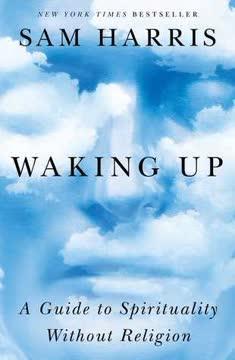
by Sam Harris
Premium summary · Opens in the app · 30 min read
Most people assume that spirituality requires faith. You must believe in something invisible, accept certain propositions about the universe on insufficient evidence, and join a community that shares your convictions. This assumption has driven millions of thoughtful people away from spiritual life entirely. They look at organized religion and see superstition, tribalism, and wishful thinking. They conclude that spirituality is simply not for them.
**Author:** Sam Harris **Estimated Reading Time:** 45 minutes
**What You'll Learn:** Why the self is an illusion, how meditation reveals the nature of consciousness, what psychedelics can and cannot teach us, why near-death experiences do not prove an afterlife, and how to cultivate genuine spiritual insight without abandoning reason.
**Who This Book Is For:** Anyone who suspects there is more to life than material success but cannot stomach religious dogma. Anyone who has tried meditation and found it frustrating. Anyone curious about the nature of consciousness and what it means to live a genuinely examined life.
Most people assume that spirituality requires faith. You must believe in something invisible, accept certain propositions about the universe on insufficient evidence, and join a community that shares your convictions. This assumption has driven millions of thoughtful people away from spiritual life entirely. They look at organized religion and see superstition, tribalism, and wishful thinking. They conclude that spirituality is simply not for them. Sam Harris believes this is a tragic mistake. The problem is not spirituality itself. The problem is that we have conflated spirituality with religion for so long that we have forgotten they are separable. Spirituality, properly understood, is not about believing in things. It is about investigating the nature of your own mind. It is about waking up from the illusion of being a separate self, cut off from the world, trapped inside your head, thinking thoughts you did not choose to think. Harris came to this realization through an unusual path. He is one of the most prominent atheist intellectuals of our time, a fierce critic of religious dogma, and a neuroscientist who has spent years studying the brain. Yet he has also spent decades practicing meditation, studying with teachers in the Eastern traditions, and exploring the nature of consciousness through direct experience. He sees no contradiction between rigorous scientific skepticism and genuine spiritual insight. In fact, he argues that the two are natural allies. The central claim of this book is simple but radical: there is a form of well-being that has nothing to do with changing the contents of your life and everything to do with changing your relationship to your own mind. You do not need to believe anything on insufficient evidence to access it. You do not need to join a church, accept a creed, or pretend to know things you do not know. You simply need to look closely at your own experience and see what is actually there. This is harder than it sounds. Most of us spend our entire lives lost in thought, identified with a stream of mental chatter that we mistake for ourselves. We are so busy thinking about our…
Continue reading in the MinuteRead app
Get the complete 30-minute summary of Waking Up
Get the complete summary in the appConsciousness is the foundation of all experience and the one thing that cannot be an illusion.
The sense of being a separate self is an illusion that can be seen through directly.
Meditation is the practice of paying attention to present-moment experience and seeing the nature of mind.
You are not your thoughts. They arise and pass on their own.
Psychedelics can offer glimpses of insight but are not a substitute for sustained practice.
Near-death experiences do not prove an afterlife. Natural explanations exist.
"Waking Up" is a strong fit if you want practical ideas around philosophy, spirituality, religion—especially themes like consciousness is the foundation of all experience and the one thing that cannot be an illusion; the sense of being a separate self is an illusion that can be seen through directly. The MinuteRead summary distills these concepts into a focused read, whether you're deciding whether to buy the book or applying its lessons at work.
Sam Harris is an American author, philosopher, and neuroscientist born in 1967. He gained prominence with his 2004 book "The End of Faith," which critiqued organized religion. Harris has written several other books on atheism, morality, and spirituality. He holds a BA in philosophy from Stanford University and a PhD in neuroscience from UCLA. Harris's work often combines scientific reasoning with philosophical inquiry, particularly in the areas of ethics, free will, and consciousness. Despite hi…
View all summaries by Sam HarrisContinue Reading
Access the complete 30-minute summary and thousands more nonfiction books in the MinuteRead app.

Continue reading the complete summary in the MinuteRead app.