MinuteRead
30 min
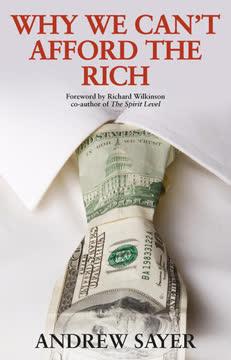
Book summary
by Andrew Sayer
Premium summary · Opens in the app · 30 min read
There is a story we tell ourselves about wealth. It goes something like this: people who work hard, develop valuable skills, and make smart decisions will be rewarded. The wealthy are wealthy because they earned it. They created value. They took risks. They deserve what they have.
**Author:** Andrew Sayer **Estimated Reading Time:** 42 minutes
**What You'll Learn:**
- How the wealthy extract value from the economy without creating it - Why working harder won't close the wealth gap - How financialization has transformed capitalism into a wealth-extraction machine - Why philanthropy often reinforces inequality rather than reducing it - What climate justice requires from wealthy nations and individuals
**Who This Book Is For:**
Anyone who has wondered why the gap between rich and poor keeps growing despite technological progress and economic growth. Anyone who suspects that the wealthy play by different rules but wants to understand exactly how those rules work. Anyone seeking a clear-eyed analysis of modern capitalism that goes beyond slogans and offers genuine insight into how the system operates.
There is a story we tell ourselves about wealth. It goes something like this: people who work hard, develop valuable skills, and make smart decisions will be rewarded. The wealthy are wealthy because they earned it. They created value. They took risks. They deserve what they have. Andrew Sayer wants you to question every part of that story. The problem is not simply that some people have more money than others. Inequality of outcome is inevitable in any complex society. The problem is that the mechanisms by which wealth accumulates have become increasingly disconnected from any meaningful contribution to society. The rich are not getting richer because they are producing more. They are getting richer because the rules of the economic game allow those who already have wealth to extract it from everyone else. Consider what happens when you buy a house. You borrow money from a bank. Over thirty years, you pay back the principal plus interest. That interest can easily exceed the original loan amount. Where does that interest go? It goes to the bank's shareholders, to bondholders, to people who already have capital. They did not build your house. They did not improve your neighborhood. They simply had money to lend, and the system entitles them to a permanent stream of income from your labor. Now multiply that across every mortgage, every car loan, every credit card balance, every business loan, every government bond. The scale of wealth transfer from those who work to those who own becomes staggering. Sayer's central insight is that we have confused two very different ways of making money. The first is earning income through work: producing goods, providing services, creating something of value. The second is extracting income through ownership: collecting rent, interest, dividends, and capital gains simply because you own assets. The first requires effort and contribution. The second requires only that you already have wealth. This distinction is not new. Classical economists like…
Continue reading in the MinuteRead app
Get the complete 30-minute summary of Why We Can't Afford the Rich
Get the complete summary in the app**Earned income comes from contribution; unearned income comes from ownership.** The wealthy accumulate wealth primarily
**The division of labor reflects power, not merit.** Contributive injustice denies meaningful work to large segments of
**Financialization has turned capitalism into an extraction machine.** The financial sector has grown from a servant of
**Tax havens allow the wealthy to play by different rules.** Secrecy jurisdictions hide trillions of dollars from taxati
**Philanthropy legitimizes wealth rather than solving inequality.** It shapes social priorities without democratic accou
**Capitalism requires endless growth, which is destroying the planet.** The growth imperative is built into the system t
"Why We Can't Afford the Rich" is a strong fit if you want practical ideas around economics, politics, society, especially themes like **earned income comes from contribution; unearned income comes from ownership.** the wealthy accumulate wealth primarily; **the division of labor reflects power, not merit.** contributive injustice denies meaningful work to large segments of. The MinuteRead summary distills these concepts into a focused read, whether you're deciding whether to buy the book or applying its lessons at work.
Andrew Sayer is a British social scientist and professor of social theory and political economy at Lancaster University. He is known for his work on critical social science, moral economy, and social justice. Sayer has written extensively on topics such as class, inequality, and the nature of capitalism. His academic background spans economics, sociology, and philosophy, allowing him to bring a multidisciplinary approach to his analysis of socio-economic issues. Sayer's writing style is noted fo…
View all summaries by Andrew SayerContinue Reading
Access the complete 30-minute summary and thousands more nonfiction books in the MinuteRead app.

Continue reading the complete summary in the MinuteRead app.