MinuteRead
30 min
Book summary
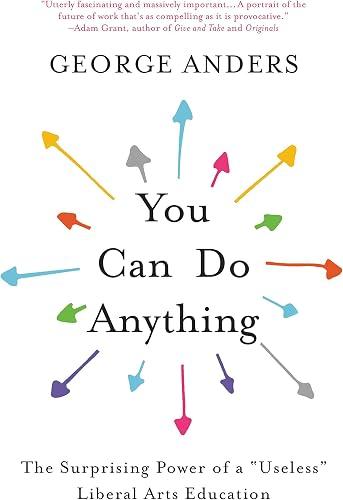
by George Anders
Premium summary · Opens in the app · 30 min read
For decades, a particular story has dominated conversations about higher education. It goes something like this: the only safe path to a good career runs through a narrow set of technical fields. Study engineering, computer science, finance, or accounting, and you will be rewarded with stable employment and rising wages. Study English, history, philosophy, or anthropology, and you have made an expensive mistake. You will struggle to find work. You will earn less. You will regret your choice.
**Author:** George Anders **Estimated Reading Time:** 42 minutes
**What You'll Learn:**
- Why the supposed crisis around liberal arts degrees is largely a myth - How critical thinking, communication, and adaptability have become premium skills in the modern economy - Where the hidden job market for versatile graduates actually exists - How real people with humanities and social science degrees built fulfilling, well-paid careers - Practical steps to translate a broad education into professional success
**Who This Book Is For:**
Anyone who has ever been told that studying philosophy, history, English, anthropology, or sociology was a mistake. Parents worried about their children's choice of major. Students wondering if they need to switch to something more "practical." Mid-career professionals looking to leverage their strengths in new directions. And anyone who suspects that the future of work belongs not to narrow specialists alone, but to people who can think broadly, communicate clearly, and adapt quickly.
For decades, a particular story has dominated conversations about higher education. It goes something like this: the only safe path to a good career runs through a narrow set of technical fields. Study engineering, computer science, finance, or accounting, and you will be rewarded with stable employment and rising wages. Study English, history, philosophy, or anthropology, and you have made an expensive mistake. You will struggle to find work. You will earn less. You will regret your choice. This story has been repeated so often that it has hardened into conventional wisdom. Politicians mock certain majors. Parents plead with their children to choose something practical. Students sit in lecture halls studying subjects they love while quietly wondering if they are sabotaging their futures. The anxiety is real, and it is widespread. George Anders wrote *You Can Do Anything* to challenge this narrative. Not with wishful thinking or vague reassurances, but with evidence, stories, and a clear-eyed look at how the modern economy actually works. His central finding is surprising to many: the skills cultivated by a liberal arts education are not obsolete. In many ways, they are more valuable than ever. The reason is simple. The economy has changed dramatically over the past few decades. Routine work, the kind that can be reduced to a set of repeatable steps, has been steadily automated or outsourced. What remains, and what is growing, is work that requires judgment, empathy, communication, and the ability to navigate ambiguity. These are precisely the capacities that a broad education in the humanities and social sciences develops. Anders spent years tracking down liberal arts graduates who had built successful careers in fields that seemed, at first glance, to have nothing to do with their college majors. He found anthropology majors working in user experience…
Continue reading in the MinuteRead app
Get the complete 30-minute summary of You Can Do Anything
Get the complete summary in the appThe skills that matter most in the modern economy are human skills: critical thinking, communication, empathy, and adapt
Liberal arts education develops exactly these skills, making graduates valuable in a wide range of industries.
The hidden job market, filled through networks and relationships, is where many of the best opportunities for liberal ar
Employers value qualities like curiosity, adaptability, and communication more than specific technical skills.
Storytelling is a concrete professional skill with measurable impact, not a soft skill.
The technology industry has created many roles that blend technical and humanistic skills, opening doors for liberal art
"You Can Do Anything" is a strong fit if you want practical ideas around education, self help, business, especially themes like the skills that matter most in the modern economy are human skills: critical thinking, communication, empathy, and adapt; liberal arts education develops exactly these skills, making graduates valuable in a wide range of industries. The MinuteRead summary distills these concepts into a focused read, whether you're deciding whether to buy the book or applying its lessons at work.
Motivated to help readers with "You don't have to mask your true identity to get paid for your strengths." Versatile skill set, George Anders wrote “You Can Do Anything” to package those ideas for a fast, focused read. In “You Can Do Anything”, George Anders focuses on "You don't have to mask your true identity to get paid for your strengths." Versatile skill set. Through “You Can Do Anything”, George Anders distills the core ideas on education into lessons readers can absorb in a single short s…
Continue Reading
Access the complete 30-minute summary and thousands more nonfiction books in the MinuteRead app.

Continue reading the complete summary in the MinuteRead app.