MinuteRead
30 min
Book summary
Premium summary · Opens in the app · 30 min read
You have probably experienced the frustration of watching someone use something you designed and do the exact opposite of what you intended. Maybe you built a website with a clear navigation menu, and users ignored it completely. Maybe you wrote instructions that seemed obvious, and people still got confused. Maybe you created a product feature that tested well in the lab, and real users abandoned it within days.
**Author:** Susan M. Weinschenk **Estimated Reading Time:** 45 minutes
**What You'll Learn:**
- Why people see things differently than you expect them to - How attention, memory, and decision-making actually work in the brain - Why social influence shapes nearly every choice people make - What truly motivates people to take action - How to design experiences that align with natural human behavior
**Who This Book Is For:**
Designers, product managers, marketers, writers, and anyone who creates experiences for other people. If your work depends on understanding why people do what they do, this book gives you the psychological foundation to make better decisions.
You have probably experienced the frustration of watching someone use something you designed and do the exact opposite of what you intended. Maybe you built a website with a clear navigation menu, and users ignored it completely. Maybe you wrote instructions that seemed obvious, and people still got confused. Maybe you created a product feature that tested well in the lab, and real users abandoned it within days. The problem is not that people are irrational or difficult. The problem is that most of us design based on assumptions about how people think, see, and decide. Those assumptions are often wrong. Susan Weinschenk has spent over three decades studying the intersection of psychology and design. Her work draws on neuroscience, behavioral economics, and cognitive psychology to answer a fundamental question: What do we actually know about how people behave, and how can we use that knowledge to create better experiences? The answer is both humbling and liberating. Humbling because it reveals how little conscious control people have over their own perceptions and decisions. Liberating because once you understand the underlying mechanisms, you can stop fighting against human nature and start designing with it. Consider a simple example. You place a button on a webpage and label it clearly. You assume people will see it because it is right there in front of them. But vision does not work like a camera. The brain does not passively record everything in the visual field. It actively selects, filters, and interprets. People might not see your button because their attention is drawn elsewhere. They might see it but not process it because their working memory is overloaded. They might process it but not click because an unconscious emotional response steers them away. Each of these failures has a specific psychological explanation. And each has a corresponding design solution. This book is organized around one hundred insights from psychology and neuroscience, each with practical implications for design. But the deeper value comes from understanding the patterns that connect these insights. Once you see how attention, memory, emotion, and social influence…
Continue reading in the MinuteRead app
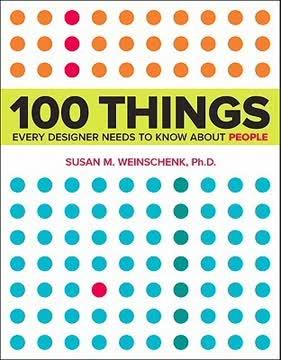
Get the complete 30-minute summary of 100 Things Every Designer Needs to Know About People
Get the complete summary in the appPeople see what their brains expect to see, not what is objectively in front of them.
Working memory is limited to about four items. Chunk information to help people process it.
Attention is selective. People miss things that are outside their focus, even highly visible things.
Multitasking is rapid task-switching, not parallel processing. It reduces efficiency and increases errors.
Most decisions are unconscious and emotional. Framing and social proof shape choices more than logic.
Too many options overwhelm people. Curate choices and provide recommendations.
"100 Things Every Designer Needs to Know About People" is a strong fit if you want practical ideas around design, psychology, business, especially themes like people see what their brains expect to see, not what is objectively in front of them; working memory is limited to about four items. chunk information to help people process it. The MinuteRead summary distills these concepts into a focused read, whether you're deciding whether to buy the book or applying its lessons at work.
Susan Weinschenk, Ph.D. is a behavioral psychologist with over 30 years of experience. She specializes in applying neuroscience to understand human motivation and behavior. Weinschenk has authored several books on psychology in design and presentations. She founded the Weinschenk Institute and works with various organizations, from Fortune 1000 companies to non-profits and educational institutions. Her expertise lies in predicting and explaining what motivates people and how to encourage action.…
View all summaries by Susan M. WeinschenkContinue Reading
Access the complete 30-minute summary and thousands more nonfiction books in the MinuteRead app.

Continue reading the complete summary in the MinuteRead app.