MinuteRead
30 min
Book summary
by Vijay Kumar
Premium summary · Opens in the app · 30 min read
Every organization claims to want innovation. Few can reliably produce it. The gap between aspiration and execution has become one of the defining challenges of modern business. Companies pour resources into brainstorming sessions, hire creative consultants, and build innovation labs, yet the results often disappoint. Why?
**Author:** Vijay Kumar
**Estimated Reading Time:** 42 minutes
**What You'll Learn:** How to transform innovation from an unpredictable act of genius into a disciplined, repeatable organizational capability. You will learn the seven modes of the design innovation process, how to build innovations around human experiences rather than products, and how to think in systems rather than isolated offerings.
**Who This Book Is For:** Innovation leaders, product managers, designers, entrepreneurs, and anyone responsible for creating new value in organizations. If you have ever felt that innovation depends too heavily on luck or individual brilliance, this book provides the structured alternative.
Every organization claims to want innovation. Few can reliably produce it. The gap between aspiration and execution has become one of the defining challenges of modern business. Companies pour resources into brainstorming sessions, hire creative consultants, and build innovation labs, yet the results often disappoint. Why? The answer lies in a fundamental misunderstanding about what innovation actually is. Most people treat innovation as an event: a flash of insight, a lucky accident, a stroke of genius from a visionary founder. They wait for inspiration to strike. They celebrate the rare breakthrough while quietly accepting that most attempts will fail. This belief is not just wrong. It is costly. Vijay Kumar spent decades studying how successful innovations actually happen. As a professor at the Illinois Institute of Technology's Institute of Design, he worked with organizations across industries to understand what separates consistent innovators from those who merely hope for the best. His conclusion was simple and profound: innovation is a discipline, not a mystery. It can be planned, practiced, and improved like any other organizational function. The problem is not that organizations lack creative people. The problem is that they lack a reliable process for channeling creativity toward meaningful outcomes. Without structure, creative energy dissipates. Ideas remain vague. Teams pursue interesting concepts without validating them against real user needs. Organizations invest in solutions that do not solve the right problems. The result is frustration, wasted resources, and a growing cynicism about innovation itself. Kumar's approach addresses this directly. He developed a comprehensive framework that organizes the innovation process into seven distinct modes: Sense Intent, Know Context, Know People, Frame Insights, Explore Concepts, Frame Solutions, and Realize Offerings. Each mode contains specific methods, tools, and techniques that teams can apply systematically. Together, they form a complete pathway from initial intent to realized offering. What makes this framework different from other innovation methodologies is its balance. The process moves deliberately between abstract thinking and concrete reality, between understanding and making. Teams do not simply generate ideas and hope for the best. They ground their work in deep research, frame their insights carefully, explore possibilities…
Continue reading in the MinuteRead app
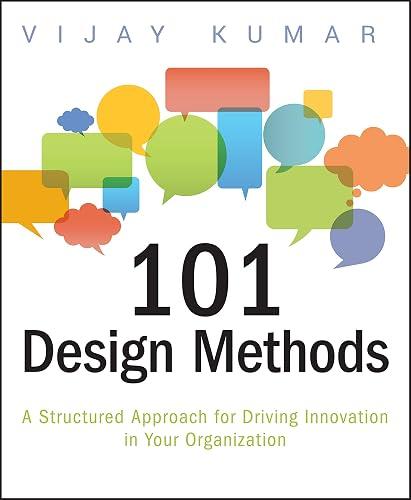
Get the complete 30-minute summary of 101 Design Methods
Get the complete summary in the appInnovation is a disciplined process that can be learned, practiced, and mastered, not a mysterious gift bestowed on a lu
Build innovations around human experiences, not just products. Consider the entire journey from discovery to disposal.
Think in systems. The most valuable innovations are integrated systems of offerings that reinforce each other.
Use the seven modes: Sense Intent, Know Context, Know People, Frame Insights, Explore Concepts, Frame Solutions, Realize
Observe what people do, not just what they say. Behavior reveals needs that words cannot express.
Separate idea generation from idea evaluation. Suspend judgment when generating, be disciplined when evaluating.
"101 Design Methods" is a strong fit if you want practical ideas around design, business, reference, especially themes like innovation is a disciplined process that can be learned, practiced, and mastered, not a mysterious gift bestowed on a lu; build innovations around human experiences, not just products. consider the entire journey from discovery to disposal. The MinuteRead summary distills these concepts into a focused read, whether you're deciding whether to buy the book or applying its lessons at work.
Motivated to help readers with 1) Innovation is a disciplined process, Vijay Kumar wrote “101 Design Methods” to package those ideas for a fast, focused read. In “101 Design Methods”, Vijay Kumar focuses on 1) Innovation is a disciplined process. Through “101 Design Methods”, Vijay Kumar distills the core ideas on design into lessons readers can absorb in a single short sitting. Readers turn to this work when they want Vijay Kumar's perspective on the subject without working through the entire o…
Continue Reading
Access the complete 30-minute summary and thousands more nonfiction books in the MinuteRead app.

Continue reading the complete summary in the MinuteRead app.