MinuteRead
30 min
Book summary
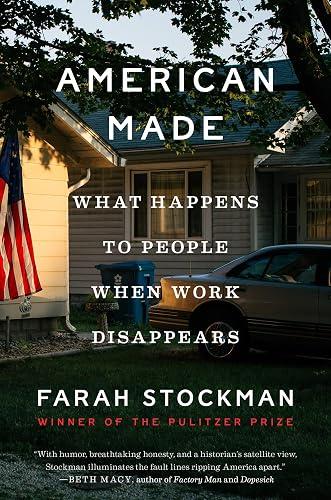
by Farah Stockman
Premium summary · Opens in the app · 30 min read
The Rexnord bearing plant in Indianapolis did not look like a place where history was being made. It was a sprawling industrial facility on the city's west side, filled with the roar of machinery, the smell of cutting oil, and the steady rhythm of workers who had spent decades turning raw steel into precision bearings. For generations, men and women walked through those doors and earned a living that could support a family, buy a home, and send children to college. Then, in 2016, the announcemen
**Author:** Farah Stockman
**Estimated Reading Time:** 45 minutes
**What You'll Learn:**
- Why the loss of factory jobs devastated American communities far beyond economics - How globalization created winners and losers along education and class lines - The real stories of workers who lived through plant closures and economic upheaval - How race shaped the experience of blue-collar America in surprising ways - What the future of work might look like for Americans without college degrees
**Who This Book Is For:**
This book is for anyone who wants to understand the human story behind America's political and economic divisions. It is for readers who sense that something profound has been lost in the American economy and want to understand what that loss means for real people. It is for those who have wondered why factory workers voted the way they did, why certain communities feel abandoned, and what dignity means in a changing world of work.
The Rexnord bearing plant in Indianapolis did not look like a place where history was being made. It was a sprawling industrial facility on the city's west side, filled with the roar of machinery, the smell of cutting oil, and the steady rhythm of workers who had spent decades turning raw steel into precision bearings. For generations, men and women walked through those doors and earned a living that could support a family, buy a home, and send children to college. Then, in 2016, the announcement came. The plant would close. The jobs would move to Mexico. Farah Stockman was working as an editorial writer for the New York Times when she first heard about the Rexnord closure. She had spent years writing about trade policy, globalization, and the economic forces reshaping America. But she realized she had never truly understood what those forces meant for the people who lived through them. She decided to find out. What followed was years of immersion in the lives of three Rexnord workers: Shannon Mulcahy, a white single mother who had fought her way into a male-dominated profession and become one of the best steelworkers on the floor; Wally Hall, a Black man who had found stability and respect in factory work after a difficult childhood; and John Feltner, a white union leader grappling with the changing nature of labor relations in an era of corporate indifference. Through their stories, Stockman discovered something that economic statistics could never capture. Factory jobs were not just paychecks. They were identities. They were communities. They were sources of pride and purpose that gave structure and meaning to entire lives. When those jobs disappeared, something far more valuable than income was lost. The story of American manufacturing is often told through…
Continue reading in the MinuteRead app
Get the complete 30-minute summary of American Made
Get the complete summary in the appWork provides identity, purpose, and community, not just income. When jobs disappear, people lose far more than money.
The decline of American manufacturing resulted from specific policy choices, including trade agreements and the failure
Globalization created winners and losers. The winners were corporations and college-educated professionals. The losers w
The human costs of deindustrialization include depression, substance abuse, family breakdown, and a crisis of meaning th
Race shaped the experience of deindustrialization in profound ways. White workers and Black workers experienced the same
Trump's rise was built on the grievances of workers who felt left behind, but his appeal was not universal. Many Black w
"American Made" is a strong fit if you want practical ideas around politics, sociology, economics, especially themes like work provides identity, purpose, and community, not just income. when jobs disappear, people lose far more than money; the decline of american manufacturing resulted from specific policy choices, including trade agreements and the failure. The MinuteRead summary distills these concepts into a focused read, whether you're deciding whether to buy the book or applying its lessons at work.
Motivated to turn hard-won expertise into something readers can use every day, Farah Stockman wrote “American Made” to distill the ideas behind the work into clear, actionable lessons. Through “American Made”, Farah Stockman distills the core ideas on politics into lessons readers can absorb in a single short sitting. Readers turn to this work when they want Farah Stockman's perspective on the subject without working through the entire original volume. The book is structured so each chapter high…
Continue Reading
Access the complete 30-minute summary and thousands more nonfiction books in the MinuteRead app.

Continue reading the complete summary in the MinuteRead app.