MinuteRead
30 min
Book summary
by Brad Frost
Premium summary · Opens in the app · 30 min read
As soon as we come to terms with this fact, the notion of the page quickly erodes as a useful means to scope and create web experiences.
**Author:** Brad Frost **Estimated Reading Time:** 42 minutes
**What You'll Learn**
Why designing web pages one at a time no longer works. How to think about interfaces as systems of interchangeable parts. A practical methodology for building design systems that scale. How to get teams aligned around shared components. What it takes to maintain a design system over time.
**Who This Book Is For**
Web designers and developers who feel overwhelmed by the complexity of modern interfaces. Product managers and stakeholders who want to understand why design systems matter. Anyone responsible for maintaining consistency across digital products. Teams that have tried and failed to keep their design and code in sync.
The web has a page problem. For two decades, we designed websites the way we designed brochures, magazines, and posters. We opened Photoshop, created a full-page mockup, and handed it to developers to translate into code. The page was our unit of work. The page was how we scoped projects. The page was how we thought about design. But the web stopped being a collection of pages a long time ago. Today's digital experiences are fluid, interactive, and deeply interconnected. A user might start on a phone, continue on a laptop, and finish on a tablet. They might interact with your product through a native app, a web app, an email, or a smartwatch. The content they see might be personalized, localized, or generated in real time. The notion of a fixed page, carefully designed pixel by pixel, simply cannot hold up under these conditions. Brad Frost wrote Atomic Design to address this fundamental mismatch between how we think about web design and how the web actually works. The book argues that we need to stop thinking in pages and start thinking in systems. We need to break our interfaces down into their smallest meaningful parts, understand how those parts combine, and build from the bottom up rather than the top down. The stakes are higher than they might first appear. When teams design page by page, they inevitably create inconsistencies. A button looks one way on the homepage and slightly different on the product page. A form behaves one way in the checkout flow and another way in the settings panel. Over time, these small inconsistencies compound. Users notice, even if they can't articulate what's wrong. The product feels sloppy. Trust erodes. Development slows down because every new page requires reinventing components that already exist somewhere else. The alternative is a design system: a collection of reusable components, guided by clear standards, that can be assembled to build any number of interfaces. Design systems are not a new idea. Print designers have used them for decades. But the…
Continue reading in the MinuteRead app
Get the complete 30-minute summary of Atomic Design
Get the complete summary in the appThe page is dead as a unit of design. Think in systems, not pages.
Modularity is the foundation. Break interfaces into small, reusable parts.
Atomic design has five stages: atoms, molecules, organisms, templates, pages.
Pattern libraries are the single source of truth for your components.
Interface inventories reveal inconsistency and build buy-in.
Design systems are human challenges. Collaboration is essential.
"Atomic Design" is a strong fit if you want practical ideas around design, technology, programming, especially themes like the page is dead as a unit of design. think in systems, not pages; modularity is the foundation. break interfaces into small, reusable parts. The MinuteRead summary distills these concepts into a focused read, whether you're deciding whether to buy the book or applying its lessons at work.
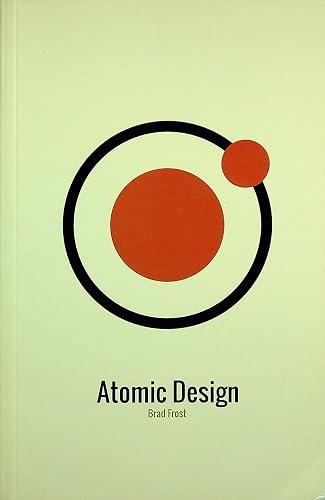
Motivated to help readers with as soon as we come to terms with this fact, Brad Frost wrote “Atomic Design” to package those ideas for a fast, focused read. In “Atomic Design”, Brad Frost focuses on as soon as we come to terms with this fact. Through “Atomic Design”, Brad Frost distills the core ideas on design into lessons readers can absorb in a single short sitting. Readers turn to this work when they want Brad Frost's perspective on the subject without working through the entire original vol…
Continue Reading
Access the complete 30-minute summary and thousands more nonfiction books in the MinuteRead app.

Continue reading the complete summary in the MinuteRead app.