MinuteRead
30 min
Book summary
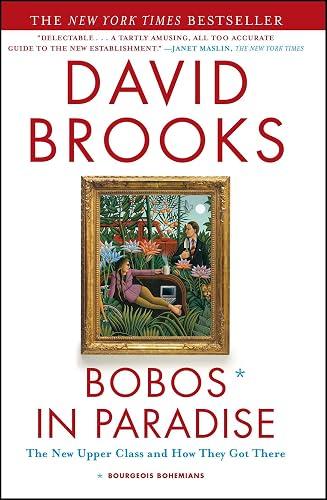
by David Brooks
Premium summary · Opens in the app · 30 min read
For most of American history, you could identify the ruling class from across a room. They wore certain clothes, attended certain schools, belonged to certain clubs, and carried themselves with an air of effortless entitlement. They were the WASPs, the Protestant establishment, the people whose names appeared in the Social Register and whose family fortunes stretched back generations. They did not need to prove anything because their status was inherited, not earned.
### By David Brooks
**Estimated Reading Time:** 2 hours 15 minutes
**What You'll Learn:**
* How America's elite transformed from an aristocracy of inherited wealth into a meritocracy of educated achievers * Why the new upper class blends 1960s counterculture with 1980s ambition * How consumption, work, spirituality, and leisure became new status battlegrounds * What the educated class really signals through its choices * How this new establishment shapes American culture, taste, and morality
**Who This Book Is For:**
Anyone who has wondered why their neighbor spent more on a kitchen stove than a car, why their colleague describes a corporate job as a spiritual journey, why their friend pays extra for furniture that looks old, or why the people running America's institutions seem simultaneously rebellious and conventional. This book is for those who sense that the old rules of status and success have been replaced by something stranger and more complicated.
For most of American history, you could identify the ruling class from across a room. They wore certain clothes, attended certain schools, belonged to certain clubs, and carried themselves with an air of effortless entitlement. They were the WASPs, the Protestant establishment, the people whose names appeared in the Social Register and whose family fortunes stretched back generations. They did not need to prove anything because their status was inherited, not earned. That world is gone. Walk into any upscale neighborhood in America today and you will see something different. The houses are expensive but not ostentatious. The kitchens are professional-grade, even though the owners rarely cook elaborate meals. The furniture looks like it was found in a farmhouse, though it cost more than most people's cars. The bookshelves are filled with serious literature and travel guides to places most tourists never visit. The cars are practical, the clothing is casual but carefully chosen, and the overall impression is one of studied simplicity. These are the Bobos, the bourgeois bohemians, and they represent something genuinely new in American life. The term itself captures the paradox. Bourgeois traditionally meant conventional, practical, materialistic, and respectable. Bohemian meant artistic, rebellious, anti-materialistic, and unconventional. For most of the past two centuries, these were opposing camps. The bourgeois merchant and the bohemian artist despised each other. One valued order and accumulation, the other valued freedom and expression. They lived in different neighborhoods, read different books, held different values, and wanted different things from life. Then something strange happened. The two camps merged. The educated class that rose to prominence in the final decades of the twentieth century managed to combine the ambition and worldly success of the bourgeoisie with the creative, anti-establishment sensibilities of the bohemians. They became wealthy while maintaining their…
Continue reading in the MinuteRead app
Get the complete 30-minute summary of Bobos in Paradise
Get the complete summary in the appThe new American elite are bourgeois bohemians, Bobos, who have fused the ambition of the bourgeoisie with the creativit
The old WASP establishment based on inherited wealth has been replaced by a meritocracy based on education, talent, and
Bobos reconcile competing values by finding ways to have both, rather than choosing one side or the other.
Financial correctness governs Bobo consumption: spending on necessities and tools is virtuous, spending on luxuries is v
Work has been transformed from a means to an end into a form of self-expression, blurring the line between professional
The modern intellectual is an entrepreneur who navigates a competitive marketplace of ideas, combining scholarly rigor w
"Bobos in Paradise" is a strong fit if you want practical ideas around sociology, culture, economics, especially themes like the new american elite are bourgeois bohemians, bobos, who have fused the ambition of the bourgeoisie with the creativit; the old wasp establishment based on inherited wealth has been replaced by a meritocracy based on education, talent, and. The MinuteRead summary distills these concepts into a focused read, whether you're deciding whether to buy the book or applying its lessons at work.
Motivated to help readers with the members of the new information age elite are bourgeois bohemians, David Brooks wrote “Bobos in Paradise” to package those ideas for a fast, focused read. In “Bobos in Paradise”, David Brooks focuses on the members of the new information age elite are bourgeois bohemians. Through “Bobos in Paradise”, David Brooks distills the core ideas on sociology into lessons readers can absorb in a single short sitting. Readers turn to this work when they want David Brooks's…
View all summaries by David BrooksContinue Reading
Access the complete 30-minute summary and thousands more nonfiction books in the MinuteRead app.

Continue reading the complete summary in the MinuteRead app.