MinuteRead
30 min
Imagine two wealthy countries. In one, people generally trust strangers. Streets feel safe. Mental illness is relatively rare. Teenagers rarely become pregnant. Most children graduate from school with decent prospects. In the other country, people lock their doors and avoid eye contact. Anxiety and depression are widespread. Violence is a constant background worry. Children from poorer families fall years behind their wealthier peers before they reach adulthood.
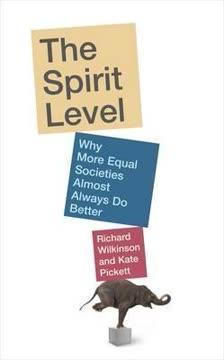
**Why More Equal Societies Almost Always Do Better**
By Richard G. Wilkinson and Kate Pickett
**Estimated Reading Time:** 45 minutes
**What You'll Learn:** How the gap between rich and poor shapes everything from your health to your happiness, why economic growth has stopped improving our lives, and what we can do to build societies that work for everyone.
**Who This Book Is For:** Anyone who has sensed that something is wrong with modern affluent societies despite their material wealth. Anyone who wants to understand why some countries feel safer, friendlier, and healthier than others. And anyone ready to question the assumption that more money means a better life.
Imagine two wealthy countries. In one, people generally trust strangers. Streets feel safe. Mental illness is relatively rare. Teenagers rarely become pregnant. Most children graduate from school with decent prospects. In the other country, people lock their doors and avoid eye contact. Anxiety and depression are widespread. Violence is a constant background worry. Children from poorer families fall years behind their wealthier peers before they reach adulthood. Now imagine that the second country is actually richer than the first. Its citizens own more cars, larger homes, and bigger televisions. Its economy produces more goods and services per person. By conventional measures, it should be the more successful society. Yet on nearly every measure of human wellbeing, it falls dramatically behind. This is not a thought experiment. This is the reality revealed by decades of research across wealthy developed nations. The difference between these two imaginary countries is not their average income. It is how that income is distributed. For most of human history, the great challenge was scarcity. Getting enough food, shelter, and basic security consumed nearly all human energy. Economic growth was the obvious solution. And for a long time, it worked. As countries got richer, their populations got healthier. Life expectancy rose. Infant mortality fell. People ate better, lived in warmer homes, and suffered fewer infectious diseases. But something changed. Among the world's richest nations, further economic growth stopped producing better health and social outcomes. The United States, the wealthiest large country on earth, has lower life expectancy than Greece, despite Americans earning roughly twice as much per person. Norway and Sweden, with average incomes similar to other European nations, consistently outperform much richer countries on measures of wellbeing. The relationship between national wealth and national health has broken down. What replaced it was a relationship between equality and health. The more equal a society, the better its population fares on almost every measure that matters: physical health, mental health, life expectancy, educational achievement, violence, trust, social mobility, and more. The more unequal a society, the worse it does on…
Continue reading in the MinuteRead app
Get the complete 30-minute summary of The Spirit Level
Get the complete summary in the appAlmost every social problem that is more common at the bottom of the social ladder is also more common in more unequal s
The effects of inequality operate primarily through psychosocial stress, not material deprivation. Status anxiety damage
Trust levels collapse as inequality rises. In the most equal countries, over 60 percent of people trust others. In the m
Mental illness is three times more common in the most unequal countries compared to the most equal.
Life expectancy is higher in more equal countries, even when average incomes are lower.
Children in more equal societies perform better in school, and the gap between rich and poor children is narrower.
"The Spirit Level" is a strong fit if you want practical ideas around politics, economics, sociology, especially themes like almost every social problem that is more common at the bottom of the social ladder is also more common in more unequal s; the effects of inequality operate primarily through psychosocial stress, not material deprivation. status anxiety damage. The MinuteRead summary distills these concepts into a focused read, whether you're deciding whether to buy the book or applying its lessons at work.
Richard Gerald Wilkinson is a British researcher specializing in social inequalities and health. As Professor Emeritus at the University of Nottingham and Honorary Professor at University College London, he has extensively studied how income inequality impacts societal well-being. Wilkinson is best known for co-authoring The Spirit Level in 2009, which argues that more equal societies have better health and social outcomes. This built on his earlier work in the 1996 book Unhealthy Societies. His…
View all summaries by Richard G. WilkinsonContinue Reading
Access the complete 30-minute summary and thousands more nonfiction books in the MinuteRead app.

Continue reading the complete summary in the MinuteRead app.