MinuteRead
30 min
Book summary
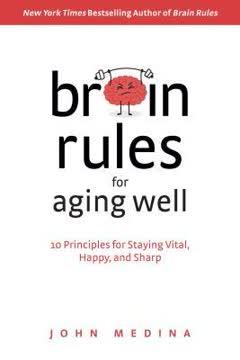
by John Medina
Premium summary · Opens in the app · 30 min read
There is a moment in every life when the future stops feeling infinite. For some, it arrives quietly, perhaps while glancing at a photograph from twenty years ago and realizing how much time has passed. For others, it announces itself loudly, in a doctor's office, with a diagnosis that changes everything. However it arrives, the question that follows is universal: What happens to my brain as I grow older, and what can I do about it?
**Author:** John Medina
**Estimated Reading Time:** 45 minutes
**What You'll Learn:**
- Why social connections are the single most powerful predictor of healthy aging - How exercise, diet, sleep, and mindfulness physically reshape your brain - The surprising truth about retirement and cognitive decline - Practical strategies to build cognitive reserve at any age - How to distinguish normal aging from the warning signs of Alzheimer's
**Who This Book Is For:**
Anyone who plans to grow older, which is to say everyone. Whether you are in your thirties looking to build lifelong habits, in your fifties navigating the transition toward retirement, or in your seventies seeking to optimize the years ahead, this book provides a science-based roadmap for keeping your brain sharp, your memory intact, and your life meaningful. It is for people who refuse to accept the myth that cognitive decline is inevitable and who want practical, evidence-backed strategies for aging well.
There is a moment in every life when the future stops feeling infinite. For some, it arrives quietly, perhaps while glancing at a photograph from twenty years ago and realizing how much time has passed. For others, it announces itself loudly, in a doctor's office, with a diagnosis that changes everything. However it arrives, the question that follows is universal: What happens to my brain as I grow older, and what can I do about it? John Medina has spent his career asking that question. A developmental molecular biologist and professor of bioengineering at the University of Washington School of Medicine, Medina has dedicated decades to understanding how the human brain works, how it learns, and how it changes across a lifespan. His previous books have explored how brains function in workplaces, schools, and early childhood. But in this volume, he turns his attention to the final frontier of brain science: aging. The problem is urgent. The global population is aging at an unprecedented rate. By 2050, the number of people over sixty will double, reaching more than two billion. With that demographic shift comes an epidemic of cognitive decline, dementia, and Alzheimer's disease. The emotional and economic costs are staggering. Families are torn apart. Healthcare systems strain under the weight. And individuals face the terrifying prospect of losing the very thing that makes them who they are: their memories, their personalities, their minds. Yet here is the remarkable truth that Medina wants every reader to understand: cognitive decline is not inevitable. Aging is not a disease. The brain, far from being a static organ that slowly wears out, is remarkably plastic, capable of growth, adaptation, and renewal at every stage of life. The science is clear. The choices you make today, whether you are thirty or…
Continue reading in the MinuteRead app
Get the complete 30-minute summary of Brain Rules for Aging Well
Get the complete summary in the appMaintain strong social connections. They are the most powerful protective factor for brain health.
Exercise regularly. Aerobic exercise grows new brain cells and reverses age-related brain shrinkage.
Eat a brain-healthy diet. Emphasize leafy greens, berries, nuts, fatty fish, and olive oil.
Prioritize sleep. Seven to nine hours per night allows the brain to clear toxic waste.
Keep learning. Novel, challenging activities build cognitive reserve.
Practice gratitude and mindfulness. They reduce stress and improve cognitive function.
"Brain Rules for Aging Well" is a strong fit if you want practical ideas around health, self help, science, especially themes like maintain strong social connections. they are the most powerful protective factor for brain health; exercise regularly. aerobic exercise grows new brain cells and reverses age-related brain shrinkage. The MinuteRead summary distills these concepts into a focused read, whether you're deciding whether to buy the book or applying its lessons at work.
Dr. John J. Medina is a developmental molecular biologist with a passion for understanding how the mind processes information. He is an affiliate Professor of Bioengineering at the University of Washington School of Medicine and resides in Seattle with his family. Medina is best known for his New York Times bestseller "Brain Rules: 12 Principles for Surviving and Thriving at Work, Home, and School," which challenges traditional designs of schools and work environments. He has also written "Brain…
View all summaries by John MedinaContinue Reading
Access the complete 30-minute summary and thousands more nonfiction books in the MinuteRead app.

Continue reading the complete summary in the MinuteRead app.