MinuteRead
30 min
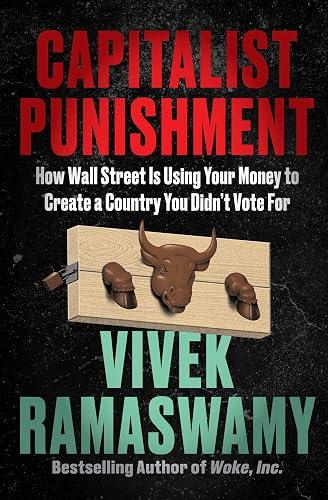
Book summary
Premium summary · Opens in the app · 30 min read
Imagine discovering that a portion of every paycheck you've ever earned has been quietly redirected to support political causes you find abhorrent. Not through taxes, not through donations you chose to make, but through the very investment accounts you opened to secure your family's future. This is not a hypothetical scenario. According to Vivek Ramaswamy, this is the reality of modern American capitalism.
**Author:** Vivek Ramaswamy **Estimated Reading Time:** 45 minutes
**What You'll Learn:**
Why the money you've worked hard to save may be funding political causes you never chose to support. How a small group of asset managers gained unprecedented control over American corporations. What ESG investing really means, why it violates fundamental legal principles, and how ordinary investors can reclaim control of their financial future.
**Who This Book Is For:**
Anyone with a retirement account, pension, or investment portfolio. Anyone curious about why corporations suddenly seem eager to weigh in on social and political issues. Anyone who senses that something has gone wrong with American capitalism but cannot quite articulate what it is.
Imagine discovering that a portion of every paycheck you've ever earned has been quietly redirected to support political causes you find abhorrent. Not through taxes, not through donations you chose to make, but through the very investment accounts you opened to secure your family's future. This is not a hypothetical scenario. According to Vivek Ramaswamy, this is the reality of modern American capitalism. The money you've entrusted to your 401(k), your pension fund, your mutual funds, and your index funds is no longer simply working to grow your wealth. It is being used as a weapon in a political battle you never signed up to fight. The people managing your money have decided that your capital should serve their vision of a better world, even if that vision comes at the expense of your returns and your values. This book exists because something fundamental has broken in the relationship between American citizens and the financial system that supposedly serves them. For generations, the basic bargain of capitalism was clear: you work hard, you save money, you invest that money, and the people managing it have one job, to make it grow. That bargain has been shattered. The problem goes by an innocuous-sounding acronym: ESG, which stands for Environmental, Social, and Governance. On the surface, it seems reasonable enough. Who could object to companies considering their environmental impact, treating workers fairly, and maintaining ethical governance? But beneath this benign exterior lies something far more consequential. ESG represents a fundamental redefinition of what a corporation is for, who it serves, and who gets to decide. Ramaswamy argues that ESG is not merely a set of investment criteria. It is a Trojan horse designed to smuggle stakeholder capitalism into the heart of the American economy. Stakeholder capitalism holds that corporations should serve not just shareholders but also employees, communities, the environment, and society at large. While this sounds noble in theory, it raises a critical question: who decides what society needs? Who determines which stakeholders matter most? Who holds these decision-makers…
Continue reading in the MinuteRead app
Get the complete 30-minute summary of Capitalist Punishment
Get the complete summary in the appESG is a Trojan horse for stakeholder capitalism, not a neutral framework for evaluating investments.
Asset managers have a fiduciary duty to act solely in the financial interest of their clients. ESG investing violates th
Greensmuggling means your money may be used to advance ESG goals even if you avoid ESG funds.
The claim that ESG investing leads to better returns is not supported by strong evidence.
The Big Three asset managers control an astonishing portion of the stock market and use their voting power to advance ES
The ESG ecosystem is riddled with conflicts of interest that undermine its credibility.
"Capitalist Punishment" is a strong fit if you want practical ideas around politics, economics, business, especially themes like esg is a trojan horse for stakeholder capitalism, not a neutral framework for evaluating investments; asset managers have a fiduciary duty to act solely in the financial interest of their clients. esg investing violates th. The MinuteRead summary distills these concepts into a focused read, whether you're deciding whether to buy the book or applying its lessons at work.
Motivated to help readers with that’s what ESG ultimately amounts to: the latest and greatest way to disguise stakeholder capitalism as, Vivek Ramaswamy wrote “Capitalist Punishment” to package those ideas for a fast, focused read. In “Capitalist Punishment”, Vivek Ramaswamy focuses on that’s what ESG ultimately amounts to: the latest and greatest way to disguise stakeholder capitalism as. Through “Capitalist Punishment”, Vivek Ramaswamy distills the core ideas on politics into lessons readers c…
View all summaries by Vivek RamaswamyContinue Reading
Access the complete 30-minute summary and thousands more nonfiction books in the MinuteRead app.

Continue reading the complete summary in the MinuteRead app.