MinuteRead
30 min
Book summary
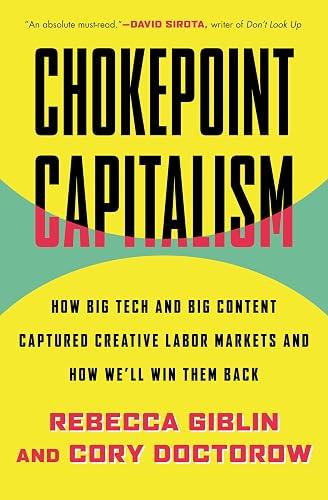
by Rebecca Giblin
Premium summary · Opens in the app · 30 min read
Imagine a farmer who raises chickens for a living. She owns the land, the barns, the equipment. She bears all the risk of disease, weather, and fluctuating feed costs. Yet she has no real choice about who buys her chickens. A handful of massive processors control the market, and they dictate the terms. They tell her what she will be paid, how the chickens will be raised, and what happens if she complains. She is technically independent, but in practice, she works for a corporation that holds all
**Author:** Rebecca Giblin and Cory Doctorow
**Estimated Reading Time:** 45 minutes
**What You'll Learn:**
- Why creative workers across every industry are earning less while corporations earn more - How digital locks, platform monopolies, and legal frameworks quietly strip power from creators - What chokepoints are, how they form, and why they are so difficult to escape - Practical strategies for reclaiming fair compensation and creative control - How collective action, transparency, and new legal tools can rebuild a fairer creative economy
**Who This Book Is For:**
This book is for anyone who creates, consumes, or cares about culture. If you are a musician, writer, filmmaker, designer, journalist, or any other kind of creative worker, this book explains the hidden forces shaping your livelihood. If you are a reader, listener, or viewer, it reveals why the content you love is becoming homogenized and why the artists behind it are struggling. And if you are simply someone concerned about concentrated corporate power, this book offers a clear diagnosis and a path toward meaningful change.
Imagine a farmer who raises chickens for a living. She owns the land, the barns, the equipment. She bears all the risk of disease, weather, and fluctuating feed costs. Yet she has no real choice about who buys her chickens. A handful of massive processors control the market, and they dictate the terms. They tell her what she will be paid, how the chickens will be raised, and what happens if she complains. She is technically independent, but in practice, she works for a corporation that holds all the power. Now imagine a musician. She writes songs, records them, builds an audience. She owns her creative work. Yet to reach listeners, she must go through a small number of streaming platforms. These platforms decide how her music is presented, how much she is paid, and whether her work is discoverable. She is technically independent, but in practice, she works for a corporation that holds all the power. This is chokepoint capitalism. The term describes a system where a few giant companies position themselves between creators and audiences, between producers and consumers, between workers and markets. They control the narrow passage through which value must flow. And because they control the chokepoint, they can extract an ever-growing share of that value for themselves. This book was born from a simple observation. Across every creative industry, the same pattern repeats. Musicians earn fractions of a penny per stream while Spotify's executives and major label shareholders grow wealthy. Authors see their advances shrink and their royalties dwindle while Amazon captures an ever-larger share of every book sale. Journalists lose jobs while Google and Facebook absorb the advertising revenue that once…
Continue reading in the MinuteRead app
Get the complete 30-minute summary of Chokepoint Capitalism
Get the complete summary in the appChokepoints are positions of control over essential pathways between creators and audiences. Whoever controls the chokep
Chokepoints are constructed through specific actions, not natural market outcomes. Because they are constructed, they ca
Digital rights management primarily benefits platforms, not creators. It locks users in and enables exploitation.
Streaming economics do not support a middle class of creators. Diversify your revenue streams and build direct audience
Lack of transparency enables exploitation. Demand transparency as a condition of doing business.
Collective action transforms individual weakness into collective strength. Join professional associations and unions.
"Chokepoint Capitalism" is a strong fit if you want practical ideas around politics, business, economics, especially themes like chokepoints are positions of control over essential pathways between creators and audiences. whoever controls the chokep; chokepoints are constructed through specific actions, not natural market outcomes. because they are constructed, they ca. The MinuteRead summary distills these concepts into a focused read, whether you're deciding whether to buy the book or applying its lessons at work.
Motivated to help readers with chokepoints in creative markets, Rebecca Giblin wrote “Chokepoint Capitalism” as a practical guide drawn from years of experience and research. In “Chokepoint Capitalism”, Rebecca Giblin focuses on "Chokepoint capitalism afflicts everyone from chicken farmers to professional wrestlers." Corporate power. Through “Chokepoint Capitalism”, Rebecca Giblin distills the core ideas on politics into lessons readers can absorb in a single short sitting. Readers turn to this …
Continue Reading
Access the complete 30-minute summary and thousands more nonfiction books in the MinuteRead app.

Continue reading the complete summary in the MinuteRead app.