MinuteRead
30 min
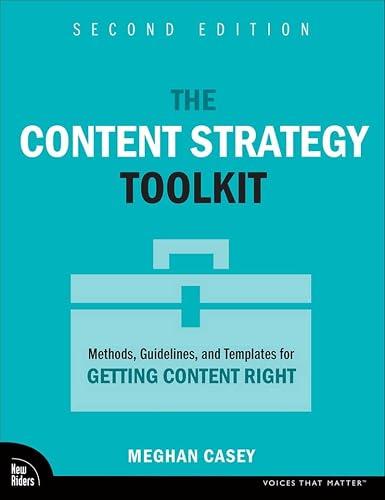
Book summary
by Meghan Casey
Premium summary · Opens in the app · 30 min read
Every organization has content. Websites, apps, product documentation, marketing materials, internal communications, social media channels. Content surrounds us, shapes how customers perceive brands, guides users through complex processes, and either supports or undermines business goals.
**Author:** Meghan Casey
**Estimated Reading Time:** 45 minutes
**What You'll Learn:**
- How to identify content problems and transform them into strategic opportunities - How to build a compelling business case that gets stakeholder buy-in - How to create a content compass that guides every content decision - How to design content systems that serve both users and business goals - How to establish governance that keeps content effective for years
**Who This Book Is For:**
This book is for anyone responsible for content in an organization, whether you are a solo content strategist, a marketing manager, a UX designer, a product owner, or a business leader who recognizes that content is a critical asset that deserves strategic attention. If you have ever felt overwhelmed by content chaos, frustrated by stakeholder disagreements, or unsure how to prove content's value, this book gives you the tools to bring order, clarity, and measurable impact to your work.
Every organization has content. Websites, apps, product documentation, marketing materials, internal communications, social media channels. Content surrounds us, shapes how customers perceive brands, guides users through complex processes, and either supports or undermines business goals. Yet most organizations treat content as an afterthought. They focus on design, technology, and functionality while treating the words as something to fill in later. The result is predictable: websites that confuse users, marketing messages that fail to resonate, support content that generates more calls than it prevents, and content teams drowning in requests with no clear priorities. This book exists because content strategy has too often been treated as a luxury reserved for large enterprises with dedicated teams and generous budgets. Meghan Casey challenges that assumption. She argues that content strategy is not a mysterious art practiced by a select few. It is a disciplined, learnable process that any organization can implement, regardless of size or resources. The problem is not a lack of awareness that content matters. Most business leaders will readily agree that content is important. The problem is that few know how to approach content strategically. They confuse content strategy with content creation, believing that hiring better writers or producing more content will solve their problems. They fail to recognize that content problems are usually system problems, rooted in unclear objectives, undefined roles, absent processes, and a lack of alignment between content and business goals. Casey's approach is different because it is relentlessly practical. She does not offer abstract theories or vague principles. She provides concrete tools: worksheets, templates, discussion guides, planning frameworks, and step-by-step processes that anyone can follow. Her methodology is built on years of hands-on experience helping organizations of all types bring order to their content chaos. The book addresses a fundamental tension…
Continue reading in the MinuteRead app
Get the complete 30-minute summary of Content Strategy Toolkit, The
Get the complete summary in the appContent strategy is a systematic process for making content decisions that serve both user needs and business goals.
Identify content problems systematically before jumping to solutions. Document hypotheses, gather evidence, and reframe
Make a compelling business case by quantifying opportunities, calculating risks, and presenting content strategy as an i
Engage stakeholders genuinely from the beginning. Their involvement and alignment will make or break your project.
Ground your strategy in understanding of both the business and the user. Research replaces assumptions with evidence.
Create a content compass with a core strategy statement that answers: What content? For whom? For what need? To achieve
"Content Strategy Toolkit, The" is a strong fit if you want practical ideas around design, business, management, especially themes like content strategy is a systematic process for making content decisions that serve both user needs and business goals; identify content problems systematically before jumping to solutions. document hypotheses, gather evidence, and reframe. The MinuteRead summary distills these concepts into a focused read, whether you're deciding whether to buy the book or applying its lessons at work.
Motivated to help readers with 1) Identify content problems and turn them into opportunities 2) Make a compelling business case for content, Meghan Casey wrote “Content Strategy Toolkit, The” to package those ideas for a fast, focused read. In “Content Strategy Toolkit, The”, Meghan Casey focuses on 1) Identify content problems and turn them into opportunities 2) Make a compelling business case for content. Through “Content Strategy Toolkit, The”, Meghan Casey distills the core ideas on design i…
Continue Reading
Access the complete 30-minute summary and thousands more nonfiction books in the MinuteRead app.

Continue reading the complete summary in the MinuteRead app.