MinuteRead
30 min
Book summary
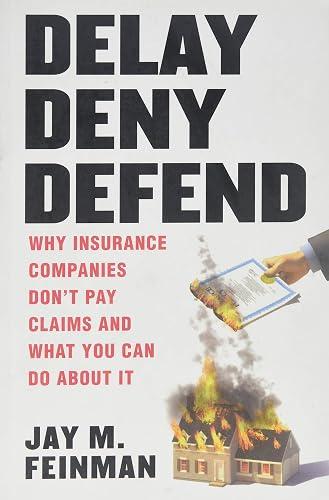
by Jay M. Feinman
Premium summary · Opens in the app · 30 min read
You buy insurance for one reason: peace of mind. You pay premiums year after year, trusting that when disaster strikes, your insurance company will be there. When a car accident leaves you injured, when a fire destroys your home, when a storm tears off your roof, you expect the company that promised to protect you will honor that promise.
**Author:** Jay M. Feinman
**Estimated Reading Time:** 45 minutes
**What You'll Learn:** How insurance companies systematically prioritize profit over their promises, the specific tactics they use to reduce payouts, and what you can do to protect yourself as a consumer.
**Who This Book Is For:** Anyone who owns insurance, has ever filed a claim, or wants to understand why the system designed to provide security so often fails the people who depend on it.
You buy insurance for one reason: peace of mind. You pay premiums year after year, trusting that when disaster strikes, your insurance company will be there. When a car accident leaves you injured, when a fire destroys your home, when a storm tears off your roof, you expect the company that promised to protect you will honor that promise. This expectation is not naive. It is the foundation of the entire insurance industry. The very word "insurance" implies security, protection, a safety net. Insurance companies spend billions on advertising that reinforces this message. They show friendly agents rushing to help after accidents. They use slogans like "Like a good neighbor" and "You're in good hands." They want you to believe that they are your partner, your protector, your ally in times of crisis. But there is a fundamental problem with this picture. Insurance companies are businesses. Their primary obligation is not to you, the policyholder. Their primary obligation is to their shareholders. And the less money they pay out in claims, the more money they keep as profit. This creates an inherent conflict. Every dollar paid to a policyholder is a dollar that does not go to the bottom line. Every claim that is delayed, reduced, or denied is a direct contribution to corporate earnings. The question is: which side wins when this conflict plays out? Jay M. Feinman, a distinguished professor of insurance law at Rutgers University, spent years investigating this question. What he found is disturbing. Through lawsuits, whistleblower testimony, internal company documents, and regulatory investigations, a clear pattern emerged. Many of the largest insurance companies in America have systematically transformed their claims departments from service centers into profit centers. They have adopted a strategy that Feinman calls "delay, deny, defend." The strategy is simple. When a policyholder files a claim, the company delays payment as long as possible. This serves multiple purposes. It allows the company to hold onto the money longer, earning investment income. It puts financial pressure on claimants who may be facing medical bills, repair costs, or lost wages. And it wears down the claimant's resolve, making them more likely to accept a lowball settlement just to end the ordeal. If delay does not work, the company denies the claim.…
Continue reading in the MinuteRead app
Get the complete 30-minute summary of Delay, Deny, Defend
Get the complete summary in the appInsurance companies make more money when they pay less in claims.
The claims process has been redesigned to minimize payouts, not to pay what is owed.
Adjusters are functionaries following computer-generated guidelines, not independent professionals.
Insurance companies segment claims and apply different strategies to different categories.
Companies work hard to prevent claimants from hiring lawyers.
Biased experts and tuned software are used to justify low offers and denials.
"Delay, Deny, Defend" is a strong fit if you want practical ideas around politics, business, law, especially themes like insurance companies make more money when they pay less in claims; the claims process has been redesigned to minimize payouts, not to pay what is owed. The MinuteRead summary distills these concepts into a focused read, whether you're deciding whether to buy the book or applying its lessons at work.
Motivated to help readers with insureds buy financial protection and peace of mind against fortuitous losses, Jay M. Feinman wrote “Delay, Deny, Defend” to package those ideas for a fast, focused read. In “Delay, Deny, Defend”, Jay M. Feinman focuses on insureds buy financial protection and peace of mind against fortuitous losses. Through “Delay, Deny, Defend”, Jay M. Feinman distills the core ideas on politics into lessons readers can absorb in a single short sitting. Readers turn to this work …
Continue Reading
Access the complete 30-minute summary and thousands more nonfiction books in the MinuteRead app.

Continue reading the complete summary in the MinuteRead app.