MinuteRead
30 min
Book summary
Premium summary · Opens in the app · 30 min read
Every company claims to be innovative. Almost every annual report celebrates a commitment to understanding customers. The standard playbook says: listen to users, observe their behavior, identify their unmet needs, and design solutions that satisfy those needs better than competitors. This approach has produced countless incremental improvements. It has made products easier to use, more efficient, and more affordable. But it has rarely produced the kind of innovation that changes what a product
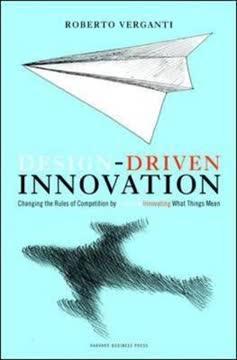
**Author:** Roberto Verganti
**Estimated Reading Time:** 42 minutes
**What You'll Learn:**
- Why the most successful products in history did not come from asking customers what they wanted - How companies like Apple, Nintendo, and Alessi create products that redefine entire categories - The hidden network of "interpreters" that shapes how people find meaning in products - A practical framework for building design-driven innovation capability in any organization - Why radical innovation requires leaders who make proposals, not managers who respond to markets
**Who This Book Is For:**
This book is for executives, product leaders, designers, and entrepreneurs who sense that something is missing from the standard innovation playbook. If you have ever felt that focus groups produce safe but uninspiring ideas, if you suspect that your customers cannot tell you what they will want next year, or if you want to understand why certain products change culture while others merely compete within it, this book will give you a new lens. It is for people who want to create products that matter, not just products that sell.
Every company claims to be innovative. Almost every annual report celebrates a commitment to understanding customers. The standard playbook says: listen to users, observe their behavior, identify their unmet needs, and design solutions that satisfy those needs better than competitors. This approach has produced countless incremental improvements. It has made products easier to use, more efficient, and more affordable. But it has rarely produced the kind of innovation that changes what a product means in people's lives. Consider the Nintendo Wii. Before its launch, the video game industry was locked in a technological arms race. Sony and Microsoft competed to deliver faster processors, better graphics, and more immersive virtual worlds. Market research told Nintendo that gamers wanted more of the same. Yet Nintendo ignored the conventional wisdom and created a console that was technically inferior to its competitors. The Wii used a simple motion-sensing controller that invited players to stand up and move. It transformed gaming from a sedentary escape into a physical, social activity. The result was not just a successful product. It was a product that expanded the entire definition of who a gamer could be. Or consider Swatch. In the early 1980s, the Swiss watch industry was in crisis. Japanese competitors had flooded the market with cheap, accurate quartz watches. The rational response was to compete on price or precision. Instead, Swatch redefined the watch from a timekeeping instrument into a fashion accessory. People began buying multiple watches to match their outfits. The meaning of the product changed, and with it, the entire market. These examples share a common pattern. The companies behind them did not discover a hidden…
Continue reading in the MinuteRead app
Get the complete 30-minute summary of Design Driven Innovation
Get the complete summary in the appEvery product has a meaning. Radical innovation changes the meaning, not just the functionality.
Users cannot articulate radically new meanings. Radical innovation is a proposal, not a response.
The design discourse is a network of interpreters researching how people give meaning to things. Tap into it.
Technology epiphanies happen when you see beyond the obvious application of a technology.
Key interpreters are forward-looking and influential. Build deep relationships with them.
Cultural prototypes diffuse new meanings before product launch. They are not marketing.
"Design Driven Innovation" is a strong fit if you want practical ideas around design, business, startup, especially themes like every product has a meaning. radical innovation changes the meaning, not just the functionality; users cannot articulate radically new meanings. radical innovation is a proposal, not a response. The MinuteRead summary distills these concepts into a focused read, whether you're deciding whether to buy the book or applying its lessons at work.
Roberto Verganti is a Professor of Management of Innovation at Politecnico di Milano and the founder of PROject Science, a consulting institute. He is known for his work on design-driven innovation and has written extensively on the subject. Verganti's research focuses on how companies can use design to create radical innovations that propose new meanings to customers. His approach emphasizes the importance of engaging with a network of interpreters to develop innovative ideas rather than relyin…
View all summaries by Roberto VergantiContinue Reading
Access the complete 30-minute summary and thousands more nonfiction books in the MinuteRead app.

Continue reading the complete summary in the MinuteRead app.