MinuteRead
30 min
Book summary
Premium summary · Opens in the app · 30 min read
There is a moment that almost every trainer, teacher, and instructional designer knows well. You have delivered the material. You have explained the concepts clearly. You have answered questions. The participants nod along. Everything seems to be going well. And then, weeks later, you discover that nothing has changed. The same mistakes are still being made. The new software is still being used incorrectly. The safety procedures are still being ignored. The training happened, but the learning di
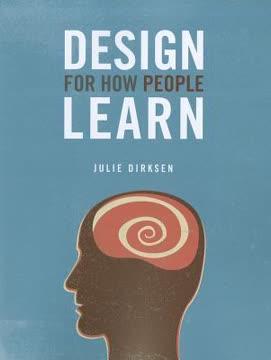
**Author:** Julie Dirksen
**Estimated Reading Time:** 45 minutes
**What You'll Learn**
This book reveals why so much training and education fails to change behavior, and what to do instead. You will learn how people actually acquire new skills, why motivation matters more than information, how memory really works, and how to design learning experiences that produce real-world results. Whether you are building a course, teaching a workshop, or trying to help someone master a new capability, this book gives you a practical framework for designing learning that sticks.
**Who This Book Is For**
This book is for anyone who has ever tried to teach something to another person and watched it fail to take hold. Instructional designers, corporate trainers, educators, product managers, and team leaders will find it immediately useful. But the principles apply far beyond formal classrooms. If you have ever created onboarding materials, written documentation, designed software, mentored a colleague, or tried to teach yourself a new skill, this book will change how you think about the learning process.
There is a moment that almost every trainer, teacher, and instructional designer knows well. You have delivered the material. You have explained the concepts clearly. You have answered questions. The participants nod along. Everything seems to be going well. And then, weeks later, you discover that nothing has changed. The same mistakes are still being made. The new software is still being used incorrectly. The safety procedures are still being ignored. The training happened, but the learning did not. Julie Dirksen wrote *Design for How People Learn* to address this exact problem. Her central observation is simple but profound: most learning experiences are designed around the convenience of the instructor or the content, not around the way human beings actually learn. We build slide decks full of information. We deliver lectures. We check for understanding with multiple-choice quizzes. And then we are surprised when the knowledge evaporates and the behavior stays the same. The problem is not a lack of effort. The problem is a fundamental misunderstanding of what learning is and how it works. Learning is not the passive receipt of information. Learning is a change in capability. It is the ability to do something today that you could not do yesterday. And that kind of change requires a completely different approach to design. Dirksen brings a unique perspective to this challenge. She is an instructional designer with deep experience in corporate training, but she is also a student of cognitive science, behavioral psychology, and user experience design. She understands that the same principles that make software intuitive can make learning effective. She knows that the insights from memory research have direct implications for how we structure practice.…
Continue reading in the MinuteRead app
Get the complete 30-minute summary of Design for How People Learn
Get the complete summary in the appLearning is a journey from current capability to desired performance, not just information transfer.
The goal of learning is not knowing more but doing more.
Different types of gaps (knowledge, skill, motivation, habit, environment) require different types of interventions.
You do not get to decide what motivates your learners. Understand them before you design for them.
Attention requires engaging both the rational rider and the emotional elephant.
Memory works better when information is encoded in multiple ways and practiced over time.
"Design for How People Learn" is a strong fit if you want practical ideas around design, education, teaching, especially themes like learning is a journey from current capability to desired performance, not just information transfer; the goal of learning is not knowing more but doing more. The MinuteRead summary distills these concepts into a focused read, whether you're deciding whether to buy the book or applying its lessons at work.
Julie Dirksen is an experienced instructional designer and expert in the field of learning design. She specializes in creating effective learning experiences for adults in corporate settings, although her principles are applicable to various educational contexts. Dirksen's approach combines practical, real-world applications with a "show-don't-tell" educational model. Her writing style is praised for being accessible, engaging, and infused with light humor. Dirksen's work is informed by learning…
View all summaries by Julie DirksenContinue Reading
Access the complete 30-minute summary and thousands more nonfiction books in the MinuteRead app.

Continue reading the complete summary in the MinuteRead app.