MinuteRead
30 min
Walk into any well-designed space and you feel something before you think anything. A warm restaurant with soft lighting and the murmur of conversation puts you at ease. A stark office with fluorescent lights and hard surfaces makes you tense. A beautifully crafted smartphone feels right in your hand before you even turn it on. These reactions happen instantly, automatically, and they shape everything that follows.
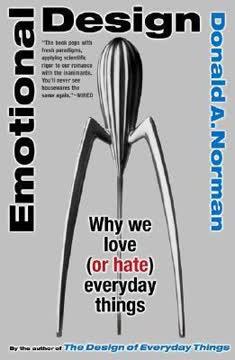
**Author:** Donald A. Norman
**Estimated Reading Time:** 45 minutes
**What You'll Learn:**
- Why attractive products actually work better than unattractive ones - How the brain processes design at three distinct levels - Why emotions are not obstacles to rational thinking but essential components of it - How to create products that form lasting emotional bonds with users - Why personalization transforms ordinary objects into meaningful possessions
**Who This Book Is For:**
Designers who want to move beyond usability into creating products people love. Engineers who wonder why technically superior products sometimes fail. Business leaders who need to understand why aesthetics drive purchasing decisions. And anyone curious about why they feel attached to certain objects while remaining indifferent to others.
Walk into any well-designed space and you feel something before you think anything. A warm restaurant with soft lighting and the murmur of conversation puts you at ease. A stark office with fluorescent lights and hard surfaces makes you tense. A beautifully crafted smartphone feels right in your hand before you even turn it on. These reactions happen instantly, automatically, and they shape everything that follows. For decades, the field of design operated on a simple assumption: if something works well, people will like it. Function came first. Aesthetics were decoration, nice to have but ultimately secondary. Engineers built products that performed their tasks efficiently, and designers were brought in at the end to make things look presentable. The result was a world full of functional but forgettable objects, things that did their jobs but inspired no loyalty, no affection, no desire. Donald Norman spent much of his career advancing this view. His earlier work, particularly The Design of Everyday Things, focused on usability, on making products understandable and easy to operate. The central argument was that good design is invisible, that the best products get out of the way and let users accomplish their goals without friction. This was a necessary correction to decades of poorly designed products that frustrated and confused people. But something was missing. Norman began noticing that people formed deep attachments to objects that were not particularly usable. They loved beautiful things even when those things were difficult to operate. They kept old possessions not because they worked well but because they carried memories. They chose products based on appearance, brand, and emotional resonance rather than purely rational assessments of functionality. The cognitive scientist in him wanted to dismiss these behaviors as irrational. The designer in him knew they revealed something important. Emotional Design is Norman's attempt to reconcile these observations. The book argues that emotions are not separate from cognition but integral to it. The way we feel about a product shapes how we…
Continue reading in the MinuteRead app
Get the complete 30-minute summary of Emotional Design
Get the complete summary in the appEmotions are inseparable from cognition. They shape how we think, what we attend to, and what we remember.
Attractive things work better because positive emotions broaden thinking and enhance creative problem-solving.
The three levels of emotional design are visceral, behavioral, and reflective. Great products succeed at all three.
The visceral level is about immediate sensory appeal. It shapes first impressions before conscious thought.
The behavioral level is about the pleasure and effectiveness of use. It is where trust is built.
The reflective level is about meaning, memory, and self-image. It is where lasting emotional bonds are formed.
"Emotional Design" is a strong fit if you want practical ideas around design, psychology, business, especially themes like emotions are inseparable from cognition. they shape how we think, what we attend to, and what we remember; attractive things work better because positive emotions broaden thinking and enhance creative problem-solving. The MinuteRead summary distills these concepts into a focused read, whether you're deciding whether to buy the book or applying its lessons at work.
Donald Arthur Norman is a prominent researcher, professor, and author specializing in design, usability engineering, and cognitive science. He directs The Design Lab at UC San Diego and co-founded the Nielsen Norman Group. Norman's influential books, including "The Design of Everyday Things," have shaped the field of user-centered design. He holds positions at various institutions, including KAIST, and advocates for design's role in innovation. Norman's work bridges academia and industry, focusi…
View all summaries by Donald A. NormanContinue Reading
Access the complete 30-minute summary and thousands more nonfiction books in the MinuteRead app.

Continue reading the complete summary in the MinuteRead app.