MinuteRead
30 min
Book summary
by Doug McKenzie-Mohr
Premium summary · Opens in the app · 30 min read
Every year, governments, nonprofits, and concerned citizens spend millions of dollars trying to persuade people to live more sustainably. They print brochures about energy conservation. They run advertisements urging people to take public transit. They host workshops on composting. They launch websites about water conservation.
By Doug McKenzie-Mohr
**Estimated Reading Time:** 45 minutes
**What You'll Learn:** How to move beyond information campaigns and design community programs that actually change behavior. You'll discover a systematic five-step process for identifying the right behaviors to target, understanding what truly motivates people, and building interventions that overcome real-world barriers.
**Who This Book Is For:** Environmental program managers, sustainability coordinators, community organizers, policymakers, students of environmental studies, and anyone who has ever wondered why people don't adopt sustainable behaviors despite saying they care about the environment.
Every year, governments, nonprofits, and concerned citizens spend millions of dollars trying to persuade people to live more sustainably. They print brochures about energy conservation. They run advertisements urging people to take public transit. They host workshops on composting. They launch websites about water conservation. And most of these efforts fail. Not because people don't care. Surveys consistently show that large majorities of people express concern about environmental issues and say they want to make sustainable choices. The problem is that caring doesn't translate into action. The gap between environmental attitudes and environmental behavior is one of the most frustrating and well-documented phenomena in environmental psychology. For decades, the dominant approach to closing this gap has been information-based campaigns. The underlying assumption is simple: if people just understood the environmental consequences of their actions, they would change. Educate them about climate change, and they'll drive less. Show them the data on water scarcity, and they'll take shorter showers. Explain the benefits of recycling, and they'll sort their waste. This assumption is not just wrong. It's actively counterproductive. It leads organizations to invest scarce resources in strategies that produce little or no measurable change, while ignoring approaches that actually work. The evidence is clear. Study after study has shown that increasing knowledge and changing attitudes rarely leads to significant behavior change on its own. People who know a great deal about environmental problems often behave no differently than people who know very little. Information campaigns can increase awareness, but awareness is not action. Doug McKenzie-Mohr recognized this problem early in his career. Working as an environmental psychologist, he saw the disconnect between what research showed about behavior change and what practitioners were actually doing in the field. The academic literature was full of insights about how people make decisions, what motivates them, and what barriers prevent them from acting. But this knowledge wasn't reaching the people who designed environmental programs. The result was a field dominated by intuition rather than evidence. Program designers relied on their own assumptions about what would work. They assumed that if they cared about something, others would care too. They assumed that information would lead to action. They assumed that…
Continue reading in the MinuteRead app
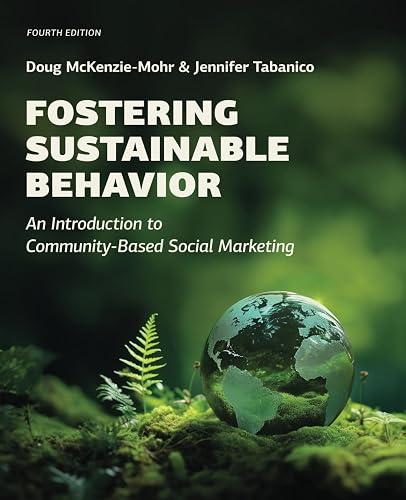
Get the complete 30-minute summary of Fostering Sustainable Behavior
Get the complete summary in the appInformation alone rarely changes behavior. Stop relying on brochures and awareness campaigns.
Start by selecting high-impact behaviors that are under-adopted and likely to be adopted.
Research barriers and benefits before designing any program. Don't assume you know why people aren't acting.
Match behavior change tools to specific barriers. No single tool works for every problem.
Commitment is powerful. Get people to make written, public commitments to specific behaviors.
Social norms influence behavior. Show people that others are already doing the right thing.
"Fostering Sustainable Behavior" is a strong fit if you want practical ideas around sustainability, environment, psychology, especially themes like information alone rarely changes behavior. stop relying on brochures and awareness campaigns; start by selecting high-impact behaviors that are under-adopted and likely to be adopted. The MinuteRead summary distills these concepts into a focused read, whether you're deciding whether to buy the book or applying its lessons at work.
Motivated to help readers with community-based social marketing draws heavily on research in social psychology, Doug McKenzie-Mohr wrote “Fostering Sustainable Behavior” to package those ideas for a fast, focused read. In “Fostering Sustainable Behavior”, Doug McKenzie-Mohr focuses on community-based social marketing draws heavily on research in social psychology. Through “Fostering Sustainable Behavior”, Doug McKenzie-Mohr distills the core ideas on sustainability into lessons readers can absor…
Continue Reading
Access the complete 30-minute summary and thousands more nonfiction books in the MinuteRead app.

Continue reading the complete summary in the MinuteRead app.