MinuteRead
30 min
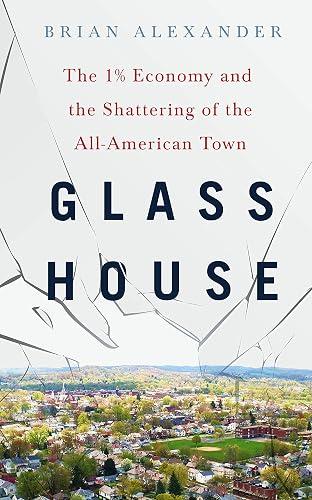
Book summary
by Brian Alexander
Premium summary · Opens in the app · 30 min read
Lancaster, Ohio, sits about thirty miles southeast of Columbus. For most of the twentieth century, it was the kind of place that embodied the American promise. You could graduate from high school, walk into Anchor Hocking's glass plant, and earn a wage that bought a house, a car, a vacation, and a secure retirement. You could raise a family. You could belong to a union, a church, a bowling league. You could look your neighbors in the eye and know that you were all part of something together.
**Author:** Brian Alexander
**Estimated Reading Time:** 45 minutes
**What You'll Learn:**
- How a quintessential American manufacturing town rose, fell, and struggled to redefine itself - The mechanics of private equity takeovers and why they so often devastate local communities - The human cost of financial engineering, from lost pensions to the opioid crisis - Why the social fabric of small-town America unraveled so quickly - What resilience looks like when the economic foundation of a community disappears
**Who This Book Is For:**
Anyone who has wondered what happened to American manufacturing towns. Anyone who has driven through the Midwest and seen shuttered factories, empty storefronts, and wondered how things got this way. Anyone who wants to understand the intersection of corporate finance, community decline, and the human beings caught in between. This is not an economics textbook. It is a portrait of a place and its people, rendered with the precision of a journalist and the heart of someone who grew up there.
Lancaster, Ohio, sits about thirty miles southeast of Columbus. For most of the twentieth century, it was the kind of place that embodied the American promise. You could graduate from high school, walk into Anchor Hocking's glass plant, and earn a wage that bought a house, a car, a vacation, and a secure retirement. You could raise a family. You could belong to a union, a church, a bowling league. You could look your neighbors in the eye and know that you were all part of something together. That Lancaster no longer exists. Brian Alexander grew up in Lancaster. He left, built a career as a journalist, and returned years later to find a town he barely recognized. The factories that had employed generations of families were gone or hollowed out. The downtown that had bustled with shoppers was dotted with empty buildings. The optimism that had defined the place had curdled into something darker: addiction, despair, and a pervasive sense that nobody in power cared. Glass House is Alexander's attempt to understand what happened. It is not a nostalgic elegy for a lost golden age. Alexander is too honest a reporter for that. Lancaster was never perfect. It had its vices, its prejudices, its petty scandals. But it worked. People had jobs. Families stayed together. The community held. The book traces the unraveling through the story of Anchor Hocking, the glass manufacturer that was Lancaster's economic backbone for nearly a century. Anchor Hocking was more than a company. It was the town's identity. When the company was sold, merged, acquired, and ultimately dismantled by a series of corporate owners, the town went down with it. But Glass House is not just about one company or…
Continue reading in the MinuteRead app
Get the complete 30-minute summary of Glass House
Get the complete summary in the appLancaster, Ohio, was a thriving company town built on glass manufacturing. Its decline mirrors the decline of hundreds o
Anchor Hocking provided stable jobs, good wages, and a sense of identity for generations of Lancaster residents.
The company was dismantled by a series of corporate takeovers and private equity acquisitions that prioritized short-ter
The private equity playbook involves loading companies with debt, cutting costs, and selling quickly. The human cost is
Economic decline is often gradual. The slow bleed makes it difficult to recognize and respond to.
The opioid crisis compounded Lancaster's economic problems. Addiction is a disease, not a moral failing.
"Glass House" is a strong fit if you want practical ideas around politics, economics, business, especially themes like lancaster, ohio, was a thriving company town built on glass manufacturing. its decline mirrors the decline of hundreds o; anchor hocking provided stable jobs, good wages, and a sense of identity for generations of lancaster residents. The MinuteRead summary distills these concepts into a focused read, whether you're deciding whether to buy the book or applying its lessons at work.
Motivated to help readers with 1) Lancaster, Brian Alexander wrote “Glass House” to package those ideas for a fast, focused read. In “Glass House”, Brian Alexander focuses on 1) Lancaster. Through “Glass House”, Brian Alexander distills the core ideas on politics into lessons readers can absorb in a single short sitting. Readers turn to this work when they want Brian Alexander's perspective on the subject without working through the entire original volume. Brian Alexander Morgan is an American r…
Continue Reading
Access the complete 30-minute summary and thousands more nonfiction books in the MinuteRead app.

Continue reading the complete summary in the MinuteRead app.