MinuteRead
30 min
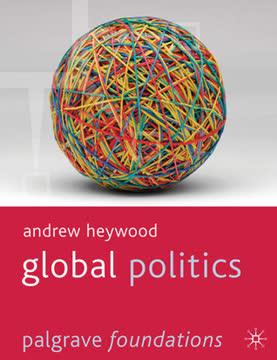
We live in a world where a virus originating in one city can shut down economies on every continent within weeks. Where a social media post from a teenager can spark protests in dozens of countries. Where decisions made in boardrooms in New York or Beijing can determine the livelihoods of farmers in Kenya or factory workers in Bangladesh. This is the world of global politics, and it is far more complex than the traditional study of international relations ever imagined.
**Author:** Andrew Heywood
**Estimated Reading Time:** 45 minutes
**What You'll Learn:**
How the world actually works beyond headlines and soundbites. You will learn why states remain powerful but no longer dominate global affairs alone. You will understand how globalization reshapes economies, identities, and security. You will see how different theoretical lenses reveal different truths about power, war, cooperation, and justice. You will gain frameworks for thinking clearly about the most pressing issues of our time, from nuclear weapons to human rights to the shifting balance of global power.
**Who This Book Is For:**
Anyone who wants to move beyond simplistic views of international affairs. Whether you are a student, a professional, a policymaker, or simply a curious citizen, this book will equip you with the concepts and historical context needed to understand the forces shaping our interconnected world. No prior knowledge of politics is required.
We live in a world where a virus originating in one city can shut down economies on every continent within weeks. Where a social media post from a teenager can spark protests in dozens of countries. Where decisions made in boardrooms in New York or Beijing can determine the livelihoods of farmers in Kenya or factory workers in Bangladesh. This is the world of global politics, and it is far more complex than the traditional study of international relations ever imagined. For most of the twentieth century, the study of world affairs was relatively straightforward. The central actors were states, primarily the great powers. The central question was war and peace between them. The central dynamic was the balance of power. This was the world of treaties, alliances, diplomatic summits, and military strategy. It was a world where the internal affairs of states were largely off-limits to international scrutiny, and where non-state actors barely registered on the analytical radar. That world no longer exists. The collapse of the Soviet Union in 1991 ended the bipolar rivalry that had structured global politics for nearly half a century. But what followed was not simply a unipolar moment of American dominance. Instead, the post-Cold War era unleashed forces that had been building beneath the surface for decades: the accelerating integration of global markets, the revolution in communications technology, the resurgence of ethnic and religious identities, the rise of transnational challenges like climate change and terrorism, and the growing assertiveness of non-state actors ranging from multinational corporations to advocacy networks to criminal organizations. Andrew Heywood's Global Politics is an attempt to make sense of this transformed landscape. It is not a book that offers simple answers or comforting certainties. Instead, it provides something more valuable: a set of conceptual tools for thinking clearly about a world that defies easy…
Continue reading in the MinuteRead app
Get the complete 30-minute summary of Global Politics
Get the complete summary in the appGlobal politics involves multiple levels and multiple actors, not just states interacting with states.
Globalization is real and transformative, but it does not make the state irrelevant.
History shapes the present through the legacies of empire, war, and shifting power.
Realism and liberalism offer contrasting lenses on state behavior, but critical theories reveal what they miss.
The state persists but is being transformed by global dynamics.
Identity and difference drive conflict and cooperation in a globalizing world.
"Global Politics" is a strong fit if you want practical ideas around politics, political science, international relations, especially themes like global politics involves multiple levels and multiple actors, not just states interacting with states; globalization is real and transformative, but it does not make the state irrelevant. The MinuteRead summary distills these concepts into a focused read, whether you're deciding whether to buy the book or applying its lessons at work.
Andrew Heywood is a renowned British author specializing in politics textbooks. With over two decades of experience as a politics lecturer and department head, he has established himself as the leading writer in his field for the UK. Heywood's expertise extends to his role as an AS and A Level Chief Examiner in Government and Politics. His professional background includes positions as Vice Principal of Croydon College and Director of Studies at Orpington College. Currently, Heywood works indepen…
View all summaries by Andrew HeywoodContinue Reading
Access the complete 30-minute summary and thousands more nonfiction books in the MinuteRead app.

Continue reading the complete summary in the MinuteRead app.