MinuteRead
30 min
Book summary
Premium summary · Opens in the app · 30 min read
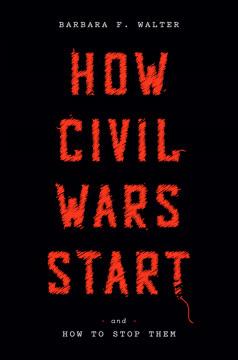
Most Americans believe a second civil war is impossible. The idea feels like something from another century, a relic of history books and black-and-white photographs. The United States is the world's oldest democracy, the wealthiest nation on earth, and the victor of the Cold War. Surely the country that exported democracy around the globe cannot be sliding toward the kind of internal conflict that has torn apart places like Syria, Yugoslavia, or Rwanda.
**Author:** Barbara F. Walter **Estimated Reading Time:** 45 minutes
**What You'll Learn:**
- Why the United States is closer to civil war than most people realize - The hidden patterns that precede civil conflicts across history - How identity-based factionalism destabilizes nations - Why social media accelerates political violence - What a modern American civil war would actually look like - Specific actions to strengthen democracy and prevent catastrophe
**Who This Book Is For:**
This book is for anyone who has watched political events unfold with growing unease and wondered where the country is heading. It is for citizens who want to understand the forces shaping political instability, for leaders who need to recognize warning signs before it is too late, and for readers who believe that understanding the mechanics of civil conflict is the first step toward preventing one.
Most Americans believe a second civil war is impossible. The idea feels like something from another century, a relic of history books and black-and-white photographs. The United States is the world's oldest democracy, the wealthiest nation on earth, and the victor of the Cold War. Surely the country that exported democracy around the globe cannot be sliding toward the kind of internal conflict that has torn apart places like Syria, Yugoslavia, or Rwanda. Barbara F. Walter has spent her career studying civil wars. She has examined conflicts in over one hundred countries, analyzed the data, and identified the patterns that precede political violence. Her conclusion is unsettling: the United States is displaying the same warning signs that have appeared before civil wars in other nations. The country is not immune to the forces that drive societies apart. The problem is not that Americans are inherently violent or that the country is destined for collapse. The problem is that the conditions that make civil war possible are emerging with alarming speed. Democratic institutions are weakening. Political parties are organizing around identity rather than ideology. Groups that once held power feel their status slipping away. Social media amplifies extremism. And a growing number of Americans say they are open to political violence. The topic matters because civil wars are not distant abstractions. They are among the most destructive events a society can experience. They kill millions, displace entire populations, destroy economies, and leave psychological scars that last for generations. The Syrian civil war killed over half a million people and displaced more than half the country's population. The Rwandan genocide killed nearly a million people in one hundred days. The Yugoslav wars turned neighbors into enemies and left the region fractured for decades. Americans struggle to see these parallels because they imagine civil war as something that happens to other people in…
Continue reading in the MinuteRead app
Get the complete 30-minute summary of How Civil Wars Start
Get the complete summary in the appThe United States is closer to civil war than most people realize.
Anocracies are the most dangerous political condition, and the U.S. entered the anocracy zone in 2016.
Civil wars are primarily about identity, not ideology or economics.
The groups most likely to initiate violence are those experiencing status decline.
Social media accelerates polarization and extremism through its business model.
A modern American civil war would be decentralized and guerrilla-style.
"How Civil Wars Start" is a strong fit if you want practical ideas around politics, history, war, especially themes like the united states is closer to civil war than most people realize; anocracies are the most dangerous political condition, and the u.s. entered the anocracy zone in 2016. The MinuteRead summary distills these concepts into a focused read, whether you're deciding whether to buy the book or applying its lessons at work.
Barbara F. Walter is a renowned political scientist specializing in civil wars and political violence. As the Rohr Professor of International Relations at the University of California, San Diego's School of Global Policy and Strategy, she brings extensive expertise to her research. Walter's work extends beyond academia, as she is a life member of the Council on Foreign Relations and contributes to the blog Political Violence at a Glance. Her insights are frequently shared in major publications s…
View all summaries by Barbara F. WalterContinue Reading
Access the complete 30-minute summary and thousands more nonfiction books in the MinuteRead app.

Continue reading the complete summary in the MinuteRead app.