MinuteRead
30 min
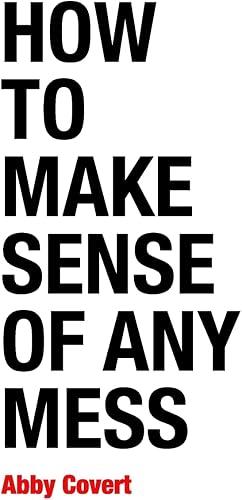
Book summary
by Abby Covert
Premium summary · Opens in the app · 30 min read
Every day, you wake up and face messes. Some are small: a cluttered inbox, a confusing website, a meeting that should have been an email. Others are large: a product launch that is going sideways, a team that cannot agree on priorities, a personal project that has stalled because you cannot figure out what to do next.
**Author:** Abby Covert **Estimated Reading Time:** 45 minutes
**What You'll Learn:** - Why every problem you face is fundamentally an information problem - How to use language as a tool for creating clarity and alignment - Practical frameworks for structuring, measuring, and refining complex situations - How to move from feeling overwhelmed to taking confident action
**Who This Book Is For:** Anyone who has ever felt lost in a project, overwhelmed by complexity, or unsure how to bring order to chaos. Whether you are a designer, manager, entrepreneur, writer, or simply someone trying to make sense of a complicated situation, this book gives you the tools to think clearly and act decisively.
Every day, you wake up and face messes. Some are small: a cluttered inbox, a confusing website, a meeting that should have been an email. Others are large: a product launch that is going sideways, a team that cannot agree on priorities, a personal project that has stalled because you cannot figure out what to do next. We tend to think of these problems as unique. We blame the technology, the people, the budget, the timeline. But beneath almost every frustrating situation lies a common root cause: information is not being organized in a way that makes sense to the people who need it. Abby Covert has spent her career helping people untangle messes. She is an information architect, which means she thinks deeply about how information is structured, labeled, and connected. But her insight in this book is that information architecture is not just a discipline for designers. It is a way of thinking that anyone can use. The problem is that most people do not know how to approach a mess. They jump to solutions before understanding the problem. They use vague language that creates confusion. They avoid difficult conversations about priorities. They assume that if they just work harder, things will get clearer. But effort without clarity just creates a more organized mess. Covert's approach is different. She argues that making sense of any mess requires you to slow down and think deliberately about information. What are you trying to accomplish? Who are you trying to help? What words are you using, and do they mean the same thing to everyone involved? What structures are you imposing on your content, and are those structures helping or hurting? These questions sound simple. They are not. Answering them honestly requires you to confront ambiguity, negotiate with stakeholders, and make decisions that feel uncomfortable. But the alternative is worse: continuing to operate in a fog, hoping that things will somehow improve on their own. This book is a field guide for navigating that fog. It does not offer…
Continue reading in the MinuteRead app
Get the complete 30-minute summary of How to Make Sense of Any Mess
Get the complete summary in the appInformation is subjective. It is what people understand, not what you intend.
Identify the mess before proposing solutions. Understanding comes first.
State your intent clearly and specifically. Vague goals produce vague results.
Face reality, even when it is uncomfortable. Denial is the enemy of progress.
Choose a direction and say no to things that do not align with it.
Measure progress, not just success. Celebrate small wins.
"How to Make Sense of Any Mess" is a strong fit if you want practical ideas around design, business, technology, especially themes like information is subjective. it is what people understand, not what you intend; identify the mess before proposing solutions. understanding comes first. The MinuteRead summary distills these concepts into a focused read, whether you're deciding whether to buy the book or applying its lessons at work.
Motivated to help readers with 1) Identify the Mess: Recognize Information and People as Key Components 2) State Your Intent: Use Language, Abby Covert wrote “How to Make Sense of Any Mess” to package those ideas for a fast, focused read. In “How to Make Sense of Any Mess”, Abby Covert focuses on 1) Identify the Mess: Recognize Information and People as Key Components 2) State Your Intent: Use Language. Through “How to Make Sense of Any Mess”, Abby Covert distills the core ideas on design into l…
Continue Reading
Access the complete 30-minute summary and thousands more nonfiction books in the MinuteRead app.

Continue reading the complete summary in the MinuteRead app.