MinuteRead
30 min
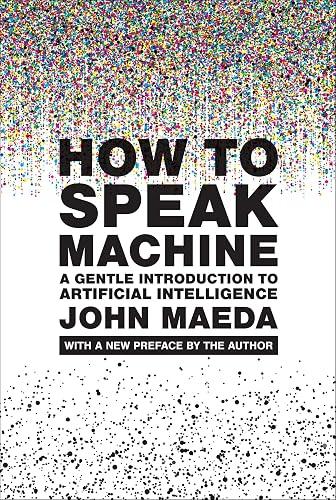
Book summary
by John Maeda
Premium summary · Opens in the app · 30 min read
There is a moment in every person's life when technology stops feeling like a tool and starts feeling like a mystery. For some, it happens when a recommendation algorithm knows their taste better than their closest friends. For others, it happens when a loan application is denied by a system no one can explain. For many, it happens quietly, over years, as the devices around them grow more capable while their own understanding stays frozen in place.
### By John Maeda
**Estimated Reading Time:** 45 minutes
**What You'll Learn**
The hidden logic that powers every computer, app, and algorithm you interact with. You will discover why machines think in loops, how they scale beyond human imagination, why they are never truly finished, and what happens when they inherit human biases. More importantly, you will learn how to think alongside machines rather than being overwhelmed by them.
**Who This Book Is For**
This book is for anyone who has ever felt left behind by technology. For designers who want to understand engineers. For business leaders who need to make sense of data. For curious minds who sense that something fundamental has shifted in how the world works. You do not need a technical background. You only need a willingness to see the world through a different lens.
There is a moment in every person's life when technology stops feeling like a tool and starts feeling like a mystery. For some, it happens when a recommendation algorithm knows their taste better than their closest friends. For others, it happens when a loan application is denied by a system no one can explain. For many, it happens quietly, over years, as the devices around them grow more capable while their own understanding stays frozen in place. John Maeda wrote this book because he noticed something strange about the way we talk about technology. The people who build computational systems speak a language that sounds like English but operates by entirely different rules. They use words like "loop" and "scale" and "iterate" with meanings that diverge sharply from everyday usage. Meanwhile, the rest of us nod along, pretending to understand, feeling the gap widen with every passing year. Maeda is uniquely positioned to bridge this gap. He has lived on both sides of the divide. He trained as an engineer at MIT, earned degrees in computer science and electrical engineering, and then did something unexpected: he became an artist. He spent years creating digital art, exploring what happens when human creativity collides with computational logic. Later, he studied design and business, eventually leading research at MIT's Media Lab and serving as president of the Rhode Island School of Design. He has spent his career translating between worlds that rarely speak to each other. The problem Maeda identifies is not that technology is too complex for ordinary people to understand. The problem is that we have been taught to think about computers in the wrong way. We treat them as mysterious black boxes, or as magic, or as threats. We alternate between awe and anxiety. What we rarely do is try to understand how they actually think. This matters more than ever…
Continue reading in the MinuteRead app
Get the complete 30-minute summary of How to Speak Machine
Get the complete summary in the appComputers are machines for repetition. Their power comes from executing loops with perfect consistency at massive scale.
The same loop that processes one item can process a million items. This is why computers scale so dramatically.
Human intuition is linear, but the computational world is exponential. Exponential growth starts slowly and then explode
Artificial intelligence has shifted from rules to learning. Neural networks discover patterns from data, but they do not
In the computational world, quality means an unfinished product that improves over time. Release early, gather feedback,
Every interaction with a computational system generates data. Data is valuable, but it is not objective.
"How to Speak Machine" is a strong fit if you want practical ideas around design, technology, computer science, especially themes like computers are machines for repetition. their power comes from executing loops with perfect consistency at massive scale; the same loop that processes one item can process a million items. this is why computers scale so dramatically. The MinuteRead summary distills these concepts into a focused read, whether you're deciding whether to buy the book or applying its lessons at work.
Motivated to help readers with there's one thing that a computer can do better than any human, John Maeda wrote “How to Speak Machine” to package those ideas for a fast, focused read. In “How to Speak Machine”, John Maeda focuses on there's one thing that a computer can do better than any human. Through “How to Speak Machine”, John Maeda distills the core ideas on design into lessons readers can absorb in a single short sitting. Readers turn to this work when they want John Maeda's perspective o…
View all summaries by John MaedaContinue Reading
Access the complete 30-minute summary and thousands more nonfiction books in the MinuteRead app.

Continue reading the complete summary in the MinuteRead app.