MinuteRead
30 min
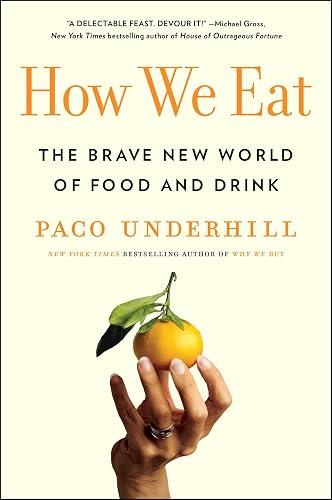
Every day, billions of people make choices about food. What to eat. Where to buy it. How to prepare it. Whether to cook at all. These choices feel personal, even intimate. They reflect our tastes, our memories, our cultures, our budgets, our moods.
By Paco Underhill
**Estimated Reading Time:** 42 minutes
**What You'll Learn:**
Why supermarkets are designed the way they are, how technology is transforming our relationship with food, what ultra-processed foods are doing to our health, why farmers markets matter more than ever, how social media changed the way we experience meals, and what the future of eating will look like.
**Who This Book Is For:**
Anyone who eats, shops for food, cooks, orders takeout, posts photos of meals online, or wonders why they bought three things they didn't plan to at the grocery store. In other words, everyone.
Every day, billions of people make choices about food. What to eat. Where to buy it. How to prepare it. Whether to cook at all. These choices feel personal, even intimate. They reflect our tastes, our memories, our cultures, our budgets, our moods. But here is what most of us never stop to consider: almost none of these choices are entirely our own. The supermarket you walk through has been engineered with the precision of a casino floor. The packaging on your favorite snack was tested across dozens of iterations to trigger a specific neurological response. The restaurant menu you browse was designed to guide your eyes toward the highest-margin items. The food delivery app on your phone uses algorithms that know your ordering patterns better than your closest friends do. Paco Underhill has spent his career studying how people interact with retail environments. As the founder of Envirosell, a research and consulting firm, he has tracked shoppers through stores, recorded their movements, analyzed their hesitations, and mapped their decision-making processes. He has watched people read labels, reach for products, change their minds, and walk out with items they never intended to buy. His previous book, *Why We Buy*, became a global bestseller by revealing the hidden forces that shape consumer behavior. In *How We Eat*, Underhill turns his attention to the most fundamental consumer activity of all: acquiring food. The book arrives at a moment of profound transformation. For most of human history, the challenge was getting enough to eat. Scarcity was the enemy. Famine was a recurring threat. The struggle for calories shaped our biology, our social structures, and our cultures. Today, in much of the developed world, the problem has inverted. Abundance is the challenge. We are surrounded by food that is cheap, convenient, and engineered to be irresistible. The result is a public health crisis of obesity, diabetes, and diet-related disease. At the same time, technology is rewriting the rules of food acquisition. Online grocery shopping, meal kit delivery, restaurant apps, and ghost kitchens are changing where and how we get our meals. Social media has turned food…
Continue reading in the MinuteRead app
Get the complete 30-minute summary of How We Eat
Get the complete summary in the appSupermarkets are designed to influence your behavior. Awareness is your best defense.
Milk is at the back for a reason: to make you walk past everything else.
Ultra-processed foods are not real food. Read ingredient lists.
Stick to the perimeter of the supermarket for whole foods.
Farmers markets offer transparency and connection that supermarkets cannot.
Liquid calories count. Pay attention to what you drink.
"How We Eat" is a strong fit if you want practical ideas around food, business, sociology, especially themes like supermarkets are designed to influence your behavior. awareness is your best defense; milk is at the back for a reason: to make you walk past everything else. The MinuteRead summary distills these concepts into a focused read, whether you're deciding whether to buy the book or applying its lessons at work.
Motivated to help readers with store designers, Paco Underhill wrote “How We Eat” to package those ideas for a fast, focused read. In “How We Eat”, Paco Underhill focuses on store designers. Through “How We Eat”, Paco Underhill distills the core ideas on food into lessons readers can absorb in a single short sitting. Readers turn to this work when they want Paco Underhill's perspective on the subject without working through the entire original volume. Paco Underhill is an environmental psycholog…
View all summaries by Paco UnderhillContinue Reading
Access the complete 30-minute summary and thousands more nonfiction books in the MinuteRead app.

Continue reading the complete summary in the MinuteRead app.