MinuteRead
30 min
Book summary
Premium summary · Opens in the app · 30 min read
Something strange happens when highly intelligent people turn their attention to society. The same analytical minds that produce breakthroughs in mathematics, physics, or medicine routinely generate ideas about economics, politics, and social policy that fail spectacularly when implemented. The same verbal dexterity that wins academic debates produces theories that collapse upon contact with reality.
**Author:** Thomas Sowell
**Estimated Reading Time:** 45 minutes
**What You'll Learn:** Why the most educated and articulate members of society so often champion ideas that produce disastrous results. You will learn to distinguish between verbal brilliance and empirical truth, understand why centralized planning fails despite the intelligence of its advocates, and discover how systemic processes like markets and cultural evolution outperform the designs of even the most brilliant minds.
**Who This Book Is For:** Anyone who has wondered why smart people keep making the same mistakes in public policy, why academic consensus so often diverges from common sense, and how to evaluate the ideas that shape our world without being seduced by eloquence alone.
Something strange happens when highly intelligent people turn their attention to society. The same analytical minds that produce breakthroughs in mathematics, physics, or medicine routinely generate ideas about economics, politics, and social policy that fail spectacularly when implemented. The same verbal dexterity that wins academic debates produces theories that collapse upon contact with reality. Thomas Sowell spent decades examining this paradox. His conclusion is uncomfortable but essential: intellectual ability in one domain does not translate into wisdom about society. In fact, the habits of mind that serve intellectuals well within their specialties often blind them to the realities of the world they seek to reshape. The problem is not intelligence. It is a particular vision of how the world works, combined with a particular vision of the intellectual's role within it. Many intellectuals see themselves as anointed leaders whose superior knowledge and moral insight entitle them to guide the less enlightened masses. They see society's problems as puzzles to be solved through reason and good intentions. And they see existing institutions, traditions, and systemic processes as obstacles to be overcome rather than repositories of accumulated wisdom. This vision has consequences. Throughout the twentieth century and into our own time, intellectuals have provided the theoretical justification for policies that produced poverty, war, and social disintegration. They have championed economic systems that created famines, social programs that destroyed families, and foreign policies that emboldened aggressors. They have done so not despite their intelligence but often because of it, for their intelligence gave them confidence that their abstract theories were superior to the messy, evolved practices they sought to replace. The alternative to the intellectual's vision is what Sowell calls the tragic vision: the recognition that human beings are inherently limited in knowledge, virtue, and foresight. In this view, the best social outcomes emerge not from central planning but from systemic processes that coordinate the dispersed knowledge of millions of individuals. Markets, cultural traditions, legal precedents, and social norms all embody wisdom that no single mind could ever articulate,…
Continue reading in the MinuteRead app
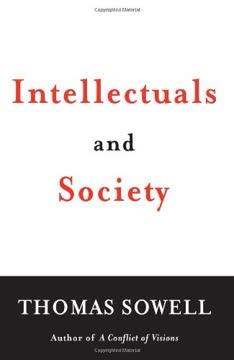
Get the complete 30-minute summary of Intellectuals and Society
Get the complete summary in the appIntellectual ability in one domain does not confer wisdom about society as a whole. Brilliant people can be completely w
The vision of the anointed leads intellectuals to see themselves as leaders of the less enlightened masses, entitled to
Intellectuals systematically filter reality, noticing facts that support their vision while ignoring or dismissing facts
Abstract thinking disconnected from empirical knowledge produces policies that fail, often with devastating consequences
Verbal virtuosity is not the same as truth. The most articulate advocates are often the most wrong.
Every policy has unintended consequences, and in complex social systems these consequences are often larger than the int
"Intellectuals and Society" is a strong fit if you want practical ideas around politics, economics, philosophy, especially themes like intellectual ability in one domain does not confer wisdom about society as a whole. brilliant people can be completely w; the vision of the anointed leads intellectuals to see themselves as leaders of the less enlightened masses, entitled to. The MinuteRead summary distills these concepts into a focused read, whether you're deciding whether to buy the book or applying its lessons at work.
Thomas Sowell is an American economist, social commentator, and author known for his laissez-faire economic perspective. Born in North Carolina and raised in Harlem, he overcame early challenges to earn degrees from Harvard, Columbia, and the University of Chicago. Sowell has taught at several universities and is currently a Senior Fellow at Stanford University's Hoover Institution. He has authored numerous books on economics, social issues, and political science, earning recognition for his pro…
View all summaries by Thomas SowellmContinue Reading
Access the complete 30-minute summary and thousands more nonfiction books in the MinuteRead app.

Continue reading the complete summary in the MinuteRead app.